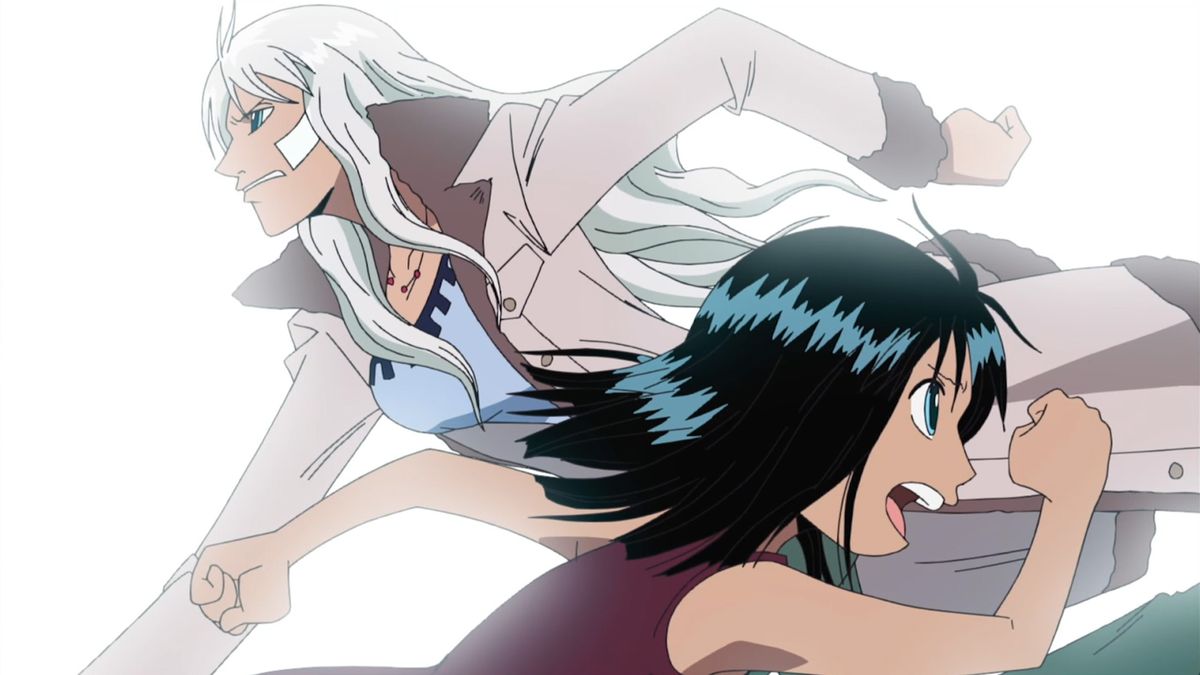
RaeRae Reacts · One Piece Episode 276
Olvia Comes Home After Secrecy Has Made Home Unrecognizable
One Piece Episode 276 brings Olvia back to warn Ohara while mother and daughter pass without recognition because state secrecy has shaped their family.
Bottom line: Olvia comes home, but secrecy has already made home unrecognizable
One Piece Episode 276 brings Nico Olvia back to Ohara and refuses to give Robin an easy reunion. Mother and daughter pass each other in the street without recognition. That moment says more about the cost of the archaeological mission than a clean embrace could. The World Government has made their work so dangerous that love must hide, photographs become precious, and a child can know her mother mainly as an absence.
Olvia returns because the island faces extermination. Robin runs toward the Tree of Knowledge because Jaguar D. Saul warns her about the same threat. They move through one crisis on intersecting paths, connected by history and purpose before either can safely claim the relationship.
Episode facts and production credits
Episode 276 aired in Japan on September 10, 2006. Hirohiko Kamisaka wrote the screenplay, Toru Yamada directed, Masayuki Takagi served as animation director, and Miho Shiraishi and Michiyo Kawasaki handled the art direction. The story follows Olvia’s escape and return while Saul warns Robin that Marine ships are approaching Ohara.
The episode works through motion rather than a single confrontation. Olvia moves toward the scholars, Robin moves toward the library, Saul moves toward the danger, and the government closes routes around the island. Every path reveals who possesses information and who has been denied enough time to act.
Olvia escapes prison because warning Ohara matters more than personal safety
Olvia could use escape to disappear. She returns to the place the government already associates with forbidden research. The decision is not sensible self-preservation. The decision is responsibility toward people whose danger increased because the expedition was captured.
Her return also rejects the government’s effort to isolate detainees from the communities affected by their knowledge. Imprisonment attempts to stop information at the body holding the information. Olvia carries the warning home anyway.
The expedition proves historical research requires collective labor
Olvia did not discover the threat through solitary genius. Archaeologists traveled, decoded, compared, preserved, argued, and relied on one another. Government forces attack a network because a network can keep knowledge alive after one person falls.
That collective labor matters to Robin’s future. Her ability to read Poneglyphs comes from a community of study, even when she later survives as the last visible member. Calling Robin uniquely dangerous hides the many people and generations behind her knowledge.
Olvia carries grief before she reaches her daughter
The captured expedition has already paid a human price. Olvia returns with information purchased through imprisonment, death, and the knowledge that more violence is coming. She does not arrive as an untouched heroic mother ready to repair eight years in one conversation.
That emotional condition complicates every choice. Grief pushes her toward the scholars and the warning. Motherhood pulls her toward Robin. The government created an emergency where attending to one responsibility consumes minutes needed by another.
Robin learns the danger from Saul because adults kept her outside the full truth
Saul tells Robin that warships are coming for Ohara’s scholars. His warning gives shape to the tension she has sensed around the library and her mother’s work. Robin finally receives information adults withheld in hopes of protecting her.
The scholars’ secrecy came from love, but secrecy leaves her dependent on a frightened stranger for the facts determining her life. Protection without communication can become another form of power over a child, especially when danger has already found the household.
Saul knows the Marines from inside, so his fear carries a receipt
Saul does not spread a vague rumor about ships. He held the rank of vice admiral and knows what the government can mobilize. His terror comes from professional knowledge of the institution’s capacity and willingness.
That history lets the episode separate informed warning from panic. Saul understands the chain of command, the scale of the fleet, and the meaning of a Buster Call. Robin should run because the danger is real, not because fear always deserves obedience.
Robin runs toward the Tree of Knowledge because people are still inside
A simple survival instinct would send Robin away from the library. She runs toward Clover and the scholars. The people inside gave her intellectual belonging, recognized her work, and connected her to Olvia. She cannot treat them as replaceable once danger appears.
Her choice mirrors the Straw Hats at Enies Lobby. Love sends people toward danger when someone important remains trapped inside. Adult Robin sees that choice as unacceptable when others make the run for her, but she understood the impulse at eight.
The city’s confusion shows how suppression keeps civilians unprepared
Most residents do not know the full research program or the government’s plan. As fear spreads, people scramble without a shared account of what is happening. Secrecy has protected the work from casual exposure while leaving the wider island unable to evaluate the threat.
The government benefits from that confusion. Officials can define the scholars as criminals after controlling which facts civilians receive. A community denied information cannot make a genuinely informed decision about solidarity, evacuation, or resistance.
Mother and daughter pass because political secrecy became family architecture
Robin has a photograph and a longing, but not enough lived familiarity to recognize Olvia immediately in a chaotic street. Olvia sees a child shaped by years she missed. Both hesitate within a system that trained them to protect one another through distance.
The missed recognition is not a cute misunderstanding. Government criminalization has entered the family’s senses. Faces, names, touch, and public acknowledgment all carry risk. The state does not need to stand between them physically when secrecy has already learned the job.
Olvia’s refusal to claim Robin comes from fear, and fear still wounds
Olvia worries that association will place Robin in greater danger. Denying the relationship appears to offer a thin layer of protection. The choice follows the same logic Robin later uses with the Straw Hats: love means leaving before the people you love become targets.
Episode 276 lets viewers understand that logic while feeling the damage. A protective lie can still break the person being protected. Good motive does not erase consequence.
Robin recognizes her mother through accumulated details, not magic
The emotional connection does not need supernatural certainty. Robin has studied Olvia through memory, image, conversation, and absence. Small details gather until the woman in front of her becomes the person she has been waiting to meet.
Recognition becomes an act of scholarship as well as love. Robin reads evidence because adults denied her a normal family history. The skill that threatens the government also helps a child reconstruct her own life.
Olvia and Robin share archaeology for different immediate reasons
Olvia pursues the Void Century as a collective historical responsibility. Robin pursues archaeology through intellectual gift, loneliness, curiosity, and connection to Olvia. Their motives overlap without becoming identical.
That distinction protects Robin from being reduced to her mother’s legacy. She inherits knowledge and unfinished work, but she remains a person whose own questions, friendships, and judgments shape what the work becomes.
Clover must choose between preserving people and preserving evidence
The approaching operation forces Professor Clover and the scholars into triage. Records, Poneglyph research, archaeological context, and human lives all face destruction. No choice can save everything.
Authoritarian power creates that cruel competition, then judges victims for whichever loss follows. If scholars save documents, officials call them fanatics. If they save people, the government succeeds in erasing research. The impossible choice belongs to the attackers.
The Tree of Knowledge is a workplace, archive, school, and home
The library holds more than books. Scholars built careers, friendships, arguments, methods, and daily routines inside. Robin found recognition there that her household and peers withheld. Destroying the tree attacks several kinds of belonging at once.
That layered meaning explains why people do not abandon the building without thought. Viewers may want everyone to run immediately, but an archive can contain generations of human labor that no living person knows how to recreate.
The government calls research illegal while refusing public examination
A legitimate prohibition should survive questions about evidence, harm, scope, and enforcement. The Void Century ban survives through secrecy and lethal punishment. Researchers cannot challenge the rule without proving themselves subject to the rule.
That circular structure makes innocence impossible. Asking why the history is forbidden becomes evidence that a person intends to uncover forbidden history. The government protects the ban from scrutiny by criminalizing scrutiny itself.
Olvia’s white hair makes resemblance visible after years of separation
The visual design gives mother and daughter recognizable differences while keeping a family connection in face, bearing, and attention. Robin’s dark hair prevents the reunion from relying on a simple mirrored image. Their resemblance emerges through expression and shared focus.
That choice supports the episode’s argument. Family does not require visual duplication. Relationship is built from history, care, missed time, knowledge, and the decision to claim one another when claiming becomes dangerous.
Saul becomes a bridge between institutional knowledge and personal care
Saul understands the Marines, knows Olvia, recognizes the Buster Call, and cares about Robin. Those connections place him between the large political machinery and one child’s immediate survival.
He does not respond by giving Robin a lecture about global politics. He translates institutional danger into practical instruction: people are coming, scholars are targets, and she needs to move. Useful care gives someone enough truth to act.
The episode refuses to turn motherhood into a purity test
Olvia missed years of Robin’s life. That absence matters. She also risked imprisonment and death pursuing work she believed belonged to the world, then escaped to warn the island. The story does not require viewers to erase one truth to hold the other.
Women in adventure stories often receive harsher judgment for leaving family than men receive for identical missions. A fair reading can name Robin’s loneliness without pretending Olvia’s political labor was a selfish vacation.
Robin’s childhood competence keeps attracting adult danger
Robin reads, reasons, notices, and moves with unusual ability. Adults may confuse that competence with safety. Her knowledge instead makes government agents more determined to control or kill her.
Competence cannot substitute for protection. The episode keeps returning to a basic failure: an eight-year-old has to navigate a military crisis created by adults because the adults with power chose extermination over accountability.
The direction makes the near reunion hurt through timing
Toru Yamada’s direction lets Robin and Olvia occupy the same public space while remaining emotionally separated. The audience understands the relationship before the characters can safely acknowledge the relationship. That gap creates tension without manufactured mystery.
Masayuki Takagi’s animation direction emphasizes faces turning, bodies passing, and recognition arriving too late for comfort. Small movements carry the weight because the episode knows a missed look can hurt more than another explosion.
The Japanese performances keep Olvia’s restraint from feeling cold
Yuriko Yamaguchi voices Olvia as well as adult Robin, giving mother and daughter an audible connection across time. Anzu Nagai’s young Robin reaches toward that connection with a child’s guarded hope. The shared and contrasting vocal qualities make the family bond present even during denial.
Takashi Kusao gives Saul urgency without losing warmth. His fear for Robin sounds practical rather than theatrical. The performance reminds viewers that he knows exactly which institution is approaching.
Ohara’s tragedy begins before the first cannon fires
The island is already losing time, trust, public understanding, and family connection. Warships will make the violence visible, but criminalization has been shaping life for years. The Buster Call is the final concentration of a longer campaign.
That wider timeline matters because state violence often appears sudden only when viewers start counting at the explosion. Surveillance, censorship, arrest, propaganda, secrecy, and isolation prepare the target long before open destruction.
RaeRae verdict: the missed embrace proves what the government stole before Ohara burned
Episode 276 could have made Olvia’s return a clean emotional reward. Instead, Robin and her mother pass each other because the government has forced fear into the shape of their family. The coming bombardment will destroy the island, but viewers first see the quieter theft: years without touch, recognition, ordinary conversation, or permission to say “that is my mother” in public.
Olvia returns. Robin runs toward the people she loves. Saul refuses the institution that trained him. None of those choices can restore the lost years, but each choice resists the government’s claim that fear should decide every relationship. That resistance is the inheritance Robin carries to Enies Lobby, even before she can name her desire to live.