RaeRae Reacts · One Piece Episode 257
Nami and Kokoro Aim the Strength that Breaks Aqua Laguna
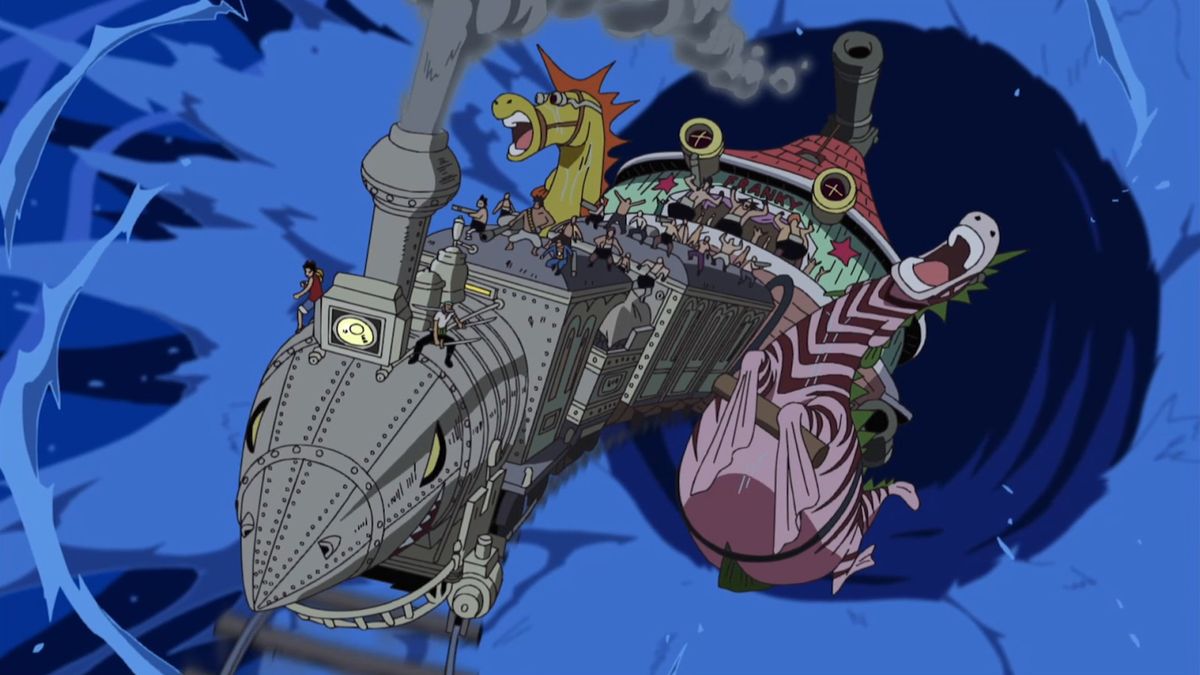
One Piece Episode 257 has Nami and Kokoro define one impossible job before Luffy and Zoro combine force to open a route through the wave.
Bottom line: Luffy and Zoro break the wave because Nami and Kokoro turn panic into one exact job
One Piece Episode 257 sends Rocketman toward a wall of Aqua Laguna large enough to erase the entire rescue before Enies Lobby sees them. The answer looks like raw power when Luffy and Zoro combine attacks, but strength is only the final step. Kokoro understands the train. Nami understands the storm. The passengers secure themselves and trust a plan that leaves almost no margin.
The captain and swordsman do not defeat weather. They create one temporary opening through a moving disaster so the train can keep following Robin. That difference gives the spectacle weight.
The official episode record
ONE PIECE.com lists Episode 257, “Smash the Wave! Luffy and Zoro’s Strongest Combo,” with a Japanese broadcast date of February 26, 2006. Hirohiko Kamisaka wrote the screenplay, Yukihiko Nakao directed, Masayuki Takagi served as animation director, and Miyuki Sato and Kunihiro Chida handled the credited art work.
The official title promises a combined attack, but the episode builds that moment through the wave’s scale, Rocketman’s limitations, and the cooperation required to place both fighters where their force can matter.
Aqua Laguna is not an opponent that can be intimidated
The storm has no pride, fear, loyalty, or interest in a dramatic challenge. Water moves because weather and geography push enormous volume across the rails. Calling the wave evil would make the danger smaller and less honest.
The rescue has to work with physical reality. Nobody can negotiate with the ocean or wait for the ocean to respect courage.
Nami recognizes danger before the strongest people understand the shape
Luffy and Zoro can see a huge wave. Nami can read movement, timing, pressure, and the relationship between Rocketman’s speed and the approaching water.
Her knowledge turns a terrifying image into a problem with a narrow response window. Navigation remains a combat skill whenever weather controls whether fighters reach the battlefield.
Kokoro knows what Rocketman can survive and what the prototype cannot correct
The train carries enough power to charge forward, but poor control means Kokoro cannot simply brake, reverse, or steer around the largest obstacle. Ocean rails remove most evasive options.
She has to commit the machine and trust passengers to change the condition ahead. Driving becomes coordination rather than solitary control.
The passengers cannot vote the wave into becoming smaller
Arguments about old grudges lose relevance when water fills the horizon. The coalition needs clear instructions, secured bodies, protected equipment, and people willing to perform assigned work.
Shared danger does not create friendship automatically. Shared danger creates a deadline for useful behavior.
Luffy approaches the wave as an obstruction between him and Robin
He does not need to hate the ocean. The wave occupies the route, and the route leads toward his crewmate. His emotional logic remains direct.
That directness becomes effective because Nami and Kokoro provide the practical frame. Without their judgment, determination could waste itself against the wrong part of the water.
Zoro supplies control to Luffy’s refusal
Luffy can produce extraordinary force, but Zoro understands timing, cutting pressure, stance, and the discipline required to align attacks. Their combination works because neither man performs the other’s role.
The scene celebrates partnership without turning two fighters into identical sources of power.
The combo requires trust built across ordinary crew life
Luffy and Zoro have fought beside each other since East Blue. They know how the other commits, how long a motion takes, and when hesitation would ruin the result.
That coordination cannot be invented inside one shout. Repeated battles, meals, arguments, and rescues built the instinct now used against the wave.
Two enormous attacks become one route rather than two performances
The point is not deciding who contributes more. Their force has to meet the same target at the same moment and create an opening wide enough for Rocketman.
Competition would be useless here. The ocean does not award style points before swallowing the train.
The wave-breaking moment earns spectacle through consequence
If Luffy and Zoro fail, the rescue coalition may die before reaching Puffing Tom. Robin and Franky continue toward Enies Lobby without the people behind them. Sanji and Usopp lose the support they expect from Water 7.
The attack looks huge because the stakes are already huge. Animation does not have to manufacture importance through light and noise alone.
Breaking one section does not mean the crew defeated Aqua Laguna
The storm continues around them. Water still strikes Rocketman, the rails remain dangerous, and the train has to pass through the opening before the sea closes again.
The distinction protects the world’s scale. Luffy and Zoro can overcome one immediate obstacle without becoming stronger than an entire weather system.
Rocketman carries the force through the opening faster than comfort allows
Kokoro cannot admire the attack for long. She has to keep speed, hold the rail, and trust the prototype not to turn success into a derailment.
The machine converts the fighters’ temporary path into actual distance gained toward Robin.
Nami’s plan succeeds because other people follow before certainty exists
No one can test the combined attack against a smaller practice wave. The coalition acts from expertise, history, and a shared understanding that waiting guarantees failure.
Trust under uncertainty is different from blind faith. Nami explains the condition, Kokoro confirms the machine’s need, and the fighters accept the assignment.
Chopper’s medical role becomes immediate after the impact
Force travels through bodies even when the plan works. Passengers slam against restraints, lose footing, and absorb the train’s violent motion.
Chopper checks injuries while the route continues. A successful maneuver can still leave damage requiring care.
The Franky Family sees Straw Hat strength used for someone besides the Straw Hats
Luffy and Zoro are protecting every passenger aboard Rocketman, including people who attacked Usopp and fought them in Water 7. Their power opens a path for Franky’s followers as well as Robin’s crew.
That evidence complicates the Family’s picture of pirates who destroyed their home only from revenge.
Galley-La workers witness pirates solving a structural problem with trust
Shipwrights understand that large forces require placement and coordination. They can appreciate the difference between uncontrolled destruction and a deliberate opening cut through pressure.
The combo resembles practical work at an impossible scale: identify the load, align effort, and clear the route before the structure fails.
The alliance gains confidence from surviving something none of them could solve alone
Nami could identify the opening but not create the force. Luffy and Zoro could attack but needed direction. Kokoro could drive but not remove the wave. The workers could secure the train but not steer the storm.
Survival becomes shared evidence that the coalition is more useful together than divided.
Robin’s sacrifice is answered by people combining risk instead of transferring risk
Robin tried to concentrate danger on herself so everyone else could live. Rocketman distributes danger among people who knowingly chose the rescue.
The wave makes that choice physical. Nobody can claim the passengers misunderstood the cost after watching an ocean wall rise over the train.
Franky’s family is learning the same lesson Tom taught through shipbuilding
A machine becomes meaningful through the people who build, maintain, operate, and depend on the machine. A family also survives through distributed work.
Franky protected the blueprints alone for years. His followers now prove they will carry part of the danger attached to protecting him.
Puffing Tom remains ahead, so victory cannot become a rest stop
The broken wave feels like a climax, but Enies Lobby is still in front of both trains. CP9 continues transporting Robin and Franky while Sanji works through the escort.
Rocketman’s passengers have to recover while moving. The deadline refuses a comfortable celebration.
Sanji’s advance work gives the wave battle a human destination
The crew is not racing through spectacular weather for a record. Sanji, Usopp, Franky, and Robin remain inside a government transport where every car creates another practical threat.
The people ahead keep the visual scale tied to specific relationships.
Usopp would understand the value of a combined attack better than his fear admits
His own fighting style depends on preparation, distance, timing, and using tools beside stronger allies. The wave combo follows the same principle at a larger scale.
No member has to match Luffy or Zoro physically to contribute to the rescue’s combined force.
The animation can stretch bodies and water without losing the emotional line
One Piece thrives when exaggerated movement serves clear intent. Luffy’s elasticity, Zoro’s cutting power, Rocketman’s wild speed, and the wave’s impossible height all point toward the same question: can they keep going?
The sequence remains readable because every excess has a job.
The gap in broadcast dates does not weaken the story’s urgency
The official record places Episode 256 on February 4 and Episode 257 on February 26, 2006. Whatever the real-world programming interval, the story resumes with Rocketman still inside the same pursuit.
The production has to restore momentum quickly, and the giant wave supplies an immediate physical reminder that the rescue never became safe.
The strongest combo is strong because the crew knows when not to use individual pride
Luffy and Zoro both enjoy proving themselves, and neither man enjoys being told an obstacle is too large. The wave demands alignment instead of competition.
Their willingness to combine force shows maturity through behavior. They do not need a speech about teamwork while Robin is getting farther away.
Yokozuna’s place beside the pursuit turns years of grief into forward motion
Yokozuna spent years challenging the sea train after watching Puffing Tom carry Tom away. The fights could never reverse the original departure. They repeated one desperate refusal against a machine that kept following its route, and the repetition turned grief into a habit everyone else treated as strange.
Rocketman gives the frog a different relationship to the rails. The rescue is not trying to punish a train for what happened years ago. The passengers are using Tom’s work to prevent another person from disappearing into the same government system. Movement finally points toward recovery rather than reenactment.
That shift does not cure Yokozuna or make Tom’s loss useful. The past supplies knowledge, loyalty, and anger to a present choice. Grief becomes one contributor among many instead of the only destination available.
The wave forces every passenger to decide whether the rescue still counts when death feels immediate
Boarding at the station allowed excitement, speeches, and the momentum of a crowd. The Aqua Laguna wall removes distance from consequence. Nobody aboard can treat Enies Lobby as a dramatic idea when the ocean may end the trip first.
The coalition stays. Franky Family members do not decide their boss is too expensive. Galley-La workers do not retreat into respectable caution. The Straw Hats do not accept Robin’s bargain after seeing what rejection costs. Kokoro keeps driving because stopping in front of the wave would not create safety.
The choice answers Robin more clearly than any promise made on calm ground. Her friends know the danger now. They have felt Rocketman shake beneath them and watched the storm fill the horizon. They still use every available skill to move closer.
That persistence is not a demand that Robin feel grateful for being pursued. The journey creates evidence she can evaluate herself: these people understood the threat, shared the risk willingly, and refused to let the government speak for their relationship again.
RaeRae verdict: Luffy and Zoro get the replay moment, but Nami and Kokoro make the moment possible
Episode 257 delivers exactly the giant anime spectacle promised by the title. Luffy and Zoro tear an opening through Aqua Laguna, Rocketman charges into the gap, and everybody aboard discovers how committed they really are.
I am not giving all the credit to the loudest attack. Nami reads the threat, Kokoro understands the machine, the passengers hold the train together, and Chopper handles the bodies afterward. Strength looks iconic because an entire rescue gives strength the right direction.