RaeRae Reacts · One Piece Episode 233
The Merry Verdict and Usopp Disappearance Arrive as Two Separate Emergencies
One Piece Episode 233 declares the Going Merry beyond repair while Usopp and two hundred million berries vanish into the Franky Family's hands.
Bottom line: the Merry’s verdict and Usopp’s disappearance arrive as two separate emergencies
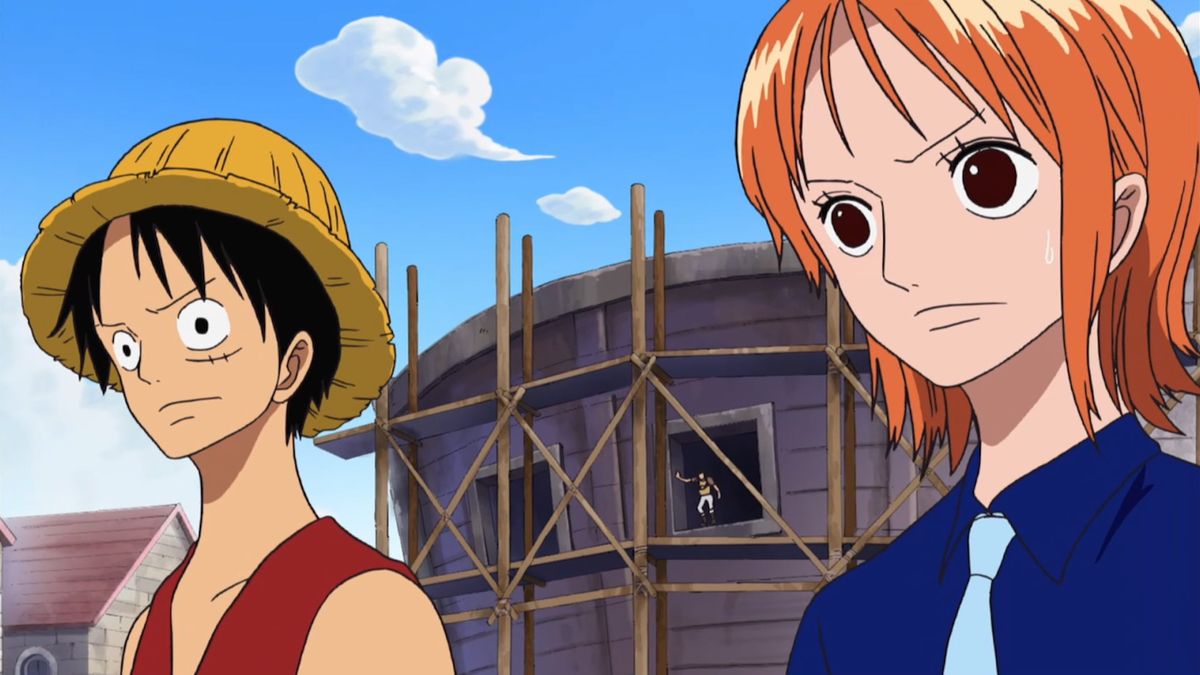
One Piece Episode 233 has Kaku return from inspecting the Going Merry and say the ship cannot be repaired. The keel is broken. The vessel is no longer a patient waiting for enough money. The same conversation reveals that Usopp and two hundred million berries have disappeared. Luffy receives grief and danger in one breath.
The episode’s cruelty comes from timing, not coincidence alone. Usopp is the crewmate most likely to hear the Merry’s verdict as a judgment on himself, and he is absent because thieves targeted him while he carried the repair fund. The crew cannot tell him the truth carefully. They must find him before understanding how badly he has already been hurt.
Episode facts: Kaku names the end of repair
Episode 233 aired in Japan on May 22, 2005 under the official title “The Pirate Kidnapping Incident and the Pirate Ship Awaiting Death.” Hirohiko Kamisaka wrote the screenplay, Hiroaki Miyamoto directed, Naoki Tate served as animation director, and Miyuki Sato with Tadami Shimokawa handled the art direction.
The official synopsis confirms that Kaku returns from the appraisal and says the Going Merry cannot be repaired. He describes the ship as joined timber waiting for death. Luffy loses composure. The crew expects Usopp to receive the worst shock, then discovers that he and two hundred million berries have vanished.
The keel changes the argument from cost to structure
A damaged sail can be replaced. A mast can be rebuilt. Hull planks can be patched. The keel organizes the vessel’s structural integrity. When that foundation fails beyond repair, adding better pieces elsewhere cannot restore the original ship’s ability to survive the sea.
That fact is exactly why three hundred million berries cannot purchase the desired answer. Money can buy labor and material within physical possibility. Money cannot make a broken foundation behave as though the damage never happened.
Kaku delivers professional truth without sharing the crew’s emotional language
Kaku sees a vessel at the end of usable life. Luffy sees a crewmate who carried them through storms, sky, deserts, attacks, and homecomings. Both descriptions refer to the same ship. They do not perform the same job.
Professional clarity requires naming risk. Emotional care requires understanding what the object means to the client. Kaku’s conclusion remains necessary even when his wording cuts. The crew cannot sail safely on a comforting lie.
Luffy’s panic is grief arriving before captaincy has found words
Luffy reacts because the verdict attacks his model of action. He can fight an enemy, pursue stolen money, find a doctor, or demand another round. A dead end in the Merry’s structure offers no body to punch and no hidden door to discover.
Captaincy still requires a decision. Luffy must protect living crewmates even when that protection means ending the voyage of the ship he loves. The responsibility arrives before he has processed the loss, which helps explain why his later conversation with Usopp becomes so damaging.
The Merry is a ship and a crewmate without contradiction
Calling the Merry a crewmate does not require pretending wood has human anatomy. The ship has carried labor, memory, personality, rescue, and reciprocal care. The Klabautermann experience in Skypiea gave form to a bond the crew already practiced.
Calling the Merry a ship does not reduce that bond. Ships face structural limits. Respecting the relationship may require refusing to force the vessel into a sea that will destroy her and everybody aboard. Love does not become stronger by denying material reality.
Usopp has treated every repair as proof that abandonment can be postponed
Usopp patched the Merry because somebody needed to work and because every successful repair delayed the feared conclusion. Each patch said the journey could continue. Repetition turned emergency labor into a promise he never had authority to guarantee.
Kaku’s verdict threatens more than the ship. The verdict tells Usopp that his skill, devotion, and vigilance cannot control the outcome. Shame will translate that limit into “I was never useful enough,” even though his labor brought the Merry to the only city qualified to assess her.
His disappearance reads differently once the crew notices the money
Usopp and two hundred million berries vanish together. From a distance, that combination could suggest theft, kidnapping, separation, or betrayal. The crew knows him well enough to reject the idea that he simply stole the repair fund.
The episode still lets uncertainty sharpen the search. Money attracts violence. Usopp’s absence becomes urgent because the cases reveal what his attackers likely wanted. His loyalty is not the question. His physical safety is.
The Franky Family attacks the person carrying the greatest emotional burden
The thieves target Usopp because he has the money and appears easier to isolate than Luffy, Zoro, or Sanji. They do not need to know that the cases represent his relationship with the Merry. Their ordinary criminal calculation lands on an extraordinary wound.
That mismatch makes the violence uglier. To the attackers, the robbery is a profitable job. To Usopp, losing the money confirms every fear about weakness, usefulness, and the ship’s survival. Predators do not need intimate knowledge to create intimate damage.
Being the weakest fighter does not make Usopp disposable
Usopp measures himself against monsters whose bodies can survive attacks he cannot. Water 7 pushes that comparison until he starts treating combat durability as the price of membership. The crew never established that rule.
He has navigated danger through invention, observation, lies, courage, repair, and impossible shots. Those contributions remain real even when a criminal group beats him. Victimization does not retroactively cancel competence.
The repair money becomes a weapon against his self-worth
Usopp believes the crew trusted him with the Merry’s future. Losing the cases therefore feels like losing the right to stand beside them. The emotional logic is false and painfully coherent.
Responsibility should be measured against reasonable control. A person assaulted by an organized group did not choose the theft. Usopp will deny himself that fairness because shame prefers a story where greater strength could have prevented everything.
Luffy must search for Usopp while carrying news that will break him
Rescue normally promises relief. Find the missing crewmate, stop the attacker, recover what remains, and return home. Here, home is the second crisis. Even if Usopp is found and the money recovered, the Merry’s verdict waits.
Luffy cannot offer the future Usopp expects as comfort. That constraint makes their next conversation dangerous. He will need to lead with care and clarity while angry, frightened, and grieving. Those are not conditions under which Luffy usually chooses language well.
Nami understands the financial loss and the larger structural loss
Nami fought to secure the correct value for the gold. Two hundred million berries disappearing matters. She also understands that no remaining sum changes Kaku’s assessment if the keel cannot be restored.
That double awareness places her between practical outrage and emotional truth. Recovering the money remains necessary because the crew needs another ship and supplies. Recovering the money cannot become a false promise to Usopp that the Merry will be saved.
Zoro sees the captain’s decision forming before the argument begins
Zoro understands hierarchy and the burden attached to command. Once a qualified shipwright says the vessel cannot continue safely, Luffy must decide for the whole crew. Refusing the decision would endanger everyone.
His clarity can look cold because he separates grief from responsibility faster than others. The separation does not mean he feels nothing. Zoro often protects the crew by naming the standard they will need after emotion makes the standard difficult to hold.
Sanji’s anger looks for a person because people can be kicked
The Franky Family gives Sanji a target for the part of the crisis that has a target. Usopp was attacked. Money was stolen. Somebody chose that violence and can receive a consequence.
The Merry’s damage offers no villain with a face. Years of travel, impact, strain, and inadequate repair accumulated into structural failure. Anger can energize rescue without solving grief.
Chopper faces an injured crewmate and a dying vessel at once
Chopper’s medical identity makes him sensitive to the difference between treatment and false hope. A doctor wants to save the patient. A responsible doctor must also recognize when a desired intervention cannot reverse the condition.
The Merry is not his biological patient, but the emotional structure resembles a terminal diagnosis. The crew wants another procedure. The specialist says further sailing will kill the ship and risk everybody aboard. Chopper knows compassion cannot be built from a lie.
Robin’s absence from the center keeps another fracture moving quietly
The crew’s attention turns toward Usopp and the Merry while Robin remains vulnerable to the World Government’s pressure. Multiple crises do not wait politely for one another to resolve.
That overlap is how Water 7 dismantles the crew’s confidence. A ship crisis, financial theft, physical assault, political pursuit, and hidden infiltration converge. No single victory can restore the earlier sense of control.
What changed when I separated the robbery from the ship’s verdict
Usopp emotionally combines the losses, and viewers can follow him into that fusion. The money did not determine whether the keel was repairable. The Franky Family did not cause years of accumulated structural damage. Kaku’s verdict would remain the same if every berry were safe.
Separating those facts does not reduce the pain. The separation reveals how shame creates false causality. Usopp needs somebody to blame, and his own body feels available. The arc becomes devastating because the wrong explanation answers an emotionally real need.
The episode’s language around a ship “waiting for death” is intentionally brutal
Kaku’s phrasing removes the fantasy that the Merry only needs a larger repair budget. The words sound cruel because the situation is cruel. A softer phrase could let Luffy postpone the decision until the sea makes the decision violently.
Brutal clarity should still be paired with care. The episode shows the verdict more strongly than the bedside manner. That imbalance pushes the crew toward conflict, but the core fact remains supported by professional inspection.
The episode’s weakness is leaving too little room between diagnosis and disappearance
The simultaneous revelations create powerful urgency, but the audience barely sits with the Merry’s condition before Usopp’s absence redirects attention. A quiet minute aboard the ship could have allowed each crewmate to react differently.
The compressed timing serves the arc’s breakdown. Nobody receives enough space to process one loss before the next arrives. I still wanted one longer beat with Luffy looking at the deck he must leave behind.
That missing pause also matters for Nami, Sanji, Chopper, Zoro, and Robin. The Merry belongs to all of them, but the coming argument will center Luffy and Usopp because their responsibilities collide most openly. A shared grief can become a two-person war when everybody else waits for the captain and the loudest dissenter to settle the meaning.
RaeRae verdict: doing everything right cannot guarantee the answer you came to buy
The crew brought the Merry to the world’s greatest shipbuilding city. They carried a fortune. They sought professional judgment. Usopp kept the vessel alive long enough to reach the yard. None of those efforts can rebuild a failed keel.
Episode 233 begins the hardest adult truth in Water 7: responsibility includes accepting limits that devotion cannot negotiate away. The tragedy is not that the crew failed to love the Merry. The tragedy is that love brought them far enough to hear an answer love cannot change.
Receipts and the route into Franky House
The official One Piece Episode 233 page supplies the May 22, 2005 broadcast date, Japanese title, synopsis, and production credits. The synopsis confirms Kaku’s unrepairable verdict, Luffy’s distress, and the discovery that Usopp disappeared with two hundred million berries.
Episode 234 follows Usopp’s solo attempt to recover the repair money, his second defeat, and the crew’s furious attack on Franky House. Continue through the planned Water 7 Arrival Episodes 229–236 shelf once unique canonical image generation resumes.