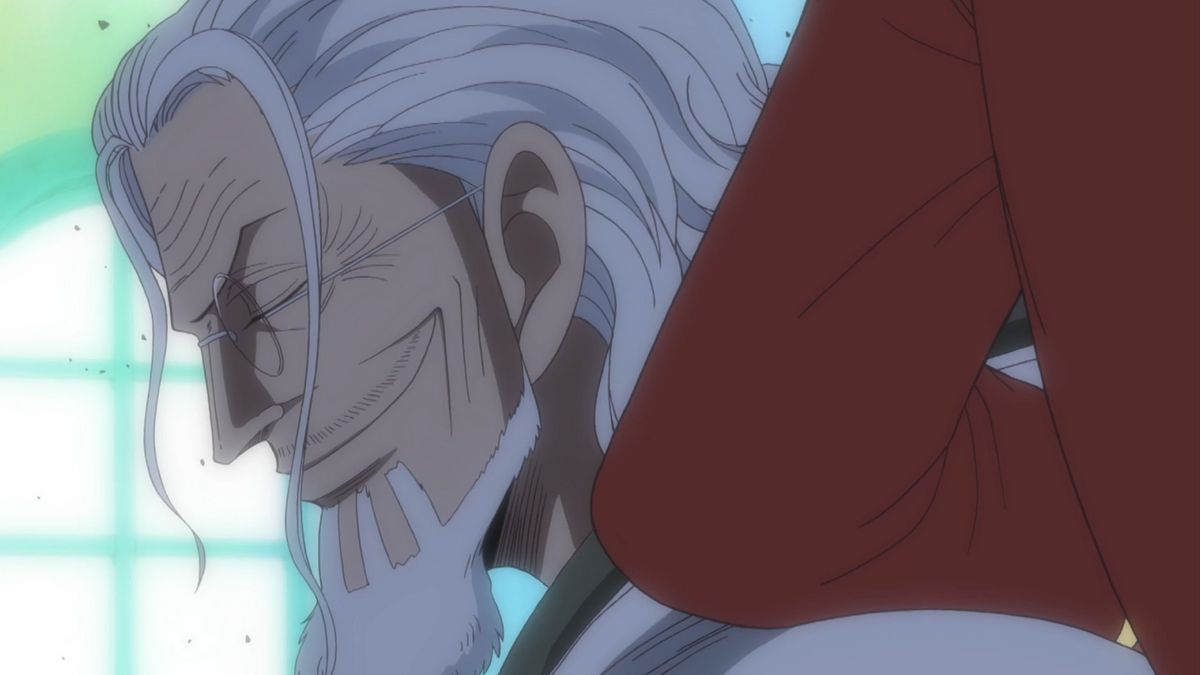
RaeRae Reacts · One Piece Episode 400
Luffy Refuses Rayleigh’s Answer Because Adventure Needs the Unknown
One Piece Episode 400 React follows Rayleigh revealing Roger’s surrender, Robin asking about the Void Century, and Luffy protecting the journey from spoilers.
One Piece Episode 400 React: Rayleigh reveals that Roger surrendered, Robin asks what the old crew knew about the Void Century, and Luffy stops Usopp from turning the One Piece into an answer somebody else can hand him.
What happened in Episode 400
At Shakky’s bar, Rayleigh identifies himself as the Roger Pirates’ former vice captain. He explains that Roger suffered from an incurable illness, completed the Grand Line, disbanded the crew, and surrendered rather than being captured. Robin asks whether they learned the Void Century. Rayleigh confirms knowledge but urges her to reach her own conclusion. When Usopp starts asking whether the One Piece exists, Luffy stops him and refuses an adventure built from borrowed answers. Rayleigh agrees to coat the Sunny over three days.
RaeRae’s opening receipt
Episode 400 puts the Pirate King’s right hand at a bar table and gives the Straw Hats access to answers fandoms would beg to hear. Then Luffy says no.
That refusal defines his dream more clearly than another victory. He wants freedom discovered through the voyage, not certainty purchased from a witness.
Rayleigh’s name rearranges the room
The coating mechanic becomes living history. Every casual gesture now belongs to somebody who stood beside Gol D. Roger.
Legend enters through a person who already proved his priorities by freeing Camie.
Roger was not captured
The government story frames the Pirate King as defeated by Marine power. Rayleigh says Roger surrendered.
One correction changes the meaning of the execution from institutional triumph to a final choice.
Illness placed a clock over the last voyage
Roger knew his body was failing. Crocus helped keep him alive long enough to complete the journey.
The race to the end came from mortality rather than simple conquest.
The Roger Pirates completed what nobody else could
They reached the final island and learned truths hidden from the world. Achievement did not make them owners of everyone who followed.
Rayleigh speaks from arrival without demanding worship.
The crew disbanded before the execution
Roger released his people and carried the final public act alone. The decision separated their lives from his sentence.
A captain’s ending did not require every crewmate to die beside him.
Surrender becomes control over the final stage
Roger chose when the government could place him in chains. Authorities gained his body without controlling the meaning he created.
The execution platform became a broadcast for the Great Pirate Era.
The government killed a man and amplified his dream
Roger’s last words sent countless people toward the sea. Public punishment produced the opposite of intended obedience.
Spectacle remains unstable when the condemned person controls the question everyone remembers.
Rayleigh speaks about Roger as a friend
History calls Roger a king, criminal, symbol, and catalyst. Rayleigh remembers a man with illness, plans, laughter, and impossible confidence.
Personal testimony returns texture to mythology.
Luffy listens without trying to imitate Roger
He shares a destination but does not ask for a script. Another captain’s route cannot become his adventure.
Inheritance works through possibility rather than duplication.
Robin asks the question her whole life built
The Void Century is not trivia for her. Ohara burned, scholars died, and the government hunted a child because of that history.
Her calm question carries every grave behind the words.
Rayleigh confirms knowledge without performing revelation
He could summarize the answer and become the center of Robin’s journey. Instead he acknowledges what the crew learned.
Confirmation matters while preserving Robin’s agency.
His warning respects differences in readiness
Rayleigh suggests that the Straw Hats may reach another conclusion after seeing the world themselves. Information alone cannot replace context.
Truth received too early can become somebody else’s interpretation.
Robin chooses the road over the shortcut
She does not force the answer once Rayleigh explains the cost of receiving history secondhand.
For a scholar, refusing immediate knowledge becomes an extraordinary act of faith in her own future.
Usopp asks the practical fandom question
He wants certainty that the treasure exists and the journey has a real destination. Fear makes the shortcut understandable.
The question is human precisely because Luffy’s answer must be absolute.
Luffy stops him before Rayleigh can answer
The captain would rather abandon piracy than pursue a treasure whose existence and location arrive as spoilers.
Adventure without uncertainty becomes an errand.
The refusal protects everybody’s choice
Usopp’s question could bind the whole crew to knowledge they did not request. Luffy interrupts because one answer would change every future island.
Leadership sometimes means defending uncertainty.
Luffy does not need proof to keep his promise
His dream survived ridicule, impossible enemies, and an ocean full of competing claims. External confirmation would add safety but remove discovery.
Faith becomes practice through continued sailing.
Rayleigh sees Roger in the quality of refusal
The resemblance does not depend on costume or copied words. Both men protect freedom through choices other people call unreasonable.
Legacy appears through temperament.
Nami still needs the coating details
Grand history does not remove the material problem of taking a ship beneath the sea. Somebody must explain time, process, and risk.
Dreams travel through logistics.
Three days creates a dangerous waiting period
The Sunny cannot leave immediately, and an admiral is hunting pirates across Sabaody. Coating requires the crew to disappear while Rayleigh works.
A practical timeline becomes the next suspense mechanism.
Rayleigh accepts the job because relationship already exists
Hatchan’s friendship, Camie’s rescue, and Luffy’s character connect the old legend to the young crew.
Help grows from witnessed values rather than destiny alone.
Shakky’s bar becomes a sanctuary for dangerous truth
Outside, Marines mobilize and nobles demand punishment. Inside, people discuss Roger, history, and freedom over drinks.
Small private spaces can preserve stories official institutions distort.
The episode slows down without losing pressure
Most action becomes conversation, yet every answer changes the world and every minute lets Kizaru move closer.
Stillness works because the threat remains active beyond the walls.
Roger’s execution and Luffy’s refusal mirror control over narrative
Roger turned a state spectacle into an invitation. Luffy prevents a witness from defining his adventure.
Both choices protect meaning from institutional or inherited ownership.
Robin’s restraint honors Ohara
The scholars pursued truth through evidence, language, and courageous inquiry. A complete answer handed across a table would bypass the work they defended.
Robin chooses to continue their method, not merely collect their conclusion.
The One Piece remains powerful because uncertainty survives
Rayleigh’s presence proves somebody reached the end, but the story protects what that ending means.
Mystery remains a relationship between evidence, faith, and desire.
This remains an episode React
This page responds to Rayleigh’s identity, Roger’s surrender, Robin’s Void Century question, Luffy’s refusal, and the Sunny’s coating plan. A series Review belongs on its dedicated record.
React classification keeps episode-level conversation separate from broader judgment.
The official local still remains canonical
The Episode 400 official still serves as featured image, hero, card, and social preview through one local WordPress attachment.
Complete metadata records source and context while unique use preserves the site’s visual filing standard.
RaeRae’s final receipt
Rayleigh offers the table everything: Roger’s final years, the government’s false victory story, confirmation that the last crew learned the world’s buried history, and access to whatever answer waits at the end.
Robin’s restraint moved me because knowledge has cost her nearly everyone. She still chooses to earn context rather than inherit another crew’s conclusion. Luffy’s refusal hits from another direction. He does not want proof that makes risk reasonable. He wants the sea, the friends, the mistakes, and the discovery.
Episode 400 turns uncertainty into something worth protecting. Roger controlled the meaning of his death by opening a question. Luffy protects the meaning of his life by refusing the answer. The Sunny needs three days of practical work. Outside the bar, Kizaru makes sure those days will not feel philosophical for long.
Rayleigh separates facts from understanding
He can provide names and outcomes. He cannot reproduce the journey that gave those facts meaning.
Wisdom recognizes the limits of transmission.
Robin’s question belongs to survival
History explains why Ohara was destroyed and why her existence became criminal.
Seeking truth remains a way of reclaiming a stolen life.
Usopp’s fear deserves compassion
He faces an admiral, impossible seas, and no guaranteed treasure. Certainty would make courage easier.
Luffy rejects the answer without shaming the fear behind the question.
The crew accepts Luffy’s boundary
Nobody insists on a vote after he protects the adventure’s central unknown.
Trust includes letting the captain define what Pirate King means to him.
Rayleigh enjoys the answer he does not give
The old pirate recognizes a familiar appetite for freedom. Silence becomes approval.
A mentor can support growth by withholding a shortcut.
The coating reminds viewers that expertise has many forms
Legendary combat power does not replace craft knowledge. Rayleigh also knows how to prepare a ship for impossible pressure.
Adventure depends on artisans as well as fighters.
Three days measures vulnerability
The crew must remain near the ship while avoiding the Marine search.
Waiting becomes dangerous because movement once supplied safety.
RaeRae’s extra receipt
Episode 400 could have emptied the mystery box and called revelation satisfying. The stronger choice is watching Luffy slam the lid closed because the box belongs at the end of a lived voyage.
Robin makes the same choice with more pain behind her. Rayleigh knows. She wants to know. Still, she walks forward. The story treats curiosity as sacred enough to protect from premature certainty.
Roger’s illness changes conquest into completion
He was not racing merely to stand above rivals. A failing body placed an ending ahead of him.
Urgency makes the final voyage intimate beneath the global legend.
Crocus belongs inside the Pirate King story
Medical skill gave Roger time that combat could not win. The strongest journey depended on care.
Support work becomes part of historical achievement.
Disbanding protects the crew from becoming a monument
Roger allows companions to scatter into separate lives. They remain people rather than permanent accessories to his death.
Leadership releases as well as gathers.
The execution created an audience the government could not control
Authorities owned the platform, schedule, and weapons. Roger owned the final invitation.
Control of infrastructure never guarantees control of meaning.
Rayleigh carries grief without freezing in the past
He remembers Roger and still builds a present with Shakky, coating work, and care for Hatchan.
Loyalty does not require life to stop after loss.
Robin protects her future self
A table answer would satisfy present hunger while stealing the person she could become through discovery.
Patience becomes confidence in her own scholarship.
Luffy protects the crew’s future reactions
He wants wonder, fear, disappointment, and joy to arrive through their own eyes. A spoiler would flatten those encounters before they happen.
The captain guards experience as shared treasure.
Usopp’s question proves the danger feels real
Only somebody frightened by the path needs proof that the destination justifies risk. His interruption grounds the legend in an ordinary survival instinct.
Courage can include wanting reassurance.
Rayleigh’s three-day estimate returns everyone to the body
Ships need resin. People need hiding places. Wounds need care. An admiral is close.
History cannot suspend material needs.
The bar conversation becomes a compact manifesto
Truth matters, but method matters. Dreams matter, but freedom defines how they are pursued.
Episode 400 explains the series by letting characters refuse easy answers.
The crew leaves the question alive together
Rayleigh could settle decades of rumor, and nobody forces him to continue. The room accepts uncertainty as part of the voyage they chose.
Shared restraint becomes another form of crew trust.
The scene also protects viewers from mistaking lore for the whole story. Facts about Roger and the Void Century matter enormously. The people deciding how to carry those facts matter too. Knowledge without choice would shrink the adventure rather than complete the world.
Refusing the answer keeps failure meaningful too
Luffy protects more than surprise. If the crew reaches the final island and finds something complicated, disappointing, or costly, that response will belong to them. Borrowed certainty would predetermine triumph before the sea gets a vote.
An adventure worthy of freedom must include the possibility of misunderstanding and change. Rayleigh respects that choice because Roger’s story also gained meaning through lived decisions rather than a guaranteed script.
The answer remains powerful because the crew leaves without taking possession
Rayleigh’s knowledge does not become a prize collected early. Robin and Luffy both choose relationship with the unknown over control. That decision lets every later discovery arrive with context, consequence, and their own judgment intact.