RaeRae Reacts · One Piece Episode 367
Robin Refuses the Straw Hat Docking Plan While the Crew Searches for a Way to Drop Oars
One Piece Episode 367 React treats Robin’s refusal as the clearest part of the crew docking gag while Zoro’s team tries to bring Oars down.
One Piece Episode 367 React: the crew tries to topple Oars through a human docking maneuver, and Robin refuses to surrender her dignity for a plan she never agreed to perform.
What happened in Episode 367
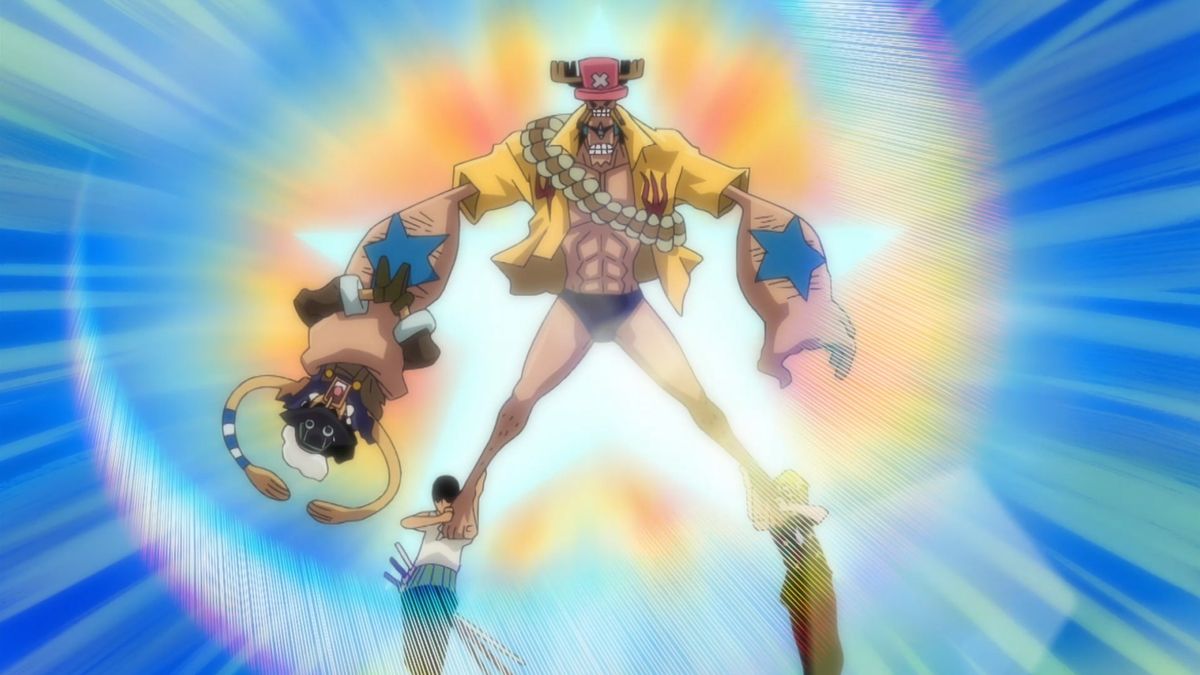
Zoro proposes a way to throw the giant. Sanji, Franky, and Chopper join the plan while Usopp panics and Robin declines, forcing the remaining crew to improvise another formation.
RaeRae’s opening receipt
A team plan still requires individual consent. Robin saying no does not make her disloyal; her refusal proves belonging never erased her boundaries.
Robin says no before the docking fantasy can become a crew obligation
Franky’s human formation is loud, urgent, and presented as teamwork. Robin still refuses. Her membership in the crew does not require participation in every idea somebody else announces.
The refusal is funny because her dignity meets maximal nonsense, and the refusal is meaningful because nobody owns her body for a group pose.
A team plan still needs individual consent
Oars is enormous and the crew genuinely needs a way to bring him down. Emergency does not automatically make every proposed use of another person’s body reasonable.
Robin can support the shared objective while rejecting one method.
Belonging did not erase the boundaries she fought to reclaim
Enies Lobby centered Robin finally declaring that she wanted to live and accepting rescue from people willing to honor that desire. Episode 367 lets the same woman exercise a smaller no without needing catastrophe to justify her choice.
Freedom matters in absurd moments as well as historic ones.
The crew’s response makes refusal survivable
Franky is disappointed, and the gag continues, but Robin is not expelled from the plan or accused of betraying the crew. The others improvise around her boundary.
Chosen family becomes credible when no can exist without threatening membership.
Robin knows embarrassment can be a real boundary
Her reason is direct: participating would be shameful as a human being. The danger does not make personal dignity imaginary. She decides which costs she will accept in combat.
A boundary need not satisfy everyone else’s seriousness test before becoming valid.
Franky imagines coordination through spectacle
His engineering brain sees bodies as parts of an improvised larger mechanism. The concept fits his love of transformation, posing, and visible teamwork.
The same imagination needs consent when the components are people rather than ship material.
Robin refuses to become a component
Hogback and Moria already treat bodies as pieces available for assembly. Franky’s docking idea is harmless comedy by comparison, but Robin’s response protects the distinction between playful cooperation and assumed access.
People can volunteer as parts of a stunt. They cannot be drafted by enthusiasm alone.
The gag lands because Robin remains perfectly herself
A sudden willingness to perform the pose would serve the joke while flattening her character. Her deadpan refusal preserves the woman who observes chaos, selects precise interventions, and rarely joins collective foolishness without purpose.
Character consistency becomes the punchline.
Usopp’s fear remains honest inside the absurd strategy meeting
Oars can crush the entire group, and Usopp understands that scale more immediately than anyone. His panic does not prevent him from joining efforts once the plan changes.
The crew carries fear, comedy, and tactical work at the same time.
Zoro proposes leverage instead of competing in raw scale
The goal is to throw a body far larger than any individual Straw Hat. Success requires position, force distribution, timing, and coordinated roles.
Strategy begins when the crew stops pretending one person can match Oars directly.
Sanji joins a ridiculous plan because the threat is real
His dignity has flexible limits when cooperation might protect the crew. Robin’s limit differs. Neither response creates a universal rule about what loyalty must look like.
Teamwork gains strength from negotiated difference rather than identical enthusiasm.
Chopper’s participation expresses trust
He accepts a place in Franky’s formation because the plan offers a way to contribute against a giant body. His smaller size becomes useful through arrangement.
Cooperation can expand capability when each participant agrees to the role.
Oars invents attacks Luffy never used
The Gum-Gum Butt Stomp carries Luffy’s naming rhythm and bodily imagination without being a move the captain developed. The stolen shadow generates variation inside a different body.
Appropriation can produce new output while remaining appropriation.
Moria did not copy a fixed library of techniques
Luffy’s shadow supplies instincts capable of creating under new physical conditions. Oars’s giant body changes which possibilities become imaginable.
The experiment is dangerous because stolen identity remains generative rather than static.
The crew fights creativity detached from care
Luffy’s improvisation usually thrills because he directs invention toward chosen fights and people he intends to protect. Oars applies similar playfulness without loyalty to anyone beneath him.
Creativity is not automatically benevolent.
A larger body changes the consequences of a joke
A ridiculous move from Luffy might disrupt a room. The same impulse from Oars can flatten architecture and bodies. Scale converts comedy into environmental danger.
Moria optimized force and ignored the social constraints that made Luffy’s chaos survivable.
The docking plan answers scale with collective imagination
The crew cannot become a giant physically, so Franky proposes performing the idea of one through coordinated bodies. The plan is gloriously unserious and tactically rooted.
One Piece lets play become strategy without demanding every character share the same appetite for play.
Robin’s refusal improves the plan by forcing adaptation
A method dependent on unwilling participation is already fragile. Once she declines, the crew must identify another configuration and distribute roles differently.
Good teamwork absorbs boundaries instead of treating boundaries as sabotage.
The joke refuses the myth that urgency cancels consent
Stories often allow emergencies to justify grabbing, moving, or assigning bodies without discussion. Episode 367 gives Robin enough space for a clear answer and keeps that answer intact.
The battle continues because consent did not stop cooperation; consent shaped cooperation.
Dignity can coexist with devotion
Robin is willing to risk her life for the Straw Hats. She remains unwilling to perform the docking pose. Extreme loyalty does not require surrendering every smaller preference.
A relationship strong enough for sacrifice should also be strong enough for boundaries.
Franky’s disappointment remains comic because he cannot override her
He desperately wants the completed formation and receives a flat refusal. The humor depends on the dream collapsing against another person’s autonomy.
If he forced participation, the scene would stop being charming nonsense.
The failed six-person plan does not mean collective action failed
The crew continues experimenting with combinations and attacks. One method is rejected; the shared goal survives.
Teams become resilient when disagreement changes a route rather than ending the mission.
Robin’s boundary contrasts with Moria’s entire project
Moria steals shadows, installs them in corpses, and commands bodies without asking. Robin says no to a harmless formation, and her crew adjusts.
The scale differs enormously, but the contrast clarifies what chosen participation looks like.
Oars embodies forced combination while the crew negotiates combination
His corpse, Luffy’s shadow, and Moria’s orders have been assembled through coercion. Franky’s docking depends on living people choosing to combine.
The episode places imposed assembly and voluntary cooperation in the same frame.
The most human part of the docking is the person who opts out
Franky imagines a perfect composite machine. Robin’s refusal reminds everyone that the proposed components have judgment, embarrassment, and independent will.
Human cooperation is messier than engineering because people remain people.
Episode 367 remains an episode React
This page responds to the crew’s plan to topple Oars, Robin refusing the human docking formation, and Oars producing an attack Luffy never used. A complete Thriller Bark Review belongs after the arc resolves those systems.
React classification preserves broadcast-level close reading and keeps whole-work Reviews distinct.
The official local still remains canonical
The Episode 367 still serves as featured image, hero, bounded-directory card, and social preview. One local attachment provides consistent recognition across every discovery route.
Complete source and accessibility metadata remain attached, and no other record reuses the image.
RaeRae’s final receipt
Episode 367 gives the crew a giant problem and Franky the most Franky answer imaginable: build a bigger fighter out of everybody standing nearby. Zoro, Sanji, Chopper, and Franky commit. Usopp panics. Robin looks at the proposed human docking and refuses because she still has standards, thank you very much.
That no is not disloyalty. Robin fought for the right to want her own life, and chosen family does not erase the right to decide what happens with her body in smaller moments. The crew adjusts. The mission survives. Across the battlefield, Oars is the opposite kind of combination: a corpse, stolen shadow, and master’s command forced together without consent. Franky’s plan can be ridiculous because participation remains voluntary. Moria’s creation is monstrous because choice was removed from every part. Robin refusing the pose is the most human beat in the entire giant-robot gag.
The joke works because Robin does not surrender the room
Robin does not need to shout, lecture, or leave the battlefield to make her boundary legible. She looks at Franky’s proposed formation, understands exactly what he wants, and declines. The scene trusts her composure. Everybody else may be vibrating at the frequency of Saturday-morning super robots, but Robin remains entirely herself. That contrast supplies the laugh without making her consent the price of belonging.
The distinction matters because a weaker version of the joke would punish the lone woman for refusing to play along. Episode 367 does not need that move. Franky is devastated in the exaggerated way only Franky can be devastated, the formation falls apart, and the crew keeps fighting. Robin neither apologizes nor gets pushed into compliance. Her no becomes part of the crew’s tactical reality, exactly as any other limitation would. They adapt because that is what an actual team does.
Chosen family still contains separate people
The Straw Hats are often celebrated as a found family, and rightly so, but the phrase can become sentimental wallpaper when treated as permission to erase individual edges. Robin’s refusal restores those edges. Loving a group does not require becoming available for every group impulse. Trust does not mean permanent access. Loyalty does not turn a person into equipment.
That makes the beat especially satisfying after Enies Lobby. The crew fought a government to insist that Robin’s desire mattered. Episode 367 quietly proves that principle survives outside the grand speech. Her preference still matters when the stakes are absurd and the request is played for comedy. Freedom that exists only during dramatic rescues is branding. Freedom that survives a ridiculous docking proposal is culture.
Oars exposes the nightmare version of combination
Across the battlefield, Oars is a body assembled into usefulness by force. A corpse is restored, Luffy’s shadow is inserted, and Moria treats the result as a controllable weapon. The giant’s movement can resemble Luffy, but resemblance cannot supply consent. Every recognizable gesture therefore carries a little theft inside the movement.
The new butt-stomp attack sharpens that theft because Oars is not merely replaying stored choreography. He can generate something Luffy never performed. Shadow, body, command, and situation combine into a fresh decision, even while the system claims ownership over the result. Thriller Bark keeps asking where a person resides when memory, motion, body, and will can be separated. Oars makes the question enormous enough to punch buildings.
Franky and Moria build for opposite reasons
Franky also thinks in components, but his best inventions protect the lives inside them. The Sunny is a home because the crew chooses to sail together. Docking remains ridiculous play because each participant can join or refuse. Moria’s creations reverse that ethic. Bodies and shadows are resources, identity is raw material, and obedience is the design requirement.
Putting both builders in one episode makes the comedy do thematic work. Franky wants a spectacular shape that expresses collective enthusiasm. Moria wants a spectacular weapon that concentrates his control. One plan collapses when a participant says no. The other plan exists because nobody was allowed to say no. That is the whole moral difference, delivered through robot poses and a zombie giant.
The crew’s failed plan still reveals progress
They do not defeat Oars here, but the attempt is not empty motion. Zoro identifies the need for a coordinated answer. Sanji, Chopper, Franky, and the others commit to testing one. Even the failed formation gives them information about scale, timing, and the giant’s response. Thriller Bark’s crew battles work because failure becomes research instead of a cue for despair.
That rhythm also keeps the absent captain from turning everybody else into placeholders. Luffy remains necessary, but the Straw Hats do not simply wait for him to return. They make decisions, embarrass themselves, protect one another, and force Oars to react. Episode 367 lets the crew be a crew rather than an audience for the protagonist.
The final RaeRae verdict
Episode 367 is giant-monster nonsense with an unexpectedly firm spine. Robin refuses to become a human robot part, the story accepts her answer, and the battle moves forward. Meanwhile Oars demonstrates exactly what happens when bodies and identities are treated as parts that cannot refuse. The episode never stops being funny, but the joke knows where the person is.
That is my favorite kind of One Piece construction: loud enough for a child to enjoy the pose, precise enough for an adult to notice the ethics underneath the spectacle. Franky can keep the dream. Robin can keep her dignity. The crew can keep fighting. Moria, naturally, can keep collecting evidence for his eventual invoice.