RaeRae Reacts · One Piece Episode 353
The Crew Finds Three Stolen Shadows While Absalom Dresses an Unconscious Nami as a Bride
One Piece Episode 353 React brings the crew back to Sunny, where Luffy, Zoro, and Sanji lie shadowless while Absalom prepares a coerced wedding.
What happens
Franky, Robin, Usopp, and Chopper return to Sunny and find Luffy, Zoro, and Sanji delivered there without their shadows. Nami remains unconscious after Absalom abducts her and changes her into a wedding dress without consent. The crew begins planning recovery while Brook’s promise waits for explanation.
RaeRae reacts
A wedding dress does not create a wedding. Absalom has changed an unconscious woman’s clothes and staged a ceremony around a choice she never made. The crew’s rescue plan must return Nami’s bodily authority as surely as the shadow plan returns stolen identity.
Canon note
Episode 353 continues the manga-canon Thriller Bark Arc.
The Sunny becomes a triage room for stolen selves
Franky, Robin, Usopp, and Chopper return to the ship expecting shelter and find a crisis inventory instead. Luffy, Zoro, and Sanji are present physically, yet all three have been stripped of the shadows that let them exist beneath the sun. The bodies on deck turn Moria’s crime from haunted-house rumor into evidence the crew can touch.
The Sunny usually represents movement, chosen family, and the freedom to leave. Here the ship briefly becomes a place where stolen people must be assessed before anyone can move forward.
Three unconscious fighters make absence visible
Luffy, Zoro, and Sanji are among the crew’s loudest sources of momentum. Seeing all three silent at once creates a vacancy larger than the number of bodies. Their recognizable faces remain while essential parts of their lives have been transferred elsewhere.
Episode 353 understands that violation does not require disappearance. A person can remain in the room while an enemy controls the conditions under which that person may safely live.
Shadow theft is environmental imprisonment
Moria does not need chains once sunlight can erase his victims. Taking a shadow redraws the world around the victim. Day becomes a border, open sky becomes a threat, and ordinary travel becomes conditional.
The cruelty reaches beyond combat power. Luffy’s sea, Zoro’s road, and Sanji’s search for the All Blue all depend upon movement through daylight. Their stolen shadows attack the futures each man chose.
The crew responds by naming every problem
Panic would be understandable, but the returning group begins sorting facts: three shadows are gone, Nami is missing, zombies carry the stolen material, and dawn will eventually turn restriction into annihilation. Clear naming becomes the first form of resistance.
One Piece repeatedly makes information a crew resource. Strength matters, but survival also depends on the person who notices the mechanism and shares the truth quickly enough for everyone else to act.
Nami’s absence refuses to become a secondary concern
The shadow crisis could swallow the entire episode, yet Nami’s kidnapping remains urgent. She is not treated as an optional rescue after the stronger fighters recover. Her absence changes the plan immediately.
That priority matters because Thriller Bark surrounds Nami with men who repeatedly treat her wishes as disposable. Her crew must answer by treating her personhood as nonnegotiable.
Absalom’s wedding costume is evidence of coercion
Absalom dresses an unconscious Nami as a bride and stages a ceremony around a consent he never received. The dress cannot turn captivity into romance. Decorative language cannot cleanse an assault on autonomy.
Episode 353 makes the contrast ugly on purpose. Wedding imagery usually announces mutual choice; Absalom uses the imagery to conceal that only one person is making decisions. The costume becomes part of the violation.
Unconsciousness cannot be mistaken for agreement
Nami cannot speak, leave, or refuse while unconscious. Absalom exploits that inability and invents the answer he wants. No amount of ceremony changes the absence of consent.
The distinction should remain blunt because the story’s comedy and fantasy trappings can otherwise soften what is happening. A person unable to answer has not said yes. Absalom’s plan depends upon ignoring that basic fact.
Possession is the language connecting Absalom and Moria
Moria treats shadows as detachable property. Absalom treats Nami’s body and future as possessions available for arrangement. Their methods differ, but both men convert a person into material for somebody else’s desire.
Thriller Bark’s monsters therefore share more than a spooky address. Their authority rests on the claim that wanting control creates a right to exercise control. The Straw Hats oppose the claim through rescue and restoration.
The bridal image does not belong to Absalom
Absalom tries to author the meaning of Nami’s appearance by placing her in a dress and declaring a role. The image still cannot make his story true. Nami remains a kidnapped navigator whose choices have been suppressed.
Clothing can signal a performance without establishing identity. Episode 353 asks viewers to look past the staged surface and keep the power relationship in focus.
Sanji’s stolen shadow and Nami’s kidnapping create divided urgency
Sanji is one of the people who would charge toward Nami without hesitation, yet he lies unconscious and shadowless while she is carried farther away. The arrangement removes a likely rescuer at the exact moment rescue becomes necessary.
Moria’s operation succeeds through coordination even when his subordinates act for selfish reasons. Every theft weakens the crew’s ability to answer the next violation.
Franky brings construction logic to catastrophe
Franky reads broken situations as things that can be rebuilt through parts, sequence, and labor. That instinct helps turn the Sunny discovery into an actionable problem rather than a shrine to helplessness.
His role is not limited to repairing wood. A shipwright thinks about what must hold, what can move, and where pressure will land. Those habits support a crew trying to restore three shadows and retrieve a missing friend before time closes.
Robin watches systems rather than isolated scares
Robin has spent a lifetime recognizing institutions that erase people while maintaining respectable language around the erasure. Thriller Bark’s theatrical horror does not hide the structure from her. Zombies, stolen shadows, and coerced bodies belong to the same machinery of control.
Her steadiness helps the episode widen. Each grotesque discovery is not random. Every discovery leads back toward an organization built to make other lives useful to Moria.
Chopper confronts medicine without care
Chopper entered the island admiring Hogback’s reputation, but the bodies around him reveal technique separated from ethical duty. Creating movement in a corpse does not equal restoring the person who died. Medical brilliance cannot excuse using bodies as inventory.
The shadowless men aboard the Sunny sharpen that lesson. Bodies require protection of agency, not merely technical manipulation. Hogback’s achievement serves domination, while Chopper’s practice begins with the patient.
Usopp survives long enough to become essential
Usopp’s fear never prevents him from gathering information or returning to the people who need that information. The series keeps refusing the easy equation between visible confidence and usefulness.
Episode 353 needs the survivor who can describe the impossible rules. Usopp’s anxious attention records threats that a more confident fighter might dismiss until too late.
The rescue plan restores crew shape before strength
The Straw Hats do not merely need three heavy hitters awake. They need their captain, swordsman, cook, and navigator returned to the positions each chose within the family. The problem is relational before the problem is tactical.
That difference keeps the story from reducing friendship to combat statistics. Every member changes how the crew thinks, travels, eats, argues, celebrates, and survives.
Dawn gives the plan an unforgiving clock
Shadowless bodies can remain alive only while sunlight stays away. The island’s darkness feels protective for a moment, yet the protection has an expiration time. Morning will convert captivity into death.
A countdown makes delay an action with consequences. The crew cannot wait for perfect information or a clean formation. They must move with the knowledge available and repair the plan while moving.
Thriller Bark weaponizes the ordinary world
Sunrise should promise relief after a night of monsters. Moria turns sunrise into the most dangerous event on the horizon. The inversion makes his power feel invasive because the entire natural cycle now enforces his theft.
Returning shadows means reclaiming more than silhouettes. Restoration gives victims access to morning, travel, and the ordinary world Moria converted into a prison.
Nami’s navigation makes forced immobility especially cruel
Nami built her freedom around reading routes and deciding where the ship can go. Absalom removes movement and tries to assign her a permanent role in his private fantasy. The kidnapping attacks the defining labor through which she directs collective movement.
Rescuing Nami therefore restores a decision-maker, not a prize. The crew needs the person who charts paths because she belongs with them and because those paths are hers to choose.
The episode refuses one single victim hierarchy
Three stolen shadows are catastrophic. Nami’s abduction is catastrophic. Brook’s unresolved theft remains catastrophic. The story does not require the crew to decide whose violation is worthy before acting.
Instead, different members take responsibility for different fronts. Shared purpose becomes the only way to answer a system capable of harming several people at once.
Rescue is not ownership changing hands
The Straw Hats do not oppose Absalom because Nami belongs to them instead. They oppose him because Nami belongs to herself and has repeatedly chosen her place aboard their ship. Chosen relationship creates duties without creating possession.
That is the moral divide Absalom cannot understand. Love and loyalty listen for another person’s will; possession writes over that will.
The empty response from Luffy changes the room
Luffy usually decides direction through immediate appetite and conviction. His silence forces the others to carry initiative before their captain can resume command. The crew proves that leadership has produced capable participants rather than dependent followers.
They act for Luffy without pretending to replace him. That balance shows a family strong enough to hold shape during temporary absence.
Zoro’s stillness signals a stolen contest
Zoro pursues difficulty willingly and defines himself through chosen confrontation. Shadow theft bypasses that choice, transferring part of him into an enemy’s system while his body cannot answer.
The violation is especially pointed for a swordsman whose discipline depends on ownership of every movement. Recovery must return both agency and the right to choose the next fight.
Sanji’s silence cannot protect Nami
Sanji’s devotion often arrives loudly, sometimes too loudly, but Episode 353 removes even his capacity to respond. The gap exposes why a crew cannot rely on one designated rescuer whenever a woman is threatened.
Nami’s safety is a collective concern. The others must move because friendship distributes responsibility beyond personality roles.
The Sunny holds proof that the crew can be violated at home
Reaching the ship usually means reaching safety. Finding three shadowless friends aboard demonstrates that no physical location can substitute for confronting Moria’s control. The enemy’s reach has crossed the boundary of home.
That discovery raises the emotional cost of Thriller Bark. The crew must reclaim not only people but confidence that their shared space can shelter them again.
Information turns horror into a route
Once the returning crew connects bodies, shadows, zombies, Nami’s location, and the approaching dawn, the island stops being an unknowable maze. Danger remains enormous, but danger gains direction.
A route does not promise safety. A route gives fear somewhere productive to go. The crew can assign movement toward Moria, Absalom, Hogback, and the stolen shadows.
Episode 353 is a React, not a Thriller Bark Review
This page stays with the broadcast unit: the Sunny discovery, three missing shadows, Nami’s coerced bridal staging, and the decision to divide rescue work. A full arc Review belongs after the larger conflict completes its arguments and consequences.
Keeping episode response inside Reacts preserves the site’s distinction between immediate close reading and whole-work judgment.
The official still remains the single visual identity
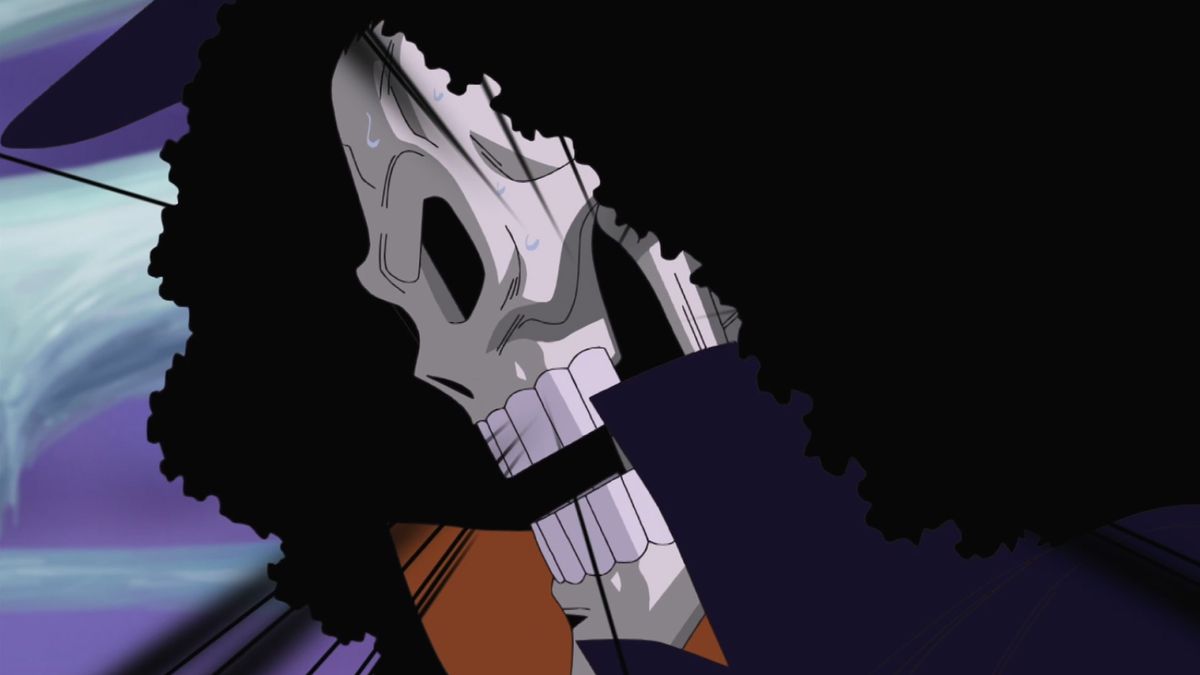
The local Episode 353 image serves as featured image, hero, directory card, and social preview. Readers encounter one truthful visual identity whether they arrive through the hub, the React directory, search, or a shared link.
Complete source and accessibility metadata travel with the local attachment, and no other post reuses the image.
RaeRae’s final receipt
Episode 353 walks back onto the Sunny and refuses to let home mean safety by default. Luffy, Zoro, and Sanji are lying there with their bodies intact and their futures under somebody else’s control. Daylight can kill them because Moria decided their shadows were resources. Nami is gone because Absalom decided her unconscious body could be dressed, staged, and assigned a marriage she never chose. Those crimes belong in the same conversation. Both villains treat personhood as an inconvenience between desire and possession.
The crew’s answer is not prettier language. Franky, Robin, Usopp, and Chopper gather facts, hold multiple emergencies at once, and begin assigning routes. They do not rescue Nami as property changing hands. They move because her choices matter and captivity has silenced those choices. They do not restore Luffy, Zoro, and Sanji merely to recover fighting power. They restore the captain, swordsman, and cook whose chosen lives require sunlight and movement. Dawn is coming, the team is incomplete, and no perfect plan will arrive first. Friendship becomes useful because everybody present accepts responsibility before certainty.