RaeRae Reacts · One Piece Episode 346
Sanji and Zoro Vanish as the General Zombies Refuse to Stay Down
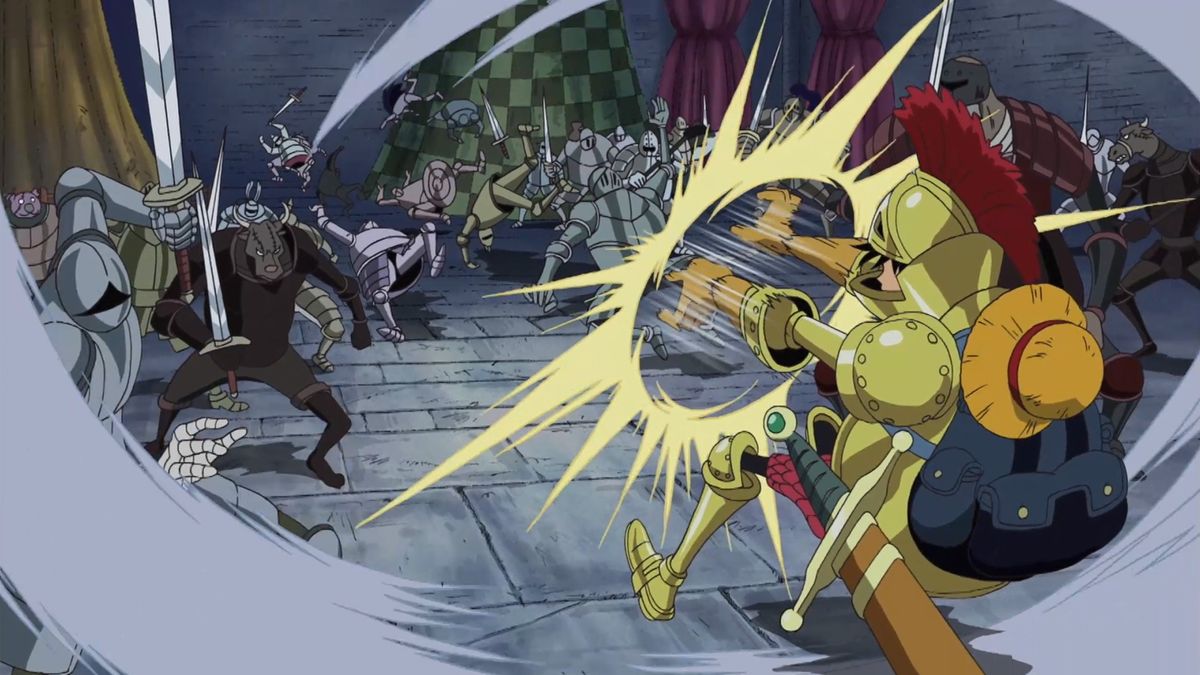
One Piece Episode 346 React leaves Luffy, Robin, and Franky facing General Zombies after Sanji and Zoro disappear without explanation.
What happens
Luffy’s group defeats the surprise zombies, then discovers Sanji and Zoro have vanished. With only Luffy, Robin, and Franky still together, General Zombies rise again and again while a mysterious swordsman enters the widening fight.
RaeRae reacts
Disappearance becomes scarier than direct combat because strength cannot protect a crewmate nobody can locate. Thriller Bark keeps converting separation into access. Every missing person is evidence that the enemy’s system works between battles, not only during them.
Canon note
Episode 346 continues the manga-canon Thriller Bark Arc.
The Surprise Zombies fall too easily to explain the real danger
Luffy’s group can overwhelm visible attackers. The quick victory confirms that Thriller Bark will not defeat these fighters through ordinary force alone.
The island’s advantage lies in concealment, separation, extraction, and bodies that do not obey familiar limits.
Sanji disappears between moments of apparent control
Nobody sees a fair fight or receives a chance to intervene. One crewmate is simply absent. The lack of visible cause makes strength difficult to apply.
Disappearance attacks the crew’s information before attacking their bodies.
Zoro’s disappearance confirms a system rather than an accident
Losing one person could be confusion in fog. Losing two exceptional fighters from the same group points toward deliberate capture.
Thriller Bark removes the people most capable of resisting physical restraint without offering the remaining crew a target.
Combat reputation cannot protect someone from an unseen mechanism
Zoro and Sanji can defeat opponents they identify. The island arranges encounters where identification arrives too late or not at all.
Power depends on access to the problem. Moria’s organization controls access.
Luffy is left with Robin and Franky
The trio remains formidable, but the emotional fact is loss of contact. Their friends may be injured, captured, or undergoing shadow extraction while the survivors still lack an explanation.
Urgency comes from uncertainty rather than a confirmed wound.
Robin understands disappearance as a political tactic
Institutions have erased people, histories, and evidence throughout her life. A person vanishing without witnesses does not feel like supernatural randomness to her.
Robin watches for who benefits when the group no longer knows where its strongest defenders went.
Franky recognizes a security failure around the crew’s movement
Sunny’s systems cannot help friends separated deep inside an enemy-controlled environment. Engineering expanded the crew’s options, but architecture has now divided them from their tools.
Franky’s strength must work beside observation and coordination.
Luffy’s instinct is to move forward rather than freeze
He cannot accept disappearance as a reason to retreat while the missing people remain inside. The choice risks further separation, yet waiting would leave the enemy uninterrupted.
His captaincy repeatedly treats finding a crewmate as the route, not a distraction from the route.
The General Zombies refuse the finality ordinary combat expects
Fighters fall and rise again because stolen shadows animate bodies prepared to endure. A successful strike solves position without solving mechanism.
The crew must learn what releases a shadow rather than spending endless strength on symptoms.
Persistence gives Moria’s army an economic advantage
Every repeated attack consumes the Straw Hats’ time and energy. The zombies can return while commanders pursue capture elsewhere.
Regeneration turns even a losing soldier into useful delay.
The zombie body is both victim and weapon
Destroying the attacker may damage a corpse used without consent while leaving the living shadow donor trapped. Hesitation can endanger the crew; indiscriminate force can ignore the people inside the system.
Thriller Bark complicates battle without making self-defense illegitimate.
A mysterious swordsman raises the problem of stolen skill
The new fighter’s technique cannot be evaluated separately from the shadow system already revealed through Ryuma. Swordsmanship may belong partly to a person absent from the body performing the technique.
The island turns mastery into evidence of possible theft.
Zoro’s disappearance makes every swordsman feel connected
The crew does not know whether the new figure caused his absence, replaced him, or represents another part of Moria’s army. Visual similarity in weapon choice creates immediate anxiety.
The episode uses uncertainty rather than confirmation to keep the threat open.
Sanji’s removal also isolates Nami from one determined protector
His behavior around women often becomes comic excess, but his absence has tactical consequences while Absalom targets Nami. The enemy has removed somebody likely to pursue the assault aggressively.
Separation strengthens coercion by reducing available support.
Zoro’s removal weakens the crew’s ability to hold a front line
His endurance and discipline usually stabilize chaotic fights. Without him, General Zombies can keep pressure on the remaining group while other officers move unseen.
The disappearance functions as strategic disarmament even before the crew learns what happened.
Moria’s system harvests strength instead of merely neutralizing strength
Capturing Zoro or Sanji would remove a threat. Taking their shadows could also create powerful zombies. The enemy turns resistance into potential supply.
That incentive explains why the island prefers capture and concealment to straightforward killing.
The Straw Hats’ bodies become valuable because of lives they chose
Training, promises, battles, and relationships produced their abilities. Moria’s extraction model treats the resulting strength as detachable property.
Stealing a shadow ignores the history through which skill became meaningful.
Disappearance makes the crew experience the victims’ invisibility
The injured survivors have been forced out of daylight and public view. Now Zoro and Sanji vanish from their friends’ immediate world.
The episode lets the crew feel how quickly a person can become inaccessible when the offender controls conditions of visibility.
The remaining trio must resist panic without pretending certainty
They know something deliberate is happening, but they cannot name every method yet. Responsible action means admitting the evidence gap while continuing to search.
Confidence becomes useful only when paired with willingness to revise the plan.
General Zombie strength reveals why Moria values shadows
Prepared corpses can keep fighting, but behavior and combat capacity depend on what has been inserted. Strong donors increase the army’s usefulness.
The Straw Hats represent an unusually rich target because every crewmate carries specialized ability.
The fight becomes an intelligence problem
Who captured Sanji? When did Zoro disappear? What makes a zombie stop? Where are the missing shadows stored? Each answer matters more than the next individual knockout.
The arc rewards characters capable of connecting evidence across separated routes.
Robin’s knowledge work becomes as important as Luffy’s force
Luffy can break barriers after the correct barrier is identified. Robin notices structures, language, and relationships that reveal where force should be directed.
Their partnership keeps action from becoming endless repetition against replaceable bodies.
Franky’s constructed body offers a moral counterexample
He uses modifications he chose to survive and protect people. The General Zombies use bodies assembled by somebody else under imposed command.
Agency separates self-directed transformation from Hogback’s production line.
The episode escalates without requiring a stronger punch
Removing Zoro and Sanji raises stakes more effectively than introducing one opponent with a larger attack. The crew loses information, coordination, and confidence in the space around them.
Threat grows through control of relationships.
The mysterious swordsman embodies a question before becoming a character
Viewers are asked to wonder whose body, shadow, and orders converge in the figure. Thriller Bark trains us to resist treating a moving body as a complete identity.
Every new zombie should be read as a composite with missing consent.
Episode 346 remains an episode React
The article responds to Sanji and Zoro disappearing, Luffy’s reduced group, persistent General Zombies, and the mysterious swordsman. A whole Thriller Bark Review must judge the completed conflict later.
Correct content type keeps this broadcast response in Reacts rather than Reviews.
The official image remains the canonical visual
The locally stored Episode 346 story image serves as featured image, hero, directory card, and social preview. Every entry point carries the same episode-specific identity.
Complete metadata records the source, and no other post reuses the asset.
RaeRae’s final receipt
Episode 346 proves that the strongest person in the room cannot punch a kidnapping nobody saw happen. Sanji disappears. Then Zoro disappears. The crew receives no fair duel, clean warning, or visible mechanism, because Thriller Bark is built to control access before combat begins. By the time Luffy, Robin, and Franky recognize the pattern, two powerful shadows may already be moving toward Moria’s inventory.
The General Zombies make the lesson louder by refusing to stay down. Beating a stolen body does not release the stolen shadow or dismantle the production line. Robin’s ability to read systems and Franky’s understanding of constructed bodies matter as much as Luffy’s force because the crew needs the correct target, not another dramatic knockout. The mysterious swordsman carries the same unsettling question Ryuma introduced: whose history is being performed through that body? Thriller Bark takes friends out of sight, takes skills out of context, and makes every absence useful to the people in command. The episode’s threat is not that Zoro and Sanji became weak. The threat is that strength itself became something the enemy intends to steal.
The crew cannot protect what the island keeps unlocatable
Every Straw Hat relationship depends on the ability to find one another again after separation. Thriller Bark attacks that promise by turning rooms, fog, and invisible movement into barriers between friends. Sanji and Zoro remain capable people while missing. Their agency has been interrupted through access rather than erased through weakness.
The remaining trio must rebuild connection before rescue can become physical.
Absence creates a race against an unseen procedure
The audience already knows shadows can be extracted and implanted into prepared corpses. Every minute without Zoro and Sanji therefore carries a specific possibility. Capture is not a static condition. Moria’s production line may be changing what their strength will do next.
Suspense comes from knowing the process while lacking proof of its current stage.
A stolen shadow creates a hostile version of legacy
Zoro wants his swordsmanship to fulfill a promise. Sanji uses strength to protect a dream, feed people, and defend friends. Moria would detach those abilities from purpose and make them serve an army.
Theft becomes an attempt to preserve skill while murdering context.
The crew needs a counter-system rather than five separate rescues
Finding Nami’s group, recovering Brook’s shadow, locating Zoro and Sanji, freeing Sunny, and restoring other victims may look like different objectives. Every route leads back to the same architecture of capture.
Understanding that unity prevents Moria from exhausting them through emergencies treated as unrelated.
General Zombies reveal the limit of spectacular victories
A dramatic finishing move can satisfy the moment while leaving production untouched. Moria’s command structure expects heroes to spend energy on bodies capable of rising again.
The episode asks a question larger than who hits hardest: who can identify the dependency that makes repeated force possible?
Disappearance also tests whether the crew trusts absent members
Luffy cannot see what Zoro or Sanji are doing, but he knows neither chose to abandon the group. Trust keeps uncertainty from becoming suspicion.
Thriller Bark can separate bodies more easily than the island can rewrite relationships built through shared choices.
The next fight must recover people, not only territory
Sunny and the island’s exits matter, yet freedom means little if crewmates and victims remain divided from their shadows. The crew’s destination-first objective is human restoration.
Episode 346 leaves that objective unresolved on purpose, using two empty spaces in the group to make the cost impossible to ignore.
Trust keeps absence from becoming abandonment
Zoro and Sanji vanish without explanation, yet Luffy does not interpret the empty spaces as betrayal. Shared history provides evidence stronger than the island’s confusion. The crew knows who chose them before Moria began controlling where anybody could be seen.
That trust protects identity while shadows are treated as transferable material.
The enemy can copy ability without copying belonging
A zombie animated by Zoro or Sanji’s shadow might reproduce strength, habits, or reflexes. Moria cannot manufacture the relationships that taught those abilities where to turn. The crew’s power includes chosen loyalty, and that loyalty remains outside the extraction process.
The missing fighters also force Luffy to lead without the reassurance of his usual front line. Robin and Franky bring different forms of strength, and the trio must turn incomplete evidence into a route toward their friends. Rescue begins by refusing to let absence become the final version of who belongs on the crew.
The search continues because chosen family does not accept disappearance as an ending.