RaeRae Reacts · One Piece Episode 326
The Phoenix Pirates Turn Sunny’s First Rescue Into a Drugged Trap
One Piece Episode 326 React explores the Thousand Sunny, Chopper and Sanji’s hospitality, and the Phoenix Pirates’ anime-original betrayal.
What happens
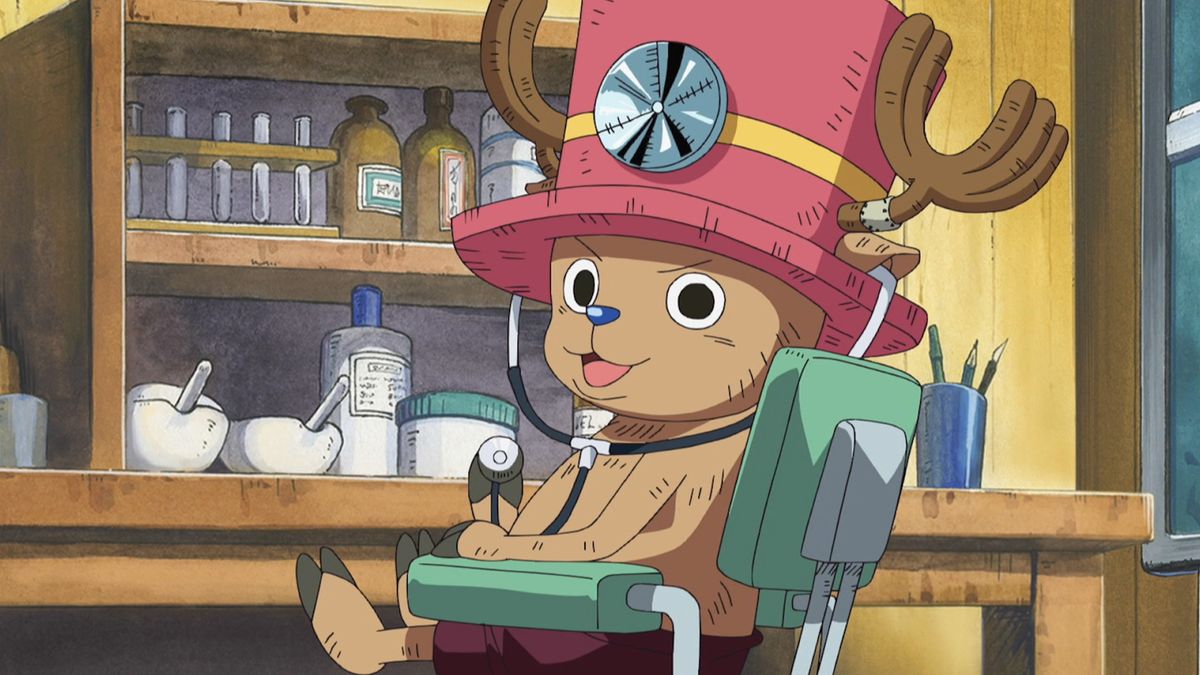
The Straw Hats explore the Thousand Sunny’s bath, aquarium, sickbay, and other new spaces before finding the stranded Phoenix Pirates. Chopper treats the injured captain Puzzle, and Sanji feeds the hungry crew. Stansen repays that hospitality with drugged alcohol, exposing the distress call as a trap connected to bounty hunters.
RaeRae reacts
The anime-original arc begins with the Sunny functioning as a home rather than a reward parked in the background. That domestic joy makes the betrayal sting. Chopper and Sanji respond to apparent need through care, so the trap exploits the crew’s ethics instead of their stupidity. Hospitality remains right even when another person chooses deception.
Canon note
Episode 326 is anime-original material. The episode belongs in the React directory because filler still shapes the television viewing experience, but no reader should be told these events came from Eiichiro Oda’s manga.
Sunny becomes a home before the next danger arrives
Episode 326 gives the Straw Hats time to enjoy rooms Franky built for actual life. The bath, aquarium, sickbay, kitchen, and shared spaces matter because Merry taught the crew that a ship can become family. Sunny cannot replace that relationship by looking impressive. The new vessel needs memories, habits, arguments, meals, and care.
Watching the crew explore creates the first layer of attachment. Their delight turns technical features into promises about the voyage ahead.
Franky’s design understands pleasure as part of survival
Sunny contains defenses and extraordinary machinery, but the shipwright also built comfort. Pirates crossing a brutal sea need more than cannons and speed. They need somewhere to recover, eat, wash, laugh, and feel safe enough to remain human between battles.
That design choice reflects Franky’s emotional intelligence. The man who sheltered Water 7’s discarded people builds another place where complicated people can belong without shrinking themselves.
The aquarium turns food storage into collective wonder
A practical tank could hold fish without becoming a room everyone wants to visit. Franky makes function joyful. The aquarium invites the crew to gather around the results of fishing rather than treating provisions as an invisible chore.
One Piece often locates family inside food, and Sunny gives that theme architecture. Sanji’s labor, Luffy’s appetite, fishing, and shared meals now occupy a system designed around their specific chaos.
The sickbay recognizes Chopper as a professional
Chopper is frequently mistaken for a pet by the government and underestimated by strangers. Sunny gives the doctor a dedicated place to practice medicine. The room does not create his expertise, but the room honors that expertise materially.
Franky built for the crew he observed rather than an abstract list of pirate requirements. Respect becomes visible when a person’s work receives resources, space, and trust.
The stranded ship activates the crew’s first instinct
When apparent survivors need help, the Straw Hats do not begin by calculating bounty value. Chopper treats injuries, Sanji prepares food, and the others make room aboard their new home. Care arrives before certainty.
The later betrayal may tempt viewers to call that response naive. I refuse that conclusion. Choosing compassion under incomplete information remains morally different from exploiting compassion through deception.
Chopper treats the body in front of him
The doctor does not require Puzzle’s crew to prove moral worth before receiving medical attention. Pain creates an immediate responsibility within Chopper’s skill. That ethic echoes Hiriluk and Kureha while showing how far the frightened reindeer has traveled.
Medical care is not a contract promising the patient will behave well afterward. The Phoenix Pirates’ choices belong to them, and Chopper’s choice to heal remains his strength.
Sanji feeds hunger without demanding a biography
Sanji’s history makes hunger an emergency that outranks suspicion. He knows what starvation does to a body and what Zeff sacrificed so another person could eat. Feeding the stranded crew follows a principle older than his membership among the Straw Hats.
The trap weaponizes that generosity, but betrayal cannot retroactively make the meal a mistake. Sanji acted from a code that keeps him recognizable to himself.
Hospitality creates vulnerability because access is real
Inviting strangers aboard means letting them enter the crew’s newest private space. Sunny has barely begun accumulating memories, so the violation lands during an emotionally tender stage. The ship is not merely equipment somebody attempts to steal. She is the home Franky gave them after Merry’s funeral.
Episode 326 understands that trust is risky precisely because trust opens something valuable. A locked life avoids betrayal by avoiding relationship too.
Drugged alcohol turns a gift into an assault on consent
Stansen presents the alcohol as gratitude, hiding the substance intended to remove the crew’s ability to choose or resist. The friendly ritual becomes a delivery system for control. No amount of Phoenix Pirate desperation makes that tactic ethically neutral.
A person cannot consent to intoxication when the drug is concealed. The anime stages a pirate trick, and the violation deserves to be named without losing the adventure tone.
The trap succeeds by reading the Straw Hats correctly
The Phoenix Pirates notice a crew willing to rescue, treat, feed, and celebrate with strangers. Their deception does not rely only on the Straw Hats being careless. The deception relies on accurate knowledge that these pirates respond to suffering.
That distinction protects the story from a lazy lesson about never helping anyone. Predators often exploit good qualities. Responsibility remains with the people who choose exploitation.
Puzzle’s condition complicates the crew around him
The Phoenix captain is injured and emotionally absent from decisions unfolding near his body. His followers face hunters, defeat, and the collapse of a dream they once shared. Fear can explain why they reach for a desperate escape without excusing every method.
The episode begins building a crew whose loyalty has lost direction. They still orbit their captain while acting in ways that betray the values a Jolly Roger should represent.
A captain’s silence leaves frightened followers to invent policy
Luffy’s crew can argue because everybody knows where his core boundaries sit. Puzzle’s incapacity creates a vacuum. His people respond through schemes that prioritize immediate survival, and no shared moral center interrupts the calculation.
This is not proof that every decision must come from one authority. The contrast shows why a crew needs values sturdy enough to guide action when its leader cannot speak.
The Thousand Sunny attracts danger because dreams have material form
Franky’s masterpiece is fast, advanced, and visibly valuable. Other pirates can see a solution to their problems floating beside them. The attempted theft reminds us that extraordinary craft becomes vulnerable once released into the world.
Franky built Sunny to sail rather than remain protected in a workshop. Loving a creation means accepting exposure while defending the purpose the creation was made to serve.
The crew’s excitement does not make them unserious pirates
Luffy and the others behave like children discovering the best house imaginable. That joy can look reckless beside the trap gathering around them. Yet delight is not evidence of incompetence. They survived Enies Lobby without allowing constant danger to confiscate their capacity for wonder.
A crew that only anticipates betrayal would already be living according to the World Government’s emotional rules.
Anime-original does not mean invisible or canon
Episode 326 begins a television-only story placed between Water 7 and Thriller Bark. The label matters because viewers deserve a clear distinction between Oda’s manga narrative and material created for the anime schedule. Hiding filler status would make the guide less useful.
The same label does not require pretending the episode never aired. A complete anime hub should document the viewing experience honestly, including original arcs and their different creative status.
The opening episode earns attention through transition
Ice Hunter begins immediately after one of the series’ most emotionally dense sagas. Competing with Enies Lobby through greater intensity would fail. Episode 326 instead uses transition: a new ship, quiet discovery, apparent rescue, and a betrayal that opens the next conflict.
The smaller scale lets viewers recalibrate while keeping motion alive. Sunny becomes familiar at the same time the anime tests what her presence changes.
The Phoenix Pirates mirror a future the Straw Hats reject
Puzzle’s crew has encountered the New World and returned damaged. Their fear offers a possible future for dreamers whose confidence meets forces larger than expected. The Straw Hats have not reached that sea yet, so the strangers function as a warning wrapped in deception.
The question is not whether courage prevents defeat. The question is what a crew becomes after defeat rearranges every expectation.
Franky’s first voyage protects more than his engineering pride
Any threat against Sunny touches the promise he made to build a dream ship and sail beside her until the end. An attempted theft would separate craft from creator before that shared journey properly begins. His investment is technical, paternal, and personal at once.
Defending Sunny means defending the future he finally allowed himself to choose when Water 7 released him.
Robin’s recent rescue shadows the trust question
The crew has just proven that apparent betrayal can hide coercion. Robin pushed them away because the government threatened everybody she loved. The Phoenix Pirates also act under pressure, but they choose to drug the people helping them. Similar surfaces do not guarantee identical ethics.
Context deserves examination without becoming automatic absolution. Compassion can ask why somebody caused harm and still name the harm clearly.
Sunny’s first lesson is that safety must be practiced
A magnificent home cannot protect its family through design alone. The crew must learn new systems, recognize threats, communicate, and decide how strangers enter their space. Security becomes a relationship between ship and sailors rather than a feature Franky can install once.
The attempted theft begins that learning process before the smell of fresh construction has emotionally faded.
The episode keeps generosity from becoming a weakness
Adventure stories sometimes punish kindness until suspicion looks mature. One Piece usually chooses a harder position. Chopper and Sanji can remain generous while the crew becomes more attentive to manipulation. Growth does not require replacing an open hand with a closed heart.
The lesson belongs to boundaries, not cynicism. Help people, protect the home, and hold betrayers responsible for the choices they make.
The danger arrives through celebration instead of battle
No giant weapon initiates the conflict. Food, drink, gratitude, and apparent relief carry the trap aboard. That approach fits an episode interested in the meaning of home. Violence enters through a social ritual because the target is trust as much as property.
The shift from tour to betrayal turns every cozy room into something the crew may have to defend.
RaeRae’s final receipt
Episode 326 lets us fall in love with the Thousand Sunny by showing where these people will live, not only how spectacularly the ship can move. Franky built a bath, an aquarium, a sickbay, and room for ordinary joy because survival without softness is not the dream. Then the Phoenix Pirates walk straight into that softness and use care as the opening for a theft.
I am keeping the ethical receipt where the story needs one. Chopper was right to treat injured people. Sanji was right to feed hungry people. The strangers were wrong to hide a drug inside a thank-you gift. Desperation supplies context, not consent. As an anime-original opening, this episode does useful work: Sunny becomes a home, the New World gains a wounded warning, and the next threat proves that chosen family needs boundaries strong enough to protect its generosity.
The first Sunny story tests whether a new home can stay open
Merry’s final gift was rescue, offered even after damage made continued sailing impossible. Sunny begins from another act of generosity: Franky builds the ship for people whose dreams he has chosen to join. The Phoenix trap places that generous inheritance under pressure immediately.
The answer cannot be permanent suspicion. A home stays meaningful when its family can welcome people and still defend one another when welcome is abused.
This filler premiere understands the assignment
The episode introduces an original conflict without pretending Enies Lobby never happened. Robin is safe, Usopp is home, Franky is aboard, and Sunny needs a life beyond her reveal. Ice Hunter starts by letting those changes breathe before threatening them.
That continuity makes Episode 326 feel placed rather than pasted. The story may be anime-original, but the emotional starting point respects exactly where the crew has arrived.