RaeRae Reacts · One Piece Episode 325
Blackbeard’s Darkness Collects the Warning Ace Could Not Hear
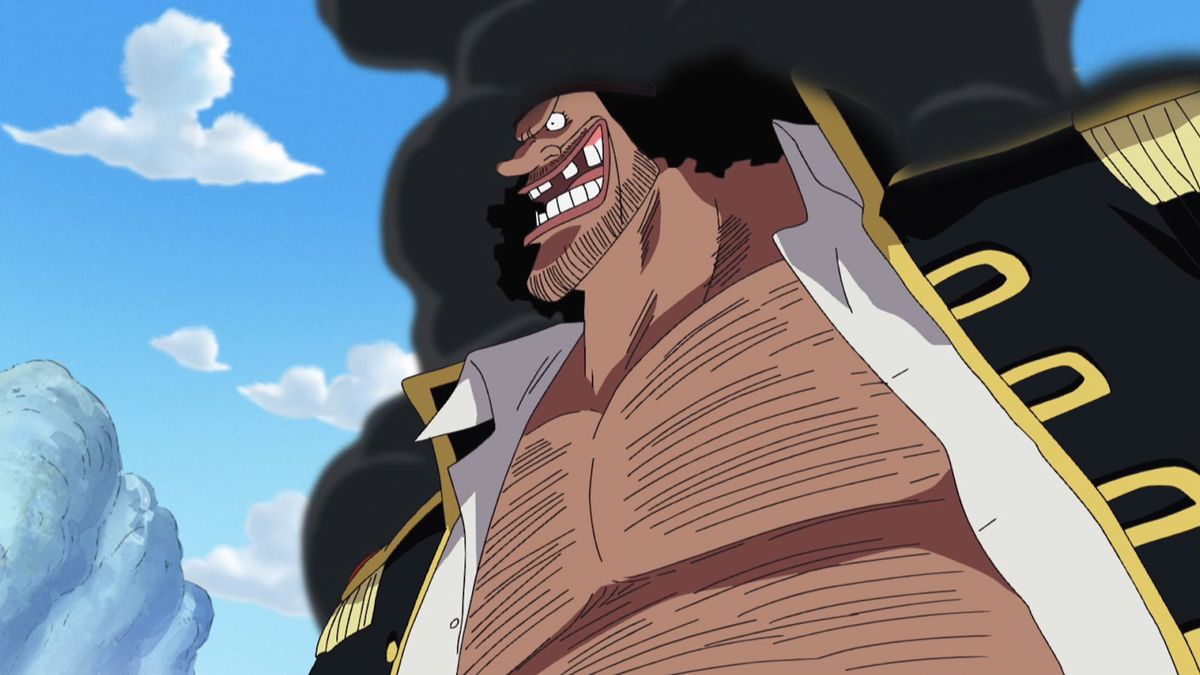
One Piece Episode 325 pits Ace’s fire against Blackbeard’s gravity and reveals the Devil Fruit power Shanks crossed the sea to warn about.
The short version
Episode 325 collects Shanks’s warning when Ace confronts Blackbeard and discovers darkness capable of pulling in matter, attacks, and Devil Fruit power itself. Brotherhood, vengeance, ambition, and a coming war gather inside one devastating duel.
Ace arrives for a murdered crewmate
His pursuit enforces Whitebeard’s family code. Loyalty gives the confrontation moral clarity while making retreat emotionally difficult.
Blackbeard offers partnership before destruction
Teach wants Ace’s strength beside his ambition. The invitation reveals a man who can admire power and still consume anybody refusing his plan.
Darkness changes the rules of Devil Fruit combat
Gravity draws everything inward, and physical contact can silence another user’s ability. Ace must fight without trusting distance or elemental immunity.
RaeRae’s receipt
Shanks tried to stop this meeting because he understood Teach’s patience. The duel proves the scar was evidence, not fear.
Episode facts and receipts
Episode 325 aired September 23, 2007. ONE PIECE.com credits Hirohiko Uesaka, Yoko Ikeda, Eisaku Inoue, Miyuki Sato, and Michiyo Kawasaki.
Classification: numbered manga-canon Enies Lobby television episode and RaeRae React. Anime, Anime Series, Japanese Anime, and Anime Reacts, not Anime Reviews.
Ace finally reaches the man he has been chasing
For dozens of episodes, Ace’s pursuit of Blackbeard has lived at the edge of Luffy’s journey. Banaro Island brings that pursuit into the center without placing Luffy in the room. The meeting feels intimate because Ace is not hunting a famous rival. He is confronting a former subordinate who murdered a crewmate and fled the family Whitebeard built.
The distance Ace traveled becomes evidence of loyalty before either man throws an attack. He believes betrayal requires an answer bearing his own name.
Blackbeard greets accountability like a business opportunity
Teach does not respond with remorse. He offers Ace a place in his crew, as though ambition can convert murder into a networking disagreement. The invitation reveals how completely he misunderstands the bond Ace came to defend. Blackbeard sees talented people as assets arranged around his ascent.
Ace sees crewmates as family. Their conflict begins with incompatible definitions of human value long before darkness meets fire.
Thatch’s absence stands inside every exchange
The murdered commander never appears on Banaro Island, yet the entire battle belongs to the wound his death created. Blackbeard killed him to take the Dark-Dark Fruit after Thatch found the power first. That choice turned desire into entitlement and a crewmate into an obstacle.
Ace refuses to let the missing person become a footnote beneath Teach’s grand plans. Pursuit keeps Thatch’s name attached to the crime Blackbeard would prefer to treat as strategy.
Blackbeard speaks about dreams without Luffy’s moral center
Teach believes in impossible ambition, fate, and the great age of piracy. Those beliefs can sound thrilling because One Piece usually treats dreams as sacred. Episode 325 draws the necessary boundary: a dream does not become good merely because somebody wants the future intensely.
Luffy risks himself for other people’s freedom. Blackbeard spends other people for his own rise. Shared vocabulary cannot erase opposite ethics.
The plan to capture Luffy makes refusal immediate
Blackbeard tells Ace that Luffy is his intended target. The revelation transforms a commander enforcing Whitebeard’s rule into an older brother standing between danger and family. Ace does not pause to weigh advantage. He rejects the offer because joining Teach would mean helping deliver Luffy to the government.
That protective instinct is beautiful and frightening. Love removes every exit Ace might otherwise consider.
Ace’s fire announces the life he chose
The Flame-Flame Fruit fits Ace’s directness. His power illuminates, spreads, consumes, and meets threats in the open. He does not hide his loyalty or pretend neutrality. Every attack makes his answer visible across Banaro Island.
Fire also carries inherited symbolism around him. Ace is Whitebeard’s son by choice and Luffy’s brother by promise. His flame belongs to relationships he intends to defend.
Blackbeard’s darkness consumes instead of illuminating
The Dark-Dark Fruit creates gravity that pulls matter, structures, attacks, and bodies toward Teach. His darkness does not simply cover the battlefield. The power drags the surrounding world into his appetite. Banaro Island physically demonstrates a worldview where everything becomes fuel for one man’s destiny.
The spectacle is enormous, but the emotional effect is claustrophobic. Space itself stops feeling neutral when Teach begins calling the darkness forward.
The pain Blackbeard suffers keeps his power from becoming effortless
Teach explains that darkness draws attacks into him, intensifying the pain he receives. He screams, rolls, bleeds, and then rises laughing. The weakness makes him more disturbing rather than less. Suffering does not teach restraint because he has built identity around enduring any cost his ambition demands.
He treats pain as proof that destiny selected him. That belief makes ordinary deterrence nearly useless.
Nullifying Devil Fruit powers changes the rules of intimacy
When Blackbeard touches Ace, the fire user’s elemental protection disappears. Ace can be struck as an ordinary body. The threat requires physical contact, turning every close exchange into a violation of the power Ace relies upon. Teach does not only attack him; Teach temporarily removes a defining ability.
The shock works because Logia confidence has shaped so many previous battles. Darkness makes the familiar hierarchy unstable.
Ace adapts instead of collapsing when certainty disappears
Discovering that Blackbeard can cancel his fruit would terrify any fighter. Ace keeps analyzing, creating distance, and expanding the scale of his fire. His confidence is not ignorance. He understands the danger and chooses to continue because the reason for fighting has not changed.
Courage here means responding to new information without abandoning the responsibility that brought him to Banaro Island.
Teach’s crew watches like witnesses to a coronation
Blackbeard’s companions do not interrupt the central duel. Their presence frames Teach as a captain proving the future he promised them. Burgess, Van Augur, Doc Q, and the others have attached themselves to a man whose faith in fate makes catastrophe feel inevitable.
The group already resembles an anti-Straw-Hat crew: powerful individuals united by appetite, opportunism, and confidence in their captain, but without the same ethic of care.
Ace fights alone because command has become personal burden
Whitebeard warned Ace against pursuing Teach, yet Ace believed his position required the chase. That decision makes the confrontation lonelier than the spectacle suggests. He carries Thatch, his division, Whitebeard’s reputation, and Luffy’s safety without allowing those people to share the risk.
Responsibility can become isolation when a protector decides love means handling every danger personally. Episode 325 makes that flaw look noble enough to hurt.
Whitebeard’s warning complicates the language of duty
Ace is not disobeying because he cares too little. He disobeys because loyalty has hardened into a rule inside him: a subordinate committed murder under his command, so the commander must answer. Whitebeard senses a danger larger than ordinary discipline and tries to release him from that obligation.
Ace cannot accept release. His personal code turns forgiveness from his father into permission he does not believe he deserves.
The fight exposes the danger inside inherited pride
Ace loves Whitebeard and carries the crew’s emblem with absolute conviction. Pride gives him belonging after a childhood haunted by questions about whether he deserved to exist. The same pride makes retreat feel like betrayal of the family that answered those questions.
Strength and vulnerability share one source. The symbol that saved Ace emotionally also helps trap him in a confrontation he cannot leave.
Blackbeard understands leverage better than love
Teach knows capturing a notorious pirate can secure status with the government. He evaluates Luffy and Ace as pieces that can purchase access to greater power. His intelligence is practical, patient, and morally vacant. People matter according to what their capture, fruit, reputation, or allegiance can unlock.
That transactional vision makes his charisma dangerous. He can speak passionately about freedom while converting everybody nearby into currency.
Fire and darkness turn ideology into landscape
Ace’s final great flame fills the sky with heat and light. Blackbeard answers with a mass of darkness capable of swallowing the island’s shape. Their powers make an argument visible: connection offered outward against appetite pulling everything inward.
The visual opposition is not a claim that Ace is flawless. The contrast shows what each man serves when his full strength reaches beyond his body.
The episode withholds the result because consequence has already begun
The final clash does not provide immediate closure. That choice keeps attention on the collision rather than reducing the scene to a winner screen. Viewers understand that whichever force remains standing, the wider era has shifted around Banaro Island.
Suspense grows from political and emotional stakes together. This duel can reach Whitebeard, Luffy, the government, and pirates who have never heard Thatch’s story.
Ace protecting Luffy without Luffy’s knowledge changes the brotherhood
Luffy sails away from Water 7 celebrating a new ship and restored crew. He does not know his brother is fighting a future disaster partly to keep that disaster from reaching him. The dramatic distance makes Ace’s love feel generous and painfully unilateral.
Protection offered in secret cannot create consent, cooperation, or shared strategy. Luffy receives the love without receiving a chance to stand beside Ace.
Blackbeard becomes terrifying because he is patient and joyful
Teach is not a cold machine. He laughs, dreams, explains, recruits, suffers, and believes deeply. Those qualities resemble traits the series often celebrates, which prevents the villain from becoming safely alien. His moral horror lives in where he directs recognizable human passion.
He is willing to wait years for one fruit and destroy a family when opportunity appears. Patience becomes predation under his control.
Ace’s dignity does not erase the danger of his choice
The episode makes him magnificent. He stands beneath Whitebeard’s mark, refuses to sell out his brother, and meets an unknown power without begging for safety. Admiration remains appropriate. So does critique. A brave decision can emerge from love while still carrying preventable risk.
Fandom does Ace no favors by pretending nobility and self-destructive responsibility cannot occupy the same body.
Banaro Island is a hinge disguised as a side story
Luffy is absent, Sunny is elsewhere, and the main crew has just begun a new voyage. Episode 325 could initially look like an interlude. Instead, the duel gathers forces that will reshape the world around the protagonist. One Piece uses the wider cast to prove history continues beyond the camera following the Straw Hats.
The sea is alive with decisions whose consequences travel farther than their makers can predict.
RaeRae’s final receipt
Ace walks into Banaro Island carrying love, duty, pride, grief, and the belief that a commander should answer for what happened under his watch. Blackbeard meets him carrying appetite dressed in the language of destiny. Their powers could not reveal them more clearly: Ace throws light across the island, while Teach pulls the island toward himself.
I will never call Ace foolish as though protecting Thatch and Luffy meant nothing. I also will not romanticize the part where he ignores Whitebeard’s warning and carries a family-sized danger alone. Episode 325 is devastating because the brave choice and the dangerous choice are the same choice. Ace refuses to become currency in Blackbeard’s plan. Teach proves he intends to turn somebody into currency anyway. The darkness does not merely attack fire; the darkness reaches for every relationship Ace came to defend.
The last image feels like a warning sent backward through the story
Knowing only what Episode 325 presents, the clash already carries more weight than an ordinary victory question. Ace has found the killer he promised to confront, and Blackbeard has found a powerful name connected to the pirate he planned to capture. Neither man can leave unchanged because each has made the other part of a larger design.
The episode closes before consequence receives a label. That restraint lets dread form around possibility rather than explanation.
Love is Ace’s strength and the opening danger can use
Blackbeard cannot persuade Ace to abandon Whitebeard or offer Luffy as payment. Those loyalties make Ace morally immovable. They also make his next move predictable: threaten his family, and Ace will stand between them and the threat regardless of personal cost.
Episode 325 leaves that contradiction burning beside the darkness. Ace’s love is never the flaw. Believing love requires facing every consequence alone is where tragedy finds room to enter.