RaeRae Reacts · One Piece Episode 296
Nami and Franky Must Save Chopper From Monster Point
One Piece Episode 296 gives Nami Key Number Two, then makes her and Franky stop the uncontrolled form Chopper used to protect the rescue.
The short version
Episode 296 makes Nami finish Kalifa, recover Key Number Two, and immediately confront the emergency Chopper has become. She and Franky determine that seawater can force his Devil Fruit body back toward normal. Franky must fire Coup de Vent at a friend because rescue now requires stopping the rescuer.
Nami’s victory creates the next responsibility
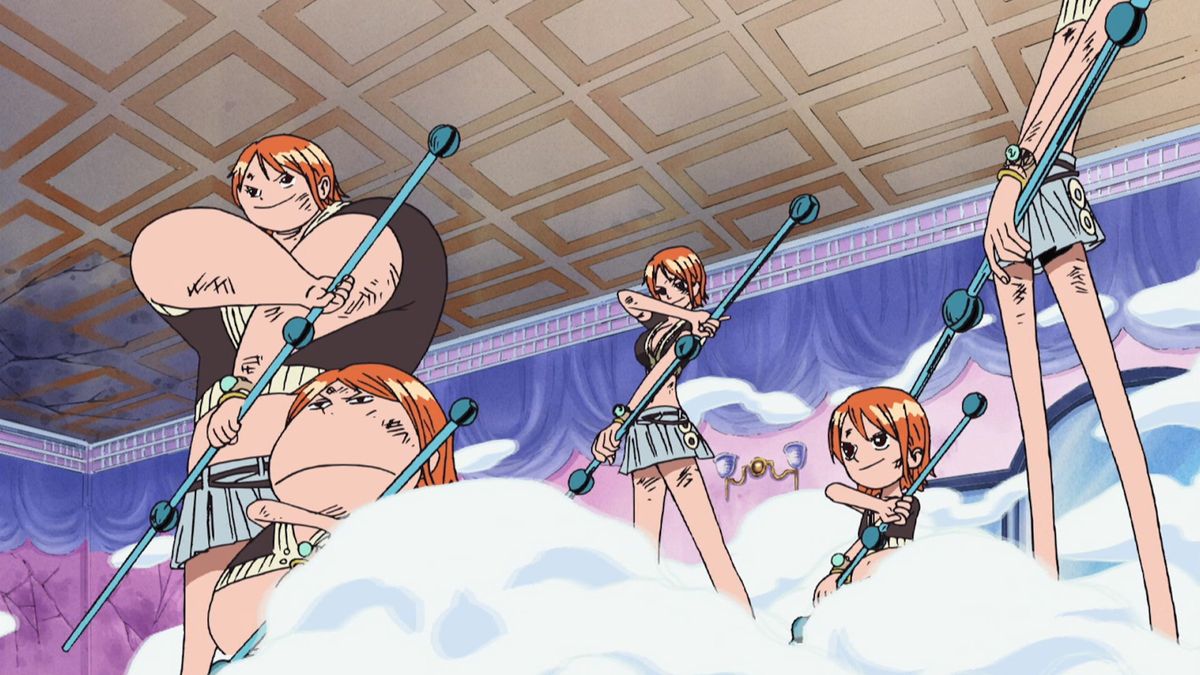
Thunder Lance Tempo defeats Kalifa and produces the key. Nami has no time to rest inside the win. Monster Point is destroying the tower and Chopper cannot consent to his own movement.
Key Number Two turns combat into access
The object matters because Robin’s cuffs suppress freedom. Nami’s fight converts atmospheric skill into the material possibility of unlocking a friend.
Stopping Chopper is an act of care
The giant body looks powerful while the person inside has lost control. Friends must value Chopper above the weapon his body has become.
Seawater becomes emergency medicine
Devil Fruit weakness offers a brutal intervention. The treatment involves impact, a fall, and drowning risk. No safe clinical option exists.
Franky accepts the terrible job
Coup de Vent is normally an attack. Here the blast must save Chopper by forcing him into the sea. Intent changes the moral meaning without removing physical danger.
Nami coordinates after carrying Sanji’s abandoned fight
She defeats Kalifa, retrieves the key, diagnoses the new emergency, and moves with Franky. The labor transferred in Episode 287 keeps expanding.
Power without agency is not victory
Monster Point overwhelms enemies and endangers allies. More strength cannot compensate for the loss of recognition, choice, and medical judgment.
Adaptation and performance
Naoki Koga’s script and Masahiro Hosoda’s direction move from finishing attack to rescue intervention. Takeo Ide’s animation direction gives Thunder Lance precision and Monster Point weight.
RaeRae’s final reaction
Episode 296 refuses to let Chopper’s sacrifice become a clean power-up. Nami and Franky have to save the doctor from the form he used to save everybody else. That consequence is the story.
Episode facts and receipts
One Piece Episode 296 aired in Japan on February 4, 2007. ONE PIECE.com credits Naoki Koga, Masahiro Hosoda, Takeo Ide, Miyuki Sato, and Kumiko Fukuzawa.
Classification: numbered manga-canon Enies Lobby television episode and RaeRae React. Anime, Anime Series, Japanese Anime, and Anime Reacts, not Anime Reviews.
A rescued person can become the next rescue
Chopper took the third Rumble Ball to stop Kumadori and protect the mission. Once control disappears, friends must redirect effort toward him. Hero and patient become the same person.
The reversal does not cancel his contribution. Rescue creates obligations after the danger a person volunteered to face.
Monster Point exposes the limit of power-scaling
The giant form offers overwhelming physical force. Chopper cannot choose targets, communicate, heal, or recognize the moment a fight should end. A larger output accompanies a smaller field of agency.
Any ranking that calls the form an uncomplicated upgrade values destruction above personhood.
Nami sees Chopper before she sees the monster
Her decision begins from recognition. The body is dangerous, but the body still belongs to their doctor and friend. She does not classify him as an enemy because appearance changed.
That recognition answers Chopper’s oldest fear. Someone can see monstrous shape and continue searching for the person inside.
Franky must use force without hatred
Coup de Vent is powerful enough to throw Chopper toward the sea. Franky attacks a friend for the friend’s survival. No anger or punishment makes the action easier.
Force can serve care when immediate bodily danger removes gentler options. The standard remains necessity, proportion, and purpose.
The sea is treatment and threat
Seawater weakens Devil Fruit users and may interrupt Monster Point. The same water can drown an unconscious Chopper. The intervention trades one emergency for another that the crew hopes to manage.
Good emergency decisions do not always produce safety. Sometimes they choose the danger with a possible recovery route.
Nami moves from combatant to coordinator
She defeats Kalifa, retrieves the key, assesses Chopper, identifies the sea counter, and works with Franky. Her value crosses categories CP9 rankings keep separate.
Leadership appears through accurate transitions. Nami knows when a fight ended and a rescue began.
Key Number Two represents restored possibility
The key may or may not open Robin’s cuffs. CP9 deliberately scattered uncertainty. Nami still carries concrete progress out of Kalifa’s room.
A small object holds the labor of weather analysis, injury, anger at Sanji, and tactical adaptation. Access has a history.
Kalifa’s defeat closes the burden Sanji transferred
Nami accomplished the task Sanji would not complete. The story moves forward because she accepted added danger. That outcome should not retroactively make the transfer fair.
Competence often causes more work to flow toward the person most likely to handle the work. Praise needs to include a receipt for that pattern.
Chopper’s medical rule was correct
Monster Point proves that the three-dose warning was not timidity. His safety boundary reflected evidence. Emergency pressure forced him across a line that existed for good reason.
The aftermath should validate the doctor’s knowledge even while honoring the choice that violated the rule.
The crew becomes Chopper’s medical team
No other doctor stands ready. Nami provides diagnosis through observation. Franky supplies the physical intervention. Others will need to recover Chopper from the water and monitor him afterward.
Love cannot substitute for training, but collective care becomes the only available bridge until medical capacity returns.
Body horror remains beneath the spectacle
Monster Point is visually impressive because scale, antlers, fur, and shadow dominate the tower. The same image is horrifying because Chopper’s familiar expressions and voice disappear.
The episode should allow fear to coexist with awe. Spectacle without horror would erase the cost.
The Buster Call makes recovery harder
Warships are coming while the crew creates an unconscious Devil Fruit user near open water. The safest immediate treatment produces another person who may need carrying during evacuation.
Every solution increases logistical weight. The rescue coalition must move injured bodies through a battlefield about to become bombardment.
Franky’s technology answers Chopper’s altered biology
One crew member rebuilt a body through machinery. Another changed transformation through chemistry. Their paths meet when mechanical air pressure interrupts biological loss of control.
Neither technology is morally fixed. Purpose and agency determine whether alteration supports life.
RaeRae’s second look
Episode 296 gives Nami a victory and refuses to let her stand still for applause. She immediately has another friend to save. That rhythm captures the exhausting truth of ensemble rescue: solving one room exposes the emergency waiting behind the door.
Franky firing at Chopper hurts because care sometimes looks nothing like tenderness. The blast says the crew wants the doctor back, not the weapon his pain produced.
Nami’s “decision” includes several impossible choices
The episode title centers her choice to stop Chopper, but no option is clean. Leaving him loose endangers everyone. Attacking him risks injury. Using seawater risks drowning. Waiting for exhaustion spends time the Buster Call has removed.
Decision-making under catastrophe means choosing which danger remains survivable. Nami does not receive a morally pure route.
Franky trusts Nami’s diagnosis
He has the force required to move Monster Point. Nami identifies the likely Devil Fruit counter and coordinates the action. Neither contribution works alone.
The exchange demonstrates leadership without rank. The person with relevant knowledge directs the person with relevant equipment.
Coup de Vent becomes a medical instrument
An air cannon cannot become gentle, but purpose and calibration can turn destructive technology toward rescue. Franky must aim with enough force to reach the sea without causing unnecessary harm.
The technique sits between attack and intervention. Emergency tools are often defined by context rather than appearance.
Chopper cannot consent, so friends use prior knowledge
The crew knows his values, role, and likely wish not to harm allies. When present consent becomes impossible, care relies on relationship and the least harmful available action.
That responsibility is heavy. Friendship provides evidence, not perfect certainty. Nami and Franky act because delay would make every outcome worse.
The sea temporarily removes power and preserves personhood
Devil Fruit weakness is usually a vulnerability enemies exploit. Here the weakness becomes a path back toward Chopper. Losing extraordinary force may restore the ordinary body capable of recognition.
The sequence reverses battle logic. Power reduction becomes the desired outcome because strength was never the highest value.
Monster Point makes Chopper resemble the accusation he survived
Humans and reindeer called him a monster before they knew his heart. The giant form seems to confirm their visual judgment while removing his ability to answer. That echo makes the transformation psychologically cruel.
The crew’s response can rewrite the meaning. They stop the dangerous body and continue caring for the person. Accountability and belonging coexist.
Nami carries three forms of rescue labor
She rescues the key from Kalifa, helps rescue Chopper from Monster Point, and continues the larger effort to rescue Robin. None of those tasks replaces the others. Success creates more work.
Women in ensemble stories are often praised for emotional labor while denied tactical authorship. Episode 296 gives Nami both and should name the cost of both.
Franky recognizes a body rebuilt under trauma
He understands what survival-driven bodily alteration can mean. Franky chose machinery after catastrophic injury. Chopper chose chemistry to expand a form others rejected.
Their histories differ, but Franky can see more than a giant target. The blast aims to return control to the person inside altered flesh.
The Buster Call punishes recovery time
Chopper will need rest, monitoring, and physical transport. The approaching fleet converts those medical needs into logistical danger. The government weapon does not only kill through shells. The deadline makes care harder.
Evacuation systems reveal whose body is considered burdensome. The Straw Hats answer by carrying one another anyway.
Kalifa’s key cannot solve every lock
Key Number Two may open Robin’s cuffs or the chain joining Zoro and Usopp. Even the correct key cannot reverse trauma, stop warships, or restore Chopper instantly. Access matters without becoming magic.
The story keeps rescue material. Every solution answers one constraint and exposes another.
Power fantasies need aftermath
Monster Point is visually designed for awe. Aftermath prevents awe from swallowing meaning. An unconscious friend, a desperate intervention, and the need for seawater keep the transformation attached to consequence.
Without aftermath, sacrifice becomes advertising for a stronger form. Episode 296 refuses that shortcut.
Nami’s anger at Sanji and care for Chopper share a principle
She objects when friends treat personal rules or bodies as though consequences belong only to them. Sanji’s refusal transferred danger. Chopper’s dose transferred emergency. The motives differ, but the crew still absorbs the result.
Care includes asking people to recognize interdependence before crisis makes interdependence brutal.
The episode values return over conquest
Nami and Franky do not need to defeat Chopper. They need Chopper to return. The objective changes every acceptable tactic.
That distinction separates rescue from domination. Winning means the friend can someday wake, speak, heal, and choose again.
RaeRae’s receipt on the blast
I am not cheering because Franky fires at Chopper. I am cheering because the crew refuses to keep a powerful monster when the cost is losing their doctor. They choose the person over the weapon.
Episode 296 understands that love may require interrupting a sacrifice before the sacrifice consumes the one who offered everything. The sea is frightening. Letting Monster Point continue is worse.
Saving the doctor protects the crew’s future
Chopper’s survival matters immediately because he is loved. His medical capacity also matters to every injury waiting beyond this floor. Stopping Monster Point protects the person and the network of future care only he can provide.
That practical truth does not reduce Chopper to a job. The crew needs his knowledge because his life already exceeds the battlefield.
The sea intervention requires another rescue afterward
Getting Chopper into seawater may end the transformation, but somebody must retrieve an unconscious Devil Fruit user. The plan contains a second obligation from the beginning.
Care means accepting that obligation before firing. Franky’s blast begins a rescue sequence rather than completing one.
The final care receipt
Franky’s blast cannot guarantee a painless recovery. The action guarantees that the crew will not confuse Chopper’s uncontrolled strength with the friend they want back.
The sea takes power away. The rescue returns possibility.
Chopper deserves recovery, recognition, medical care, and a future larger than the emergency form that saved his friends.