RaeRae Reacts · One Piece Episode 281
Nami Recognizes the Lie Inside Robin’s Bargain
One Piece Episode 281 revisits Nami’s coerced service under Arlong and shows why she recognizes that Robin’s surrender is not consent.
The short version
Episode 281 returns to Nami’s history and makes the obvious point the story sometimes forgets to say aloud: she knows exactly what that means to smile, bargain, and steal while captivity controls every choice.
A Nami recap during Robin’s rescue is thematically sharper than that first appears. Both women survive by becoming useful to dangerous systems. Both hide the terms of their captivity from people who might help. Both convince themselves that personal sacrifice can keep everyone else safe. The details differ, and flattening them into the same trauma would be lazy, but the emotional recognition between them is earned.
What this recap is actually doing
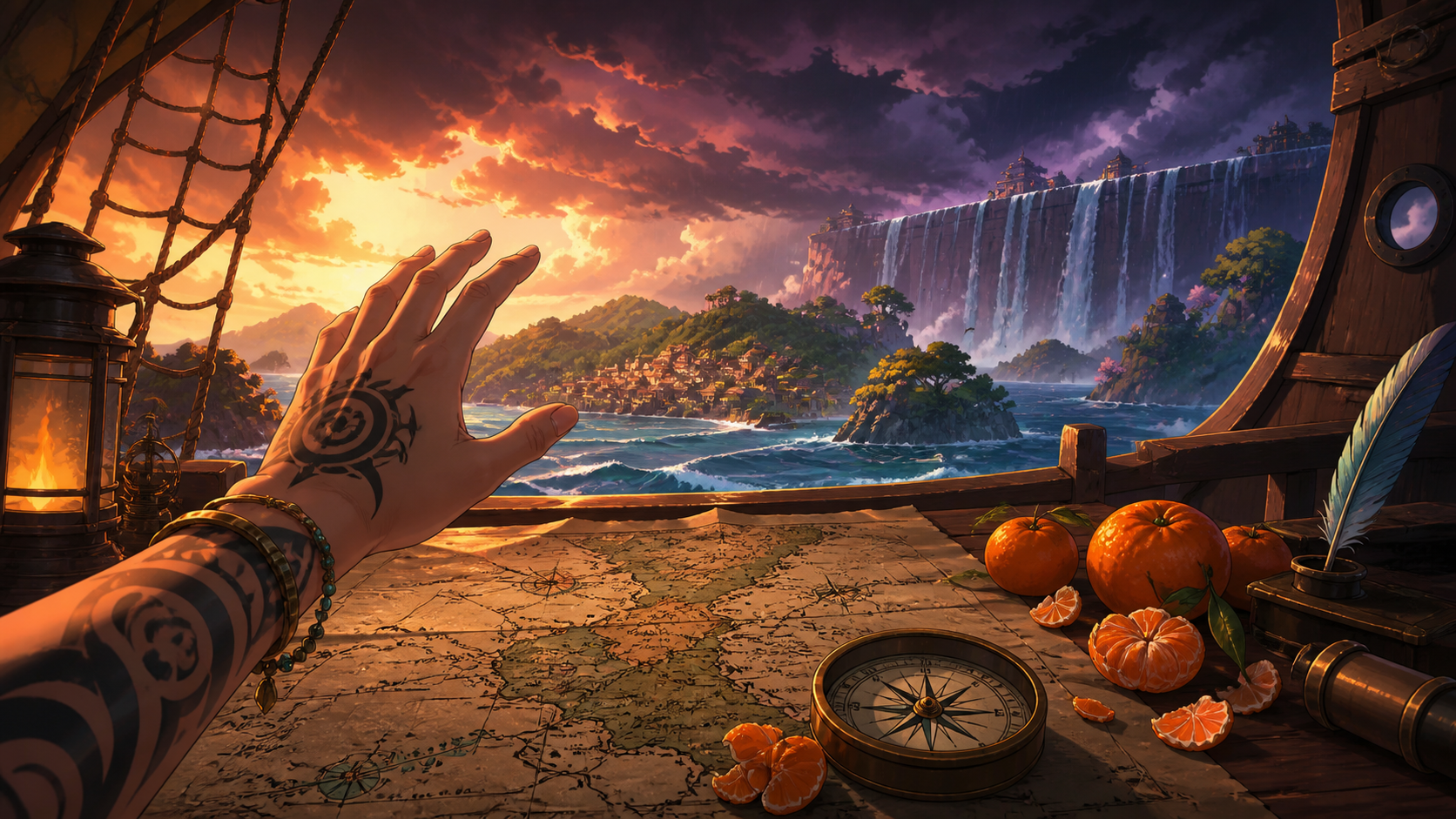
The episode revisits Bellemere, Arlong, the map room, the tangerine grove, and the moment Nami finally asked Luffy for help. Those scenes are famous because they turned a clever thief into somebody whose competence had been weaponized against her. At Enies Lobby, that history becomes a reason Nami does not accept Robin’s cold performance as consent.
Nami’s dream of mapping the world grows beside years of being forced to draw maps for Arlong. One skill carries both violation and possibility. That tension matters. Freedom does not require Nami to abandon navigation because an abuser exploited that. that lets her reclaim the work, choose the ship, choose the route, and decide who benefits from her knowledge.
The choice that matters now
Robin’s bargain with CP9 sounds different from Nami’s bargain with Arlong, but both rely on an oppressor promising restraint in exchange for obedience. Nami learned the promise was designed to preserve control. She does not need Robin to provide a neat confession before recognizing the shape of the trap. The crew’s faith is not blind here; that is informed by survival history.
Arlong rules openly through force. The World Government wraps violence in law, courts, flags, and official language. Nami’s recap makes the comparison uncomfortable on purpose. A uniform and a judicial island do not make coercion moral. When institutions decide a child’s labor, body, or knowledge belongs to them, legitimacy becomes costume design.
Adaptation, pacing, and the awkward truth
The emotional footage still lands because Nami’s early arc was constructed with patience, but borrowed impact is not new direction. Episode 281 earns its place when that reframes those scenes through Robin’s current crisis. that loses ground whenever that expects tears from memory alone. Recap should create a conversation between then and now, not merely press play on pain.
The alternate-world comedy after the recap is tonal whiplash. One Piece has always used silliness as a pressure valve, and sometimes the valve squeaks. I appreciate the cast playfulness while still wishing the broadcast had trusted the main rescue to move.
RaeRae’s final reaction
Nami does not stand at Enies Lobby because Luffy once saved her and she owes him a debt. She stands there because chosen family taught her that a coerced bargain is not consent. Episode 281 repeats old scenes, but the conclusion belongs exactly here: Robin’s “leave me” cannot be separated from the government holding everyone she loves hostage.
Episode facts and receipts
One Piece Episode 281 aired in Japan on October 15, 2006. The official ONE PIECE.com episode record classifies that inside the Enies Lobby story and identifies that as a recap installment. That distinction matters: this React judges how the anime reframes established material at this exact rescue-story pressure point rather than pretending the flashbacks are new plot.
Classification: numbered television episode, recap-heavy anime-original presentation, RaeRae React. that belongs in Anime and Japanese Anime, and that does not belong in Anime Reviews.
Nami knows what a coerced smile looks like
Nami spent years smiling, stealing, drawing maps, and negotiating while Arlong controlled the terms beneath every choice. That history gives her a specific sensitivity to Robin’s Water 7 performance. Robin says departure is voluntary. The words arrive beside CP9 agents, a threatened crew, and a government willing to destroy whole islands. Nami knows that spoken agreement under coercion does not become freedom because the captive maintains composure.
The Arlong Park memories therefore do more than refresh Nami’s biography. The recap turns her past into interpretive authority. She has lived inside a bargain where compliance supposedly protects a community. She has watched the oppressor violate that bargain once control feels threatened. Robin’s sacrifice uses different facts, but the structure rhymes loudly enough for Nami to hear.
Maps can be prison labor and freedom work
Arlong forces Nami to draw maps because her knowledge serves conquest. The Straw Hats rely on her navigation because her knowledge serves a journey she chooses. Same skill, different power relationship. That distinction matters more than any sentimental claim that friendship magically heals trauma.
Recovery does not require Nami to stop drawing. Recovery gives her authority over where, why, and for whom she draws. Her world map remains personal ambition, crew infrastructure, and a refusal to let the sea belong only to empires, Marines, or violent pirates. Knowledge changes moral meaning through consent and control.
Robin’s archaeology sits beside that argument. The World Government fears her reading because historical knowledge threatens the story supporting present authority. Arlong values Nami’s maps because geographic knowledge expands domination. Both women understand that expertise attracts people who want the product while denying the expert’s humanity.
Bellemere refuses the convenient lie
Bellemere could deny Nami and Nojiko to survive the confrontation with Arlong. She refuses to erase the relationship. That choice has been praised as love and criticized as a decision that leaves children without their mother. Both readings deserve space. One Piece builds emotion through absolute gestures, but absolute gestures distribute consequences to survivors.
Nami carries the love and the consequence. Such complexity helps explain why she values chosen family while maintaining practical vigilance. She does not simply imitate Bellemere’s dramatic refusal. She budgets, plans, reads weather, protects resources, and screams when reckless men treat survival as an optional detail. Her care often looks like logistics because logistics keep people alive.
Money, debt, and the illusion of buying freedom
Arlong tells Nami that one hundred million berries can purchase her village. The bargain converts liberation into a number the oppressor controls. When she nearly reaches that number, corrupt authority confiscates the savings. The lesson is not that money never matters. The lesson is that an abusive system will rewrite rules before allowing accumulated labor to dissolve control.
Robin attempts another impossible purchase: her own disappearance in exchange for the crew’s safety. CP9 can promise that exchange because the World Government controls the enforcement mechanism. Spandam later reveals the obvious fraud. Nami’s history makes the fraud visible before the confession. A coercive institution cannot serve as neutral guarantor of a bargain that preserves the institution’s power.
Why asking for help remains the emotional hinge
Nami’s “help me” moment works because asking violates the survival strategy that kept her village breathing. Luffy does not demand a perfect report before responding. He places the hat on her head, then acts. Robin’s “I want to live” scene echoes that structure without copying every beat. Both women must name a desire after years of suppressing desire for other people’s safety.
The parallel risks reducing two women to rescue recipients if the analysis stops there. Nami and Robin both create the conditions for victory through intelligence, information, and earlier decisions. Rescue does not erase agency. Healthy interdependence means capable people can still need help without surrendering personhood.
Weather, direction, and the present crisis
Enies Lobby’s impossible geography turns Nami’s role into more than background competence. The crew crosses water, falls, gates, roofs, bridges, and government defenses. Luffy can declare a destination, but declaration does not generate a safe route. Nami’s work translates desire into movement.
That pattern repeats across One Piece. Captains receive symbolic credit while navigators, shipwrights, cooks, doctors, and helmsmen keep adventure from becoming a mass casualty event. Episode 281 should make viewers appreciate Nami’s emotional history and material labor together. Calling her the crew’s common sense is not enough. She is a technical expert whose knowledge shapes every possible future at sea.
Performance and recap construction
Akemi Okamura gives Nami a broad register: calculating charm, explosive anger, terror, grief, greed played for comedy, and quiet attention when another person’s story resembles her own. The recap draws strength from that accumulated vocal identity. Nami’s sharpness does not disappear when she cries, and her tears do not make the sharpness false.
The construction still suffers from placement. Five recaps after Robin’s declaration test goodwill. Episode 281 earns partial credit because Nami’s past directly clarifies the present bargain. Old footage becomes argument when selected around coercion, maps, money, and asking for help. Old footage becomes padding when the edit merely assumes recognition equals insight.
RaeRae’s placement verdict
Keep Episode 281 in the numbered route. Label the recap. Give readers the choice. Completion means documenting the broadcast record honestly, not inflating every installment into essential canon or quietly deleting inconvenient pacing decisions.
Nami’s file deserves analysis because the crew does not rescue Robin from a position of ignorance. At least one member knows the texture of a false bargain from inside. Nami sees the calm voice, the self-sacrifice, and the promise that obedience will spare loved ones. She recognizes captivity wearing responsible language, and she refuses to let Robin disappear behind that language.
Nami’s anger is not a personality defect
Nami’s anger often becomes the punchline after male crewmates destroy property, ignore weather, spend resources, or create avoidable danger. Comedy can obscure the labor beneath that anger. She tracks consequences other people treat as tomorrow’s problem. Arlong Park taught her that careless power leaves ordinary people paying the bill. Enies Lobby gives that vigilance a larger political target.
When Nami refuses Robin’s performance of voluntary departure, she is not denying another woman’s words casually. She is reading the conditions surrounding those words. CP9 possesses force. The government controls information. Robin believes surrender can purchase safety. Nami has lived the same basic mechanism and watched the seller steal the payment. Her response comes from evidence, not a vague friendship instinct.
Navigation as an editorial metaphor
One Piece loves dreams, but Nami keeps asking how bodies reach them. Maps convert desire into route, distance, weather, supplies, and risk. This React archive should do the same for readers. A visitor should see the episode range, recap classification, character focus, and next destination without digging through a wall of titles. Episode 281 deserves a clear card because Nami’s own story argues that direction is not decoration. Direction makes freedom usable.
Watch notes for Episode 281
The most important comparison is not simply that Nami and Robin both suffered. Their oppressors use bargains to disguise control. Arlong assigns a purchase price to freedom while arranging authority so the payment can be stolen. CP9 offers crew safety in exchange for Robin’s surrender while serving a government that never intends to leave dangerous knowledge alive. Nami’s earlier experience gives her evidence for rejecting the performance of consent. Pay attention to the maps, money, smiles, and moments when competence becomes a cage. The recap remains recycled television, but the placement creates a precise bridge between two women whose intelligence was valued by systems that denied their right to choose the purpose of that intelligence.
One last autonomy note
Nami’s story also warns against praising sacrifice too quickly. She gives childhood, labor, money, and emotional safety to a plan built around saving Cocoyasi Village. Robin offers disappearance to save the Straw Hats. Both sacrifices sound noble when stripped of coercive context. The moral question is not whether either woman loves enough to suffer. The question is why violent men and institutions keep arranging reality so women believe private suffering is the responsible price of communal safety. Episode 281 gives the crew a chance to reject that arrangement. Love becomes useful when love helps dismantle the trap, not when love applauds the captive for enduring quietly.
One last autonomy note
Nami’s story also warns against praising sacrifice too quickly. She gives childhood, labor, money, and emotional safety to a plan built around saving Cocoyasi Village. Robin offers disappearance to save the Straw Hats. Both sacrifices sound noble when stripped of coercive context. The moral question is not whether either woman loves enough to suffer. The question is why violent men and institutions keep arranging reality so women believe private suffering is the responsible price of communal safety. Episode 281 gives the crew a chance to reject that arrangement. Love becomes useful when love helps dismantle the trap, not when love applauds the captive for enduring quietly. Nami has already paid that price and recognizes the invoice.