RaeRae Reacts · One Piece Episode 265
Luffy Breaks the Government’s Rhythm While His Allies Open the Road
One Piece Episode 265 sends Luffy through Enies Lobby’s guard lines while Galley-La and the Franky Family do the slower labor of opening Rocketman’s route.
Bottom line: Luffy’s charge works because the coalition is doing the slower work he skipped
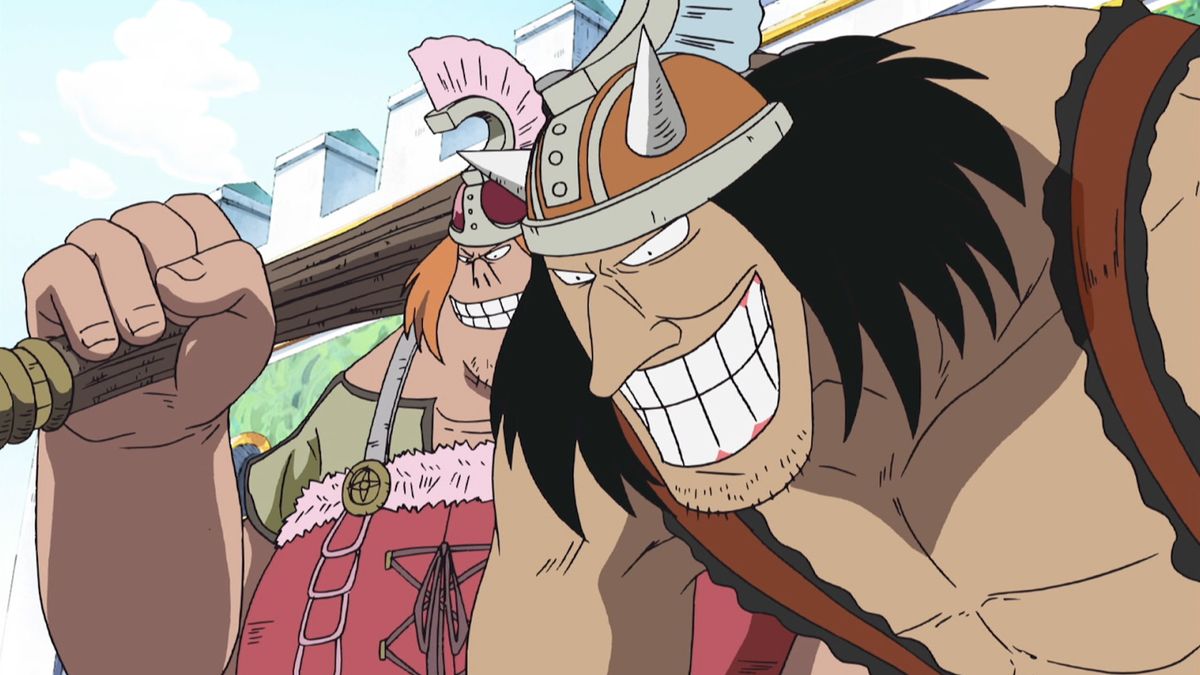
One Piece Episode 265 lets Luffy tear through Enies Lobby guards with the force of a man who has reduced the entire island to one sentence: give Robin back. The action feels glorious because the World Government expected its numbers, gates, and reputation to stop challengers before they reached the main island.
Luffy’s progress is not a solo rescue, though. Galley-La and the Franky Family are landing behind him, fighting at the entrance, forcing gates open, and trying to preserve Rocketman’s route. His speed creates disruption. Their labor turns disruption into access for everybody else.
The island throws bodies at Luffy because bureaucracy believes somebody else will stop him
Enies Lobby guards arrive in waves. Each group acts like the next line of uniforms will restore the expected order. That confidence comes from working inside a system where thousands of people can absorb one mistake and where individual responsibility disappears into rank.
Luffy attacks that structure through momentum. He does not wait for one defeated line to regroup or for a superior officer to redefine the situation. Every step forward forces the island to admit that the outer defenses were never the same thing as justice.
Luffy’s body makes reckless tactics survivable without making them wise for everyone
Rubber resilience, years of combat, and an instinct for movement allow Luffy to crash through dangers that would end another rescuer’s mission. His physical gifts change the risk calculation. A normal fighter copying the same route would become another prisoner before reaching the second gate.
The episode celebrates his strength without proving that planning was unnecessary. Luffy can survive the shortcut because allies keep the larger operation alive. Exceptional ability does not remove dependence. The strongest person still needs somebody to open the way home.
The front gate battle is infrastructure work performed under attack
The Franky Family and Galley-La are not fighting for a scoreboard. They need the gate open so Rocketman can enter and the Straw Hats can move as a group. Every punch, rope, tool, and shove serves that physical objective.
I appreciate action scenes more when the work has a job. A crowd fight can become visual noise when victory means only fewer nameless enemies. Episode 265 keeps the gate visible, so the audience knows why the coalition cannot simply scatter and chase Luffy.
Paulie turns shipwright skills into battlefield control
Paulie’s ropes come from a working life, not a magical warrior tradition created for this invasion. He understands tension, anchors, weight, and how to move through structures. Those skills become combat tools because Enies Lobby is built from gates, walls, bridges, and machinery.
His presence also carries the betrayal at Galley-La. CP9 lived beside him, learned the company, and used professional trust as cover. Paulie now applies the same practical knowledge they exploited against the institution that employed them.
The Franky Family knows how to move heavy things because dismantling is labor
Water 7 often treated the Franky Family as loud criminals, and they earned part of that reputation. They also built a working organization around salvage, demolition, transport, and physical coordination. Opening a fortified gate uses skills their city preferred to dismiss until those skills became necessary.
The rescue does not clean their history. The men remain rough, theatrical, and loyal to a boss who gave them somewhere to belong. Their competence makes that loyalty useful instead of decorative.
Luffy’s refusal to stop is an answer to Robin’s entire childhood
Robin learned that governments can erase a home, label a child dangerous, reward betrayal, and punish anyone who offers shelter. She survived by expecting every relationship to end when the risk became visible. Enies Lobby is the physical center of that expectation.
Luffy keeps moving because accepting the island’s warning would repeat the abandonment Robin has already experienced. He cannot undo Ohara or the years she spent running. He can make sure the latest institution does not receive her without resistance.
Rescue is not consent unless Robin eventually gets to speak
Luffy is right to challenge a bargain created through threats. That judgment does not let the crew replace Robin’s choice with their own permanent decision. Breaking into Enies Lobby creates room for a freer answer. Robin still has to decide what she wants when fear is no longer doing all the talking.
The distinction protects her from becoming a prize passed between powerful groups. CP9 claims state authority. The Straw Hats claim relationship. Only Robin can claim her future.
Spandam’s confidence depends on distance from the people paying for his orders
Spandam remains deeper inside the island while guards absorb the invasion. He experiences authority as a command spoken once, not as the bruises, panic, broken gates, and lives spent enforcing the command. That distance helps weak leaders mistake obedience for competence.
His position is funny because his personal courage is so small. The consequences are not funny. An institution can give a ridiculous man access to serious violence, and every subordinate who follows the order makes that access real.
The guard crowds are workers inside an institution, but the crew cannot pause for biographies
Most defenders probably have families, routines, fears, and incomplete information. One Piece does not ask viewers to imagine that every uniform contains the same personality. T-Bone already proved that decent people can serve the transport.
The invasion still requires force because those workers are physically blocking a coerced prisoner’s rescue. Systemic analysis cannot become an excuse for paralysis. We can recognize human complexity and still name the immediate choice each guard is making.
Numbers create pressure even when Luffy makes the fight look easy
Luffy drops guards quickly, but every encounter consumes breath, attention, and seconds. Enies Lobby has deeper defenses and CP9 waiting beyond ordinary personnel. The World Government relies on exhaustion as much as fear.
The visual joke of endless replacements also exposes administrative thinking. When one person falls, the system inserts another body without reconsidering the mission. Efficiency becomes cruelty when no one is allowed to ask whether Robin should have been taken.
The main island is progress, not safety
Luffy clears the outer gates and reaches the main island, which feels like a victory because Enies Lobby expected challengers to die at the entrance. The deeper location also separates him farther from the crew and places him closer to stronger defenders.
Good adventure geography changes the meaning of movement. Forward does not always mean safer. Each crossed boundary reduces the distance to Robin and increases the cost of retreat.
Rocketman remains the coalition’s shared return route
The train carried them across Aqua Laguna and now waits behind fortified gates. Preserving Rocketman matters because the rescue cannot end with everybody standing on a government island surrounded by enemies and an abyss.
Tom’s prototype keeps turning old engineering into present resistance. A machine once dismissed as uncontrollable becomes useful because Kokoro, the Franky Family, Galley-La, and the Straw Hats understand enough of the design to take the risk together.
Water 7’s separate communities become one moving front
Shipwrights and dismantlers spent years disliking each other. Pirates brought their own conflicts. Kokoro, Chimney, Gonbe, and Yokozuna add another strange branch to the coalition. Nobody receives a speech that erases the old trouble.
They cooperate because CP9 attacked their relationships and used their city as a workplace for covert violence. Shared action begins before shared affection. That order feels more honest than instant unity.
The episode understands that courage can look organized or reckless
Luffy’s courage is immediate, bodily, and impossible to miss. Paulie’s courage means staying with the gate assignment while his captain runs ahead. Nami’s courage includes fearing the island and continuing anyway. Chopper’s courage carries medical responsibility into a mass battle.
No single emotional style owns bravery. The coalition would fail if everybody copied Luffy’s expression of loyalty. Difference becomes a resource when people respect the job attached to each person’s fear and strength.
Hiroyuki Kakudo’s direction keeps crowd combat legible
Hirohiko Kamisaka’s screenplay divides attention between Luffy’s fast advance and the coalition’s gate work. Hiroyuki Kakudo’s direction needs those fronts to feel connected rather than like unrelated action clips. The episode keeps the spatial goal visible while allowing Luffy’s movement to feel unusually free.
Masayuki Takagi’s animation direction supports the speed, impacts, and large number of bodies without losing Luffy inside the crowd. Miho Shiraishi and Fumihiro Uchikawa’s art provides the walls, plazas, and layered entrances that make each gain readable.
The June 4 broadcast returned after another scheduling pause
Episode 265 aired in Japan on June 4, 2006, two weeks after Episode 264. The original weekly audience had time to sit with Luffy’s early launch before watching him tear through the island’s outer defense.
Streaming compresses that anticipation into an automatic countdown. The faster pace suits Luffy’s charge, but the original dates help explain why each new boundary and production beat receives a complete episode’s attention.
The official summary identifies two different advances
The official One Piece episode record emphasizes Luffy leaping the main gate and front gate to enter the main island. The same summary identifies Galley-La and the Franky Family beginning their landing with King Bull so they can force open the entrance for Rocketman.
Those parallel actions support the episode’s strongest idea. Luffy advances through individual power. The coalition advances through coordinated labor. Robin’s rescue needs both.
Where to watch One Piece Episode 265
Use the current licensed One Piece route available in your region, including Crunchyroll where Episode 265 is offered. Availability, subtitles, and dubs vary, so verify the episode number and official title before watching.
The official Japanese episode page provides the broadcast date, summary, and production credits. Keeping that record beside the licensed viewing route gives fans a factual floor without pretending platform catalogs remain permanent.
Luffy’s visibility pulls danger toward him and away from quieter routes
A man in a straw hat charging through the center of the island becomes impossible to ignore. Guards, officers, and messengers have to respond, which creates confusion beyond the bodies Luffy directly defeats. His recklessness therefore produces a tactical benefit the original landing plan can use.
That benefit has a cost. Visibility gives defenders one target to track and can concentrate stronger opponents around him. Luffy accepts that pressure for himself without holding a meeting, while the coalition must decide how to use the opening before the island reorganizes.
Opening the gate protects the people who cannot copy Luffy’s route
Chimney, Gonbe, Kokoro, support fighters, and injured allies cannot all launch over walls through raw strength. A route wide enough for Rocketman protects the mixed group the rescue has become. Accessibility is not sentimental decoration. The gate determines who can participate and who can leave.
The coalition’s task respects different bodies and abilities better than a plan built only around the strongest fighter. Luffy can cross alone. A successful rescue must make space for everyone whose knowledge, transport, medical care, or relationship may become necessary later.
Enies Lobby treats guards as replaceable parts of an official machine
The steady supply of personnel looks like strength, but the pattern also reveals contempt for the workers being sent forward. Commanders spend guards to slow one intruder while the institution protects its senior agents and decision makers deeper inside the island.
Replaceability encourages obedience because one guard’s doubts seem irrelevant beside the next hundred uniforms. Luffy’s advance interrupts that logic. The system can replace individuals, but the system cannot pretend the repeated losses mean nothing once its supposedly untouchable prisoner becomes the reason for a public invasion.
RaeRae verdict: Luffy breaks the government’s rhythm, and his allies build the route that makes the break useful
Episode 265 is satisfying because Enies Lobby’s massed confidence meets somebody who refuses to be emotionally processed. Luffy keeps moving, and every defeated line of guards makes the island look less inevitable. His loyalty has a physical direction: Robin is ahead.
The episode would be thinner if the coalition existed only to watch. Galley-La and the Franky Family land, fight, pull, lift, and force the gate because rescue has mechanical needs. Luffy supplies the refusal. Everybody behind him turns refusal into a breach.