RaeRae Reacts · One Piece Episode 402
The Straw Hats Spend Every Signature Move on One Pacifista
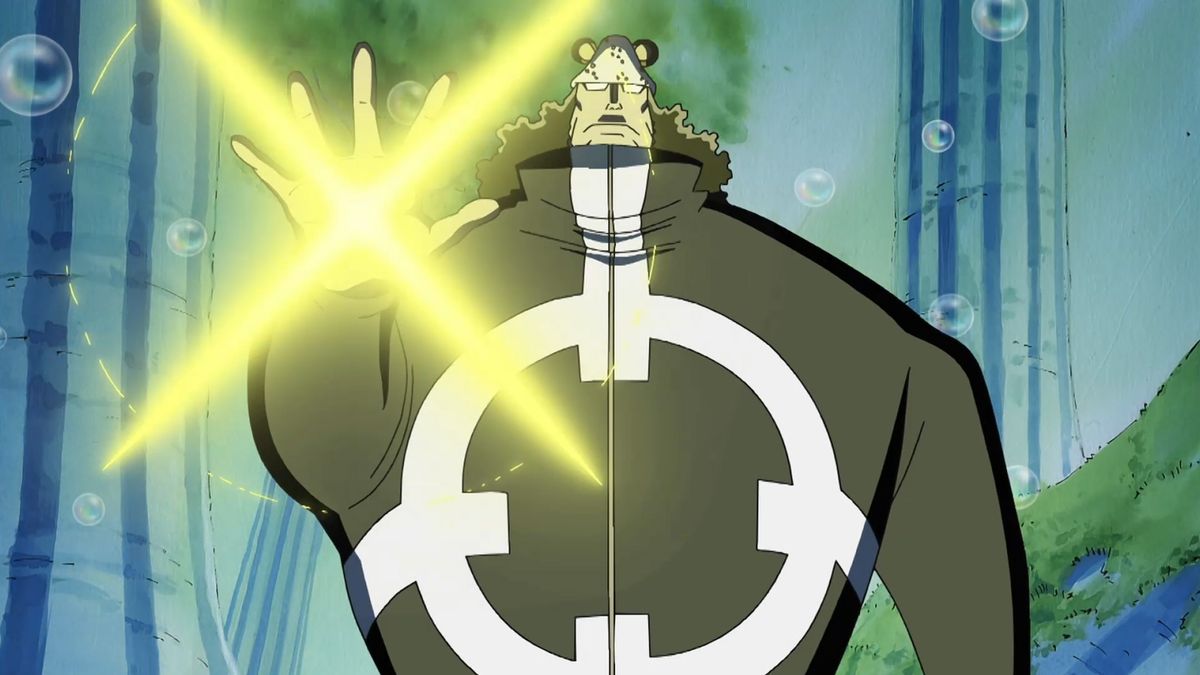
One Piece Episode 402 React follows the full crew fighting a Kuma-shaped weapon while Drake identifies Vegapunk’s Pacifista program.
One Piece Episode 402 React: the Straw Hats spend every major technique on one Kuma-shaped machine while Drake identifies the Pacifista program and Kizaru keeps proving that Sabaody contains more power than the rookies can measure.
What happened in Episode 402
The Kuma-shaped opponent fires beams from his mouth and palms, forcing the Straw Hats into a full-crew battle. Elsewhere, Urouge fights another identical figure while Kizaru continues hunting Supernovas. X Drake recognizes the copies as Pacifistas, human weapons developed by Dr. Vegapunk. Luffy’s crew combines its strongest attacks, discovers the machine’s extreme durability, and pushes toward one concentrated finish.
RaeRae’s opening receipt
Thriller Bark required the whole crew to survive one real Kuma encounter, and mercy played a role nobody understood. Sabaody removes mercy, copies the silhouette, and adds lasers.
Episode 402 makes technological escalation personal. The government did not merely build a weapon. The government reproduced a face attached to the crew’s recent trauma.
The first beam changes the fight’s grammar
A mouth opens and light crosses the battlefield with explosive force. The crew cannot treat this opponent like a large martial artist.
Range, timing, and destructive output require a new plan immediately.
Luffy recognizes Kuma before recognizing the copy
Memory supplies the name because appearance arrives before analysis. Thriller Bark taught him that paws can erase distance and bodies.
The resemblance forces fear to do the government’s work early.
Zoro carries the last Kuma encounter inside fresh wounds
His body has not forgotten the pain he absorbed for Luffy. Facing the same shape places unfinished recovery beside present danger.
Trauma becomes physical evidence rather than a dramatic callback.
The crew cannot wait for certainty
Small differences suggest this may not be the same man. Beams and fists leave no safe pause for identification.
Combat under incomplete information punishes both hesitation and assumption.
A Pacifista turns identity into military camouflage
The machine benefits from Kuma’s reputation while hiding its own capabilities. Enemies prepare for paw powers and receive laser technology.
A copied body becomes tactical misinformation.
Vegapunk enters through consequences
The scientist does not need to appear on Sabaody. His engineering changes what every pirate can survive.
Influence becomes visible through machines long before biography arrives.
Government science scales a Warlord silhouette
One exceptional fighter can occupy one location. A production program can place the same terror beside multiple crews.
Replication converts reputation into infrastructure.
Urouge proves strength before the machine proves durability
He expands his body and meets the Pacifista with enormous force. The exchange shows why his bounty belongs among the Supernovas.
The machine absorbs that proof without becoming ordinary.
Drake reads machinery where others see a man
His Marine history supplies context unavailable to most pirates. Behavior and construction do not match the real Kuma.
Institutional knowledge survives defection and becomes a survival tool.
Recognition cannot provide a counterattack
Naming the Pacifista explains the multiplication but does not weaken armor or stop beams.
Information matters without pretending information alone wins.
Kizaru treats the new weapons as familiar furniture
The admiral moves among Pacifistas without confusion. Government coordination exists even when his personal communication looks absurd.
Casual familiarity reveals how long the program has advanced beyond rumor.
The Straw Hats choose concentration over individual glory
No member can defeat the machine alone. They create openings, protect wounded crewmates, and stack attacks toward one result.
Teamwork becomes the only honest answer to industrial strength.
Nami reads movement and creates timing
Her contribution does not require matching the machine’s body. Weather, observation, and placement help other attacks land.
Strategy gives non-brute-force skills equal weight.
Usopp attacks fear through preparation
He understands that running leaves the same machine behind the crew. Ammunition and aim become courage practiced from range.
A frightened fighter can still contribute deliberately.
Brook turns speed into an opening
His light movement helps reach vulnerable angles around a huge opponent. Swordplay adds another rhythm to the coordinated assault.
The newest crewmate is fully inside the crew’s survival language.
Robin tries to control a body built against control
Her limbs can restrain ordinary anatomy, but the Pacifista’s mass and construction resist familiar leverage.
A brilliant ability meets an engineered counter through sheer durability.
Franky recognizes a machine without admiring its purpose
Engineering can produce ships, chosen bodies, and weapons of enforcement. Technical achievement carries no automatic moral value.
The Pacifista represents craft separated from consent.
Chopper supports survival while preparing force
He reads injured bodies and the enemy’s threat at once. Medical judgment remains active inside battle.
Care and combat are not opposite roles for him.
Sanji protects openings with speed
He redirects attention, lands force, and creates seconds for crewmates. No single kick needs to finish the machine to matter.
Combination fighting values sequence over ownership of the final blow.
Zoro attacks through damage he cannot hide
Every movement costs more because Thriller Bark still lives in his body. He refuses collapse without magically becoming healed.
Endurance looks frightening when pain remains visible.
Luffy uses Gear Second under a survival deadline
The technique accelerates his body at a cost. Against a Pacifista, preserving energy may be impossible.
The captain spends future stamina to create a present exit.
The machine absorbs signature attacks like data
Moves that ended previous battles become steps in a larger combination. The crew watches its strongest vocabulary lose finality.
A new power scale arrives through endurance rather than a speech.
Durability forces the crew to trust accumulation
No impact appears sufficient alone. Damage must build across members and techniques.
Progress can remain invisible until a system finally fails.
The laser technology links Pacifistas to Kizaru
The beams resemble the admiral’s light. Government science has translated a singular Devil Fruit effect into weapon design.
Institutional power learns how to imitate exceptional bodies.
Copying an ability changes the threat beyond one admiral
Kizaru cannot stand in every grove. Machines carrying light-based attacks can.
Scalability becomes more dangerous than spectacle.
The crew fights one while multiple copies exist
Their exhausting opponent is not the program’s only unit. Elsewhere, other rookies spend their own reserves against another body.
Victory over one machine cannot dismantle the factory behind the machine.
Sabaody punishes the idea of a fair fight
The government sends an admiral, Pacifistas, Marines, and later Sentomaru against scattered crews. No rule promises equal numbers or rested bodies.
Power protects privilege by refusing sporting terms.
The Straw Hats still choose one another over escape speed
A faster member could abandon a slower one. Instead every movement seeks a shared route.
The crew’s identity survives pressure through refusal to optimize people away.
The Pacifista has no visible stake in the battle
The machine does not hate Luffy or fear capture. Orders become motion without moral hesitation.
Automated obedience removes the small openings conscience can create.
Drake’s revelation widens the story’s future
Vegapunk, Pacifistas, copied beams, and Warlord bodies connect piracy to scientific power on a global scale.
The Grand Line now contains laboratories as consequential as kingdoms.
The episode makes exhaustion part of the cliff
Even success will leave the crew depleted while Kizaru remains active. Every powerful technique reduces options for the next encounter.
Winning can become another form of vulnerability.
This remains an episode React
This page responds to the Pacifista beams, Drake’s identification, Urouge’s battle, and the Straw Hats’ coordinated assault. Full Sabaody analysis remains on the arc guide.
React classification keeps installment coverage out of Anime Reviews.
The official local still remains canonical
The Episode 402 official still serves as featured image, hero, static directory card, and social preview through one local attachment.
Complete metadata preserves source, accessibility, filing, and unique visual use.
RaeRae’s final receipt
Episode 402 turns one frightening face into a government product line. That sentence carries the whole problem. Kuma was already powerful enough to break a crew. A Pacifista copies the body, adds Vegapunk’s engineering, borrows Kizaru’s light, and follows orders without conversation.
The Straw Hats answer as a crew. Not one chosen fighter, not one secret savior, and not one lucky signature attack. Nami creates timing, Usopp fires through fear, Robin tests control, Franky reads machinery, Chopper balances bodies, Brook finds angles, Sanji opens space, Zoro attacks through damage, and Luffy spends stamina.
They are magnificent, and the machine still makes magnificence expensive. Drake knows the name. Knowledge clarifies the danger without shrinking the metal. Sabaody has stopped asking whether the rookies are special. Sabaody is asking whether special pirates can survive a government capable of manufacturing nightmares.
The copied face creates an ethical horror beyond combat
A living person’s body has become the template for state weapons. The program treats appearance as material that can be reproduced, deployed, and stripped of private meaning.
Before viewers know Kuma’s full arrangement, the result already feels like a violation.
The crew’s combination attacks document growth
Techniques learned across separate islands now fit inside shared sequences. Progress appears through coordination as much as individual strength.
The battle becomes a moving archive of the voyage.
Zoro’s pain prevents the sequence from becoming effortless fan service
He can contribute and remain injured. Heroism does not require the story to erase damage for a clean pose.
Continuity gives every sword movement a cost.
Franky’s existence complicates the machine question
He also rebuilt a body through technology, but choice defines his transformation. The Pacifista program represents external command and standardized purpose.
Similar materials can serve freedom or control.
The beams industrialize a Devil Fruit advantage
Kizaru’s light belongs to one extraordinary body. Vegapunk’s work suggests effects can migrate into hardware.
The discovery changes how future power may be distributed.
Every crew member becomes necessary because the enemy was designed for scale
The Pacifista does not offer a convenient personal rivalry. Survival requires collective damage from people with different skills.
Industrial force meets relational force.
RaeRae’s extra receipt
I love a full-crew combination when the story remembers why the combination matters. Episode 402 does. Nobody is posing for a greatest-hit montage. They are exhausted, Zoro is injured, the ship cannot leave, and one machine keeps opening its mouth to fire light.
The government built repeatability. The Straw Hats answer with relationships no laboratory assembled. That difference does not make the fight easy. The cost proves why the difference matters.
The Pacifista removes negotiation from enforcement
Kuma once listened, questioned loyalty, and made a private decision at Thriller Bark. PX-4 executes a target function. The copied face invites the crew to search for humanity where military design has suppressed every visible opening.
That absence makes the machine efficient and emotionally grotesque.
The battle asks whether bodies can remain unique under state science
Government engineers reproduce Kuma’s height, shape, and reputation as though personhood were a useful shell. Numbering finishes the conversion from somebody to inventory.
The same world that prices captives now standardizes a Warlord’s body.
Coordination becomes the crew’s unmanufactured advantage
PX-4 carries immense power but follows a narrow command structure. The Straw Hats argue, adapt, notice one another, and change sequence when attacks fail.
Relationship creates flexibility no serial number can guarantee.
Every failed strike supplies useful information
A blow that does not finish the Pacifista still reveals balance, armor, reaction, or timing. The crew builds a solution from partial results.
Failure becomes evidence when people communicate.
Nobody waits for Luffy to invent the whole answer
The captain creates momentum, but specialists choose their own contributions. Authority does not erase expertise.
The crew survives because leadership leaves room for initiative.
The machine’s silence changes how violence feels
No threat, boast, or grievance explains each beam. Destruction arrives without emotional exchange.
Silence makes institutional purpose louder than personality.
The victory cost foreshadows the next mistake
After enough effort, wreckage can look like safety. Sabaody has already shown multiple identical bodies.
The crew’s deserved relief risks becoming a pause the government will not honor.
The official still preserves the episode’s own visual identity
One local frame distinguishes this Pacifista battle from Kizaru’s attack and Sentomaru’s arrival. The same attachment follows readers from card to hero.
Visual continuity supports navigation without flattening adjacent episodes.
The wrecked Pacifista records a collective answer
No single technique explains the fallen machine. The result belongs to observation, timing, accumulated damage, and nine people refusing to leave one another behind.
Government science produced repeatable force. The crew produced an unrepeatable relationship capable of surviving one unit at enormous cost.
The wreckage proves shared effort can interrupt industrial violence even before the crew understands the whole program. That earned result remains real beside the exhaustion.