RaeRae Reacts · One Piece Episode 365
Oars Recognizes Sanji From His Wanted Poster and Makes Luffy’s Face the Crew’s Enemy
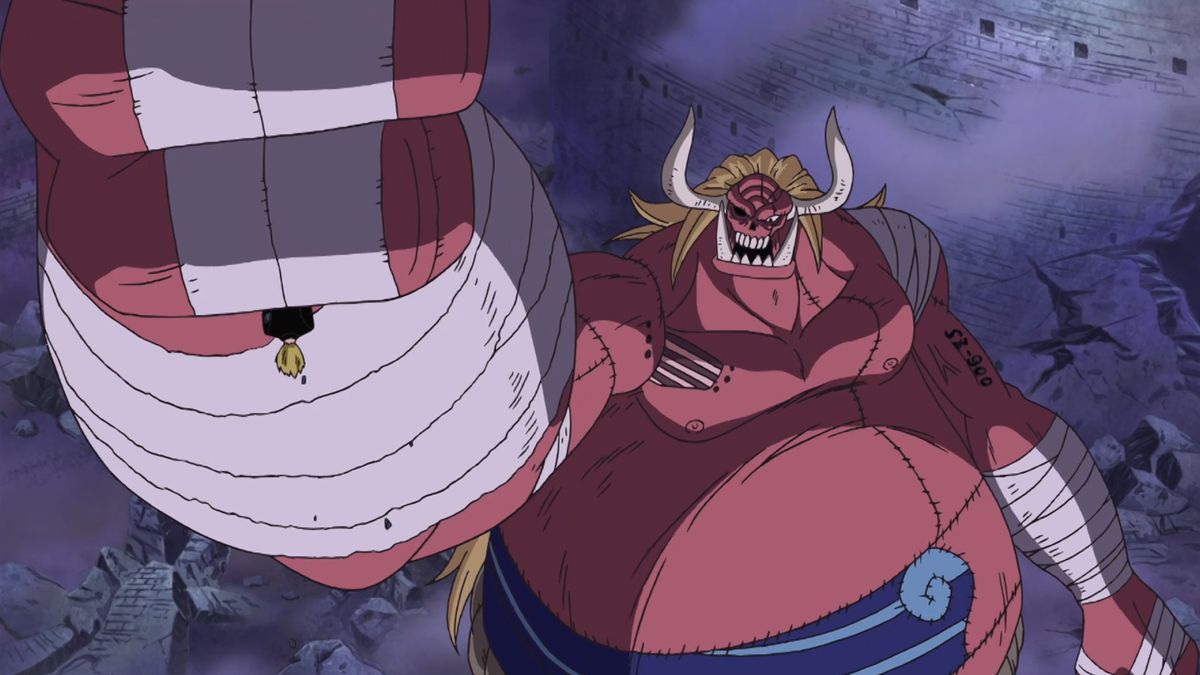
One Piece Episode 365 React reunites scattered Straw Hats under Oars’s pursuit as Sanji faces a giant carrying his captain’s stolen impulses.
One Piece Episode 365 React: scattered Straw Hats regroup while hiding from Oars, and Sanji meets the giant face-to-face during his pursuit of Nami and Absalom.
What happened in Episode 365
Oars compares faces to the wanted posters attached to his arm and recognizes Sanji. A body carrying Luffy’s shadow now treats Luffy’s crewmates as assigned targets.
RaeRae’s opening receipt
The captain’s face becomes frightening only because Moria removed the choices and loyalties that taught Luffy what strength was for.
The scattered crew finally occupies one shared threat
Usopp reaches Chopper and Robin, while Zoro calls from above with Franky and Brook nearby. Separate confrontations begin folding into one battlefield under Oars’s pursuit.
The reunion does not produce safety. The reunion gives the crew enough shared information to understand the scale of what is hunting them.
Oars makes Luffy’s outline hostile
The giant carries Luffy’s shadow, habits, and recognizable appetite for action. Those traits now operate under Moria’s command against the people who know Luffy best.
Familiarity becomes emotional pressure because the crew must fight gestures associated with trust.
The crew knows resemblance is not identity
They can recognize Luffy’s movement without confusing Oars for their captain. Identity includes memory, choice, history, and relationship beyond behavior stored in the shadow.
Moria’s experiment exposes how much of a person cannot be copied by extracting visible traits.
Sanji meets Oars while still searching for Nami
His route already carries urgency because Absalom has abducted her and attempted a forced ceremony. Oars places a giant interruption directly between Sanji and the person he intends to reach.
The obstacle matters because every delay extends captivity and consumes the night protecting shadowless bodies.
The wanted poster finally identifies Sanji correctly enough for violence
His first poster famously fails to reproduce his face accurately, yet Oars can compare the available image and conclude that Sanji belongs on the target list. Administrative error does not make surveillance harmless.
A flawed record can still expose the person authority wants harmed.
Sanji’s poster comedy acquires practical consequence
The bad drawing has wounded his vanity and produced recurring jokes. Episode 365 turns the same object into part of a hunting system. Being represented badly does not prevent the representation from directing danger.
Humiliation and surveillance can coexist inside one image.
A bounty turns recognition into a transaction
Wanted posters assign a price to capturing a face. Moria uses the visual record without caring about the bounty payment because the poster’s identification function already serves him.
The document makes a person portable across enforcement systems.
Oars does not need to know why Sanji matters
He sees a target corresponding to a list. Sanji’s cooking, hunger ethic, loyalty, and desperate search for Nami remain irrelevant to the assignment.
Classification permits violence without understanding.
Sanji sees his captain’s force without his captain’s care
Oars’s enormous body expresses Luffy’s physical imagination at a scale that can crush the crew. The force feels wrong because Luffy normally directs recklessness through bonds, however imperfectly.
Moria copied output and removed the relationships that correct output.
Facing Oars tests loyalty without making loyalty sentimental
The crew cannot simply remember that they love Luffy and refuse to strike. They must protect one another from a body using his stolen shadow. Loyalty may require resisting the familiar.
Love does not mean surrendering judgment when somebody else weaponizes a loved one’s traits.
Luffy is also a victim of every attack Oars performs
Moria forced the shadow into the corpse and supplied the command. The resulting violence cannot be attributed to the person robbed of that shadow.
Keeping blame attached to the organizer prevents exploitation from making victims responsible for their own appropriation.
Brook understands that distinction personally
He watched Ryuma use his sword habits with a body stronger than his own. The technique looked familiar while serving Moria’s system. Brook knows that resemblance can deepen violation without transferring guilt.
His presence gives the crew an experienced witness to identity theft.
Zoro’s call from the rooftop restores orientation
A voice from above tells the regrouping crew where other members survived and what confrontation has occurred. Information crosses the broken architecture before bodies can reunite physically.
Communication becomes a form of structure while the building and plan collapse.
Usopp brings tactical knowledge from Perona’s defeat
He has learned how Thriller Bark’s officers hide vulnerability behind supernatural display. Rejoining the others gives that experience somewhere to travel.
A crew becomes stronger when knowledge earned in one matchup can inform another.
Chopper and Robin carry the truth about Hogback
Their confrontation exposed how bodies, shadows, and commands form Moria’s army. Oars now appears as the largest result of the same medical exploitation.
Understanding the laboratory turns the giant from random monster into institutional product.
Franky and Zoro bring Brook’s restoration into the group fight
Their route through Ryuma concerned one stolen shadow and one legendary corpse. Oars expands the same crime to the captain’s shadow and a giant body.
Separate stories converge because Moria repeated the same extraction logic at different scales.
Oars hunts a crew represented as isolated faces
The posters divide the Straw Hats into individual targets with separate prices. Oars can identify each member one by one. The crew survives through relationships the images cannot show.
Moria’s list sees units. The Straw Hats answer as a network.
Hiding from Oars is strategy rather than cowardice
The giant’s strength makes immediate scattered confrontation wasteful. Taking cover allows information exchange and prevents Moria’s weapon from selecting isolated targets easily.
Courage includes refusing a fight on the enemy’s preferred terms.
Sanji’s direct stare still serves a time-sensitive rescue
He cannot hide forever while Nami remains with Absalom. Facing Oars becomes a calculation between surviving the giant and preserving the route toward her.
The confrontation carries purpose beyond masculine pride.
Nami’s absence shapes every decision
She is not visible within the regrouped crew, and that gap explains Sanji’s movement. Her kidnapping is not a side quest waiting after the giant fight.
The crew must hold several urgent harms at once because Moria’s operation distributes violence across different bodies.
Oars recognizes the poster but cannot recognize the bond
He can match Sanji’s identity sufficiently to attack. He cannot know why Sanji cooks for Luffy, argues with Zoro, protects Usopp, or follows Nami’s navigation.
Recognition stripped of relationship becomes useful to enforcement and useless to understanding.
The captain’s shadow makes the hierarchy look inverted
Luffy usually stands at the center of the crew’s movement. His stolen shadow now drives a weapon positioned above them physically and assigned to destroy them.
Moria tries to turn leadership’s visible force against the community that made leadership possible.
The crew’s response proves leadership was never stored in one body
They regroup, exchange information, protect separate missions, and continue without Luffy directing every step. The captain helped create a crew capable of action during his absence.
Oars possesses shadow power but cannot possess the distributed trust built around Luffy.
Wanted posters preserve authority’s story while the crew preserves lived history
The posters say criminal, price, face, and capture. The crew knows hunger, sacrifice, jokes, arguments, and promises behind each image.
Competing records of identity occupy the battlefield. Only one record recognizes people as more than targets.
Oars reveals the danger of optimizing a person for output
Moria placed Luffy’s traits inside a body capable of greater scale and durability. The upgrade removes constraints, relationships, and consent as though all three were inefficiencies.
The resulting productivity is destruction without judgment.
Episode 365 remains an episode React
This page responds to the crew regrouping under Oars’s pursuit, Sanji being identified through his wanted poster, and Luffy’s stolen shadow becoming a weapon against his family. A complete Thriller Bark Review belongs after the arc resolves those systems.
React classification preserves broadcast-level close reading and keeps whole-work Reviews distinct.
The official local still remains canonical
The Episode 365 still serves as featured image, hero, bounded-directory card, and social preview. One local attachment provides consistent recognition across every discovery route.
Complete source and accessibility metadata remain attached, and no other record reuses the image.
RaeRae’s final receipt
Episode 365 makes the Straw Hats hide from Luffy’s outline and then asks Sanji to stare that outline down. Oars has the captain’s shadow, familiar impulses, and enough force to turn the entire island into collateral damage. He also has wanted posters attached to his arm so Moria’s weapon can convert faces into targets without learning a single thing about the people pictured.
Sanji’s terrible drawing still identifies him well enough for violence. A bad record can remain a dangerous record. Oars recognizes the face and misses the cook who feeds the crew, the man searching for Nami, and the friend whose bonds give every reckless decision context. The crew understands the difference. They can fight Luffy’s stolen mannerisms without blaming Luffy, because theft does not make a victim responsible for forced labor. Moria has the shadow and the poster. The Straw Hats have lived history, which is why the image can hunt them but cannot define them.
An inaccurate portrait can still exercise accurate control
Sanji’s wanted poster fails as likeness and succeeds as infrastructure. The drawing embarrasses him because the public image does not resemble the face he knows. Oars still uses the record to place him inside a category marked for attack.
Representation does not need to understand somebody before authority can act on the representation. A database can be wrong in detail and dangerous in function.
The crew supplies context no poster was designed to preserve
Oars sees separate faces with separate prices. The Straw Hats see the person who cooks, the person who navigates, the person who studies, and the person who keeps talking after fear arrives. Their knowledge comes from shared life rather than state classification.
That context changes how they respond to familiar movement inside Oars. They recognize Luffy’s influence and refuse Moria’s conclusion that the influence makes Oars their captain.
Distributed leadership survives the captain’s absence
Luffy is occupied elsewhere, his shadow has been weaponized, and the crew still gathers information across rooftops and ruined rooms. Zoro calls positions. Usopp carries knowledge from Perona. Chopper and Robin understand Hogback’s system. Sanji protects the route toward Nami.
Their coordination proves that Luffy’s leadership did not make everyone dependent upon his next command. Trust became capability distributed among the people he chose.
Sanji’s confrontation does not erase Nami from the map
Oars demands immediate attention because his body can crush everyone present. Nami’s captivity remains the reason Sanji cannot allow the giant to consume the entire plan. Absalom’s violence continues while another battle interrupts the rescue.
Holding both emergencies prevents scale from becoming the only measure of importance. A giant threat does not make one kidnapped woman a smaller moral concern.
Oars demonstrates the difference between memory and allegiance
The shadow carries behavioral memory recognizable to the crew. Allegiance developed through choices made with them over time. Moria can transfer one and command the other only by replacing relationship with obedience.
That split explains why Oars can resemble Luffy closely while treating Luffy’s family as disposable targets.
Fighting the resemblance protects the person being imitated
If the crew surrendered because every movement reminded them of Luffy, Moria would gain control through emotional association. If they blamed Luffy, Moria would gain control through redirected guilt. Resistance requires a third position.
They can name the theft, oppose the weapon, and keep affection attached to the victim whose shadow was taken.
Moria’s list cannot predict solidarity
Wanted posters suggest that capturing one pirate produces one bounty. The crew’s response means pressure on one member activates several others. Relationships multiply consequence in ways individual prices cannot calculate.
Oars hunts isolated faces while repeatedly encountering a collective. The administrative model fails because people keep acting beyond the units assigned to them.
The face of the captain is not the source of captaincy
Luffy’s silhouette, grin, appetite, and attack patterns help friends recognize him, but leadership lives in decisions and relationships those images only reference. Oars has the visual and behavioral vocabulary without the shared grammar.
Episode 365 makes the distinction physical. A captain cannot be manufactured by enlarging the body and preserving the gestures while removing consent, memory, and mutual obligation.
Shared history remains the crew’s uncopyable defense
Moria can enlarge Luffy’s familiar gestures, but he cannot manufacture the accumulated trust that lets the Straw Hats recognize one another beyond face, poster, shadow, or command.