RaeRae Reacts · One Piece Episode 359
Sanji’s Invisible Dream Collides With the Violence Absalom Hides Behind the Clear-Clear Fruit
One Piece Episode 359 React examines Sanji’s old Devil Fruit fantasy beside Absalom’s real use of invisibility to violate privacy, consent, and Nami’s freedom.
One Piece Episode 359 React: Sanji reveals that he once dreamed of the Clear-Clear Fruit, then confronts the man using invisibility to spy, abduct, and force a future onto Nami.
What happened in Episode 359
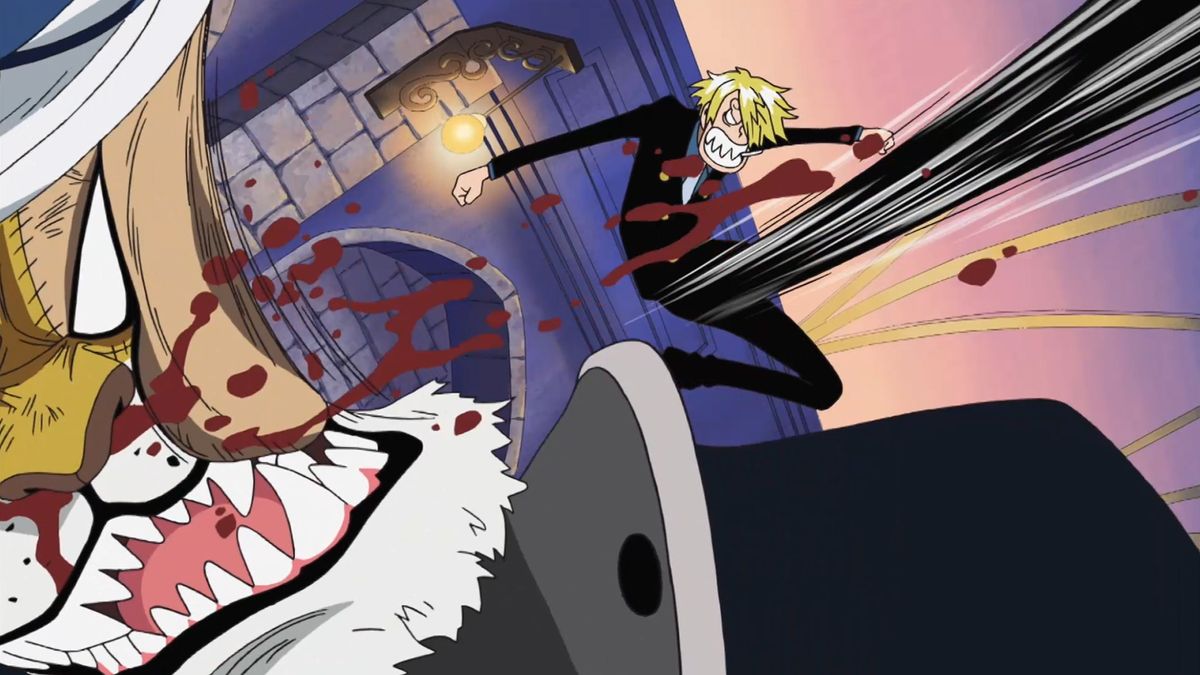
Sanji recovers Nami and continues fighting Absalom. His anger includes the discovery that the Devil Fruit he imagined possessing now belongs to a man whose behavior exposes the ugliest uses of invisibility.
RaeRae’s opening receipt
The episode’s joke cannot be allowed to blur the moral difference between a childish fantasy and Absalom’s repeated violations, but Sanji still has to answer for what his fantasy says about privacy.
Sanji’s childhood dream arrives wearing Absalom’s consequences
Sanji once imagined the Clear-Clear Fruit as the single Devil Fruit worth desiring. Episode 359 places that fantasy inside the hands of a man who uses invisibility to spy, abduct, assault, and control. A private joke becomes a confrontation with practical harm.
Seeing the power in use should force the fantasy to answer for what invisibility permits when another person’s privacy becomes disposable.
Absalom’s ownership of the fruit ends Sanji’s imagined route
Only one version of a Devil Fruit normally exists at a time, so Sanji believes Absalom has taken the dream permanently out of reach. His anger is partly absurd because the lost dream was built around voyeurism.
The comedy lands through excessive grievance, but the episode also reveals how badly desire can avoid examining its target.
The Clear-Clear Fruit does not create Absalom’s ethics
Invisibility provides capacity. Absalom chooses surveillance, kidnapping, forced intimacy, and a ceremony without consent. The power expands what his existing entitlement can accomplish.
Blaming the fruit alone would let the user disappear from responsibility. Tools create possibilities; people decide whose boundaries those possibilities will violate.
Sanji’s fantasy deserves scrutiny without false equivalence
Wanting invisibility to enter women’s private spaces is not harmless merely because the desire remained unrealized. The fantasy treats privacy as an obstacle to male pleasure. That deserves criticism.
Absalom has also committed concrete acts of violence. Distinguishing fantasy from action protects accuracy without excusing the entitlement shared between them.
Nami’s body is not the argument men get to own
The fight risks becoming a competition over which man has the superior relationship to women. Nami cannot be reduced to evidence in Sanji’s grievance about a Devil Fruit. Her captivity remains the urgent harm.
The moral question is not which man deserves access. The answer is that Nami determines access.
Rescue must restore the privacy Absalom treated as available
Ending the coerced wedding matters, but Absalom’s violence began before the ceremony. He used invisibility to enter spaces where women expected safety and to bypass the possibility of refusal.
A complete response names surveillance and unwanted access alongside kidnapping. Consent includes the right not to be watched.
Invisibility removes the social warning that danger is present
A visible attacker can be confronted, avoided, or reported. Absalom’s power lets him occupy private space while denying others the information needed to protect themselves.
The harm lies partly in that theft of awareness. People cannot make informed choices around a threat deliberately hidden from perception.
Absalom turns secrecy into asymmetrical power
He can observe without being observed, approach without announcement, and act before another person understands the conditions. Invisibility gives him information and access while denying both to his targets.
Episode 359 makes secrecy physical, but the underlying imbalance is recognizable wherever one person controls what others are allowed to know.
Sanji’s anger mixes protection with wounded desire
He is furious about Nami’s treatment and furious that Absalom possesses the fruit attached to his private fantasy. Those motives should not be flattened into a single noble flame.
RaeRae’s editorial voice can love Sanji and still separate the protective impulse from the entitlement needing examination.
A hero can be right about the villain and wrong about himself
Sanji correctly identifies Absalom as dangerous and the ceremony as illegitimate. He does not automatically become correct about every desire he expresses during the confrontation.
Fandom does not need moral perfection to recognize meaningful action. Complexity gives affection somewhere honest to stand.
The joke exposes rather than erases discomfort
Sanji’s revelation is staged for laughter through the scale of his reaction. Laughter need not close analysis. The joke supplies evidence about how casually privacy violations can be treated when no physical assault has occurred yet.
Comedy becomes a place to ask why the fantasy seemed charming before Absalom demonstrated the same premise without distance.
Absalom’s behavior is not romance becoming excessive
Romance requires recognition of another person’s will. Absalom treats Nami’s will as the obstacle his power and ceremony must overcome. That orientation is possession from the beginning.
Calling the result obsessive love would still grant him a relationship that Nami never chose.
Sanji’s kick interrupts a manufactured narrative
Absalom wrote himself as groom, Nami as bride, and resistance as irrelevant. Sanji’s attack refuses the script and forces the room to acknowledge conflict.
The interruption matters because coercion often depends on controlling the story witnesses are expected to repeat.
Nami’s unconsciousness keeps her from correcting both men
She cannot reject Absalom’s marriage or challenge Sanji’s framing of the conflict. Her silence leaves male narration filling the room.
That absence should make readers more careful, not less. Analysis must protect the choices the scene temporarily prevents her from voicing.
The desired fruit reveals a boundary Sanji has not fully learned
Sanji frequently recognizes hunger, sacrifice, and a woman’s immediate danger with startling sensitivity. Privacy remains a place where his comedy can contradict that care.
A character’s virtues do not automatically repair every blind spot. Growth requires the contradiction to stay visible.
Power amplifies values already present
Luffy’s rubber body amplifies his physical imagination. Robin’s abilities amplify her reach and capacity to protect or restrain. Absalom’s invisibility amplifies his refusal to respect boundaries.
The fruit does not determine character, but character determines what the fruit means in other people’s lives.
Absalom chose predation repeatedly
The bath, abduction, forced clothing, and attempted ceremony form a pattern rather than one mistaken impulse. Each step requires another decision to prioritize desire over Nami’s autonomy.
Patterns matter because accountability cannot be reduced to a single moment of poor judgment.
Sanji can protect Nami without being entitled to her affection
His duty arises from friendship and the fact that somebody is in danger. No rescue creates a debt of romance, gratitude, or access.
The strongest version of Sanji’s care acts because Nami’s freedom matters independently of what she may ever feel toward him.
The fight needs to return consequence to a hidden attacker
Absalom’s power has let him act without being seen and escape immediate response. Sanji’s ability to track and strike him brings physical consequence into contact with the person who kept avoiding visibility.
Being exposed is not the whole punishment, but exposure ends the protection secrecy provided.
Invisibility cannot hide a pattern once survivors name the pattern
An unseen act may be difficult to witness directly. Repeated experiences, missing time, disrupted spaces, and testimony can still establish what happened. Absalom’s supernatural advantage does not make victims unreliable.
The episode’s confrontation turns accumulated harm into a visible case against him.
Sanji’s dream was always about access rather than freedom
Luffy dreams of movement across an open sea. Robin dreams of historical truth. Sanji’s Clear-Clear Fruit fantasy imagines entering a space where other people did not invite him. Calling both desires freedom would ignore whose freedom pays the price.
A wish should be judged partly by the boundaries the wish requires others to lose.
The scene tests fandom’s willingness to hold contradiction
Sanji can be brave, loyal, perceptive, ridiculous, and wrong inside the same episode. Viewers do not need to erase the privacy joke to value his rescue of Nami.
Love for a character becomes sturdier when criticism does not feel like expulsion from fandom.
Absalom is responsible even if the episode makes room for jokes
Comic rhythm can coexist with serious harm, especially in One Piece. Tone does not change the facts of kidnapping and attempted forced marriage.
RaeRae’s reaction keeps the joke in view without letting laughter become an alibi.
The battle belongs inside Thriller Bark’s possession system
Moria possesses shadows, Hogback possesses bodies, and Absalom attempts to possess Nami’s future. Each officer treats another person as a resource available after sufficient technique.
Sanji’s confrontation becomes one front in a larger revolt against manufactured ownership.
Nami must be more than the reason Sanji looks heroic
Her violation cannot exist only to develop his anger or reveal his childhood dream. She is a navigator whose autonomy, labor, and choices carry independent value.
Person-first analysis resists turning a harmed woman into character development for the man arriving later.
Episode 359 remains an episode React
This page responds to Sanji’s Clear-Clear Fruit revelation, Absalom’s concrete abuses, Nami’s autonomy, and the difference between rescue and entitlement. A complete Thriller Bark Review belongs after the arc resolves those structures.
React classification preserves broadcast-level close reading and keeps whole-work Reviews distinct.
The official local still remains canonical
The Episode 359 still serves as featured image, hero, bounded-directory card, and social preview. One local attachment provides consistent recognition across every discovery route.
Complete source and accessibility metadata remain attached, and no other record reuses the image.
RaeRae’s final receipt
Episode 359 hands Sanji the power he wanted by showing him the man who already possesses the Clear-Clear Fruit. Absalom uses invisibility to spy, enter private spaces, abduct Nami, dress her while unconscious, and stage a marriage around consent he never received. The Clear-Clear Fruit did not invent that entitlement. The fruit gave entitlement reach and secrecy.
Sanji is right to burn over Nami’s treatment, and the old fantasy still deserves a receipt. Wanting invisible access to women’s private spaces also treats their boundaries as obstacles to a man’s pleasure. Fantasy and enacted violence are not equivalent, but refusing false equivalence does not require pretending the fantasy was harmless. Sanji’s rescue matters when the destination is Nami’s freedom, not his claim. A hero can be right about a villain and wrong about part of himself. Fandom can keep both truths without throwing away the character or the woman whose autonomy made the fight necessary.
Privacy includes control over who receives information
Absalom does not need to touch somebody for invisibility to cause harm. Secret observation takes information a person intended to keep within a chosen boundary. The target loses the ability to decide who may see, when they may see, and under what conditions.
That loss is why Sanji’s fantasy cannot be dismissed as a neutral wish for movement. The imagined pleasure depends upon women being denied knowledge of his presence and therefore denied the meaningful ability to refuse that presence.
Secrecy rearranges whose testimony appears credible
An invisible person can leave a survivor with experience that bystanders did not witness. The absence of a visible attacker may then be used to question the person who felt watched, touched, or endangered. Absalom’s power creates both access and plausible denial.
Naming the pattern becomes essential. Several violations connected to the same hidden actor establish responsibility even when the actor designed each encounter to avoid an ordinary witness.
Sanji’s contradiction can produce a better form of protection
Recognizing the harm inside Absalom’s behavior gives Sanji an opportunity to reconsider why invisible access once sounded desirable. Protection becomes stronger when privacy is valued before a visible assault occurs, not only after a villain crosses the final dramatic line.
The episode does not complete that growth for him. RaeRae’s reaction can still identify the direction: care for women must include respecting spaces where women did not invite him.
Nami’s anger belongs to Nami
Sanji’s rage can help end immediate danger, but his emotion should not replace hers. When Nami wakes, she retains the right to interpret what happened, decide what response she wants, and reject any story that converts the violation into a man’s romantic achievement.
Person-first rescue makes room for the survivor’s response even when another character delivered the spectacular kick.
The Devil Fruit becomes a receipt for the person using the power
Invisibility could support escape, rescue, reconnaissance, or protection. Absalom repeatedly selects voyeurism and coercion. Those selections expose him more clearly than visibility ever could.
The Clear-Clear Fruit hides his body while revealing his values. Every secret entrance and imposed decision tells the audience what he believes other people are allowed to keep from him.