RaeRae Reacts · One Piece Episode 315
Coby’s Promise and the New World Expand the Next Horizon
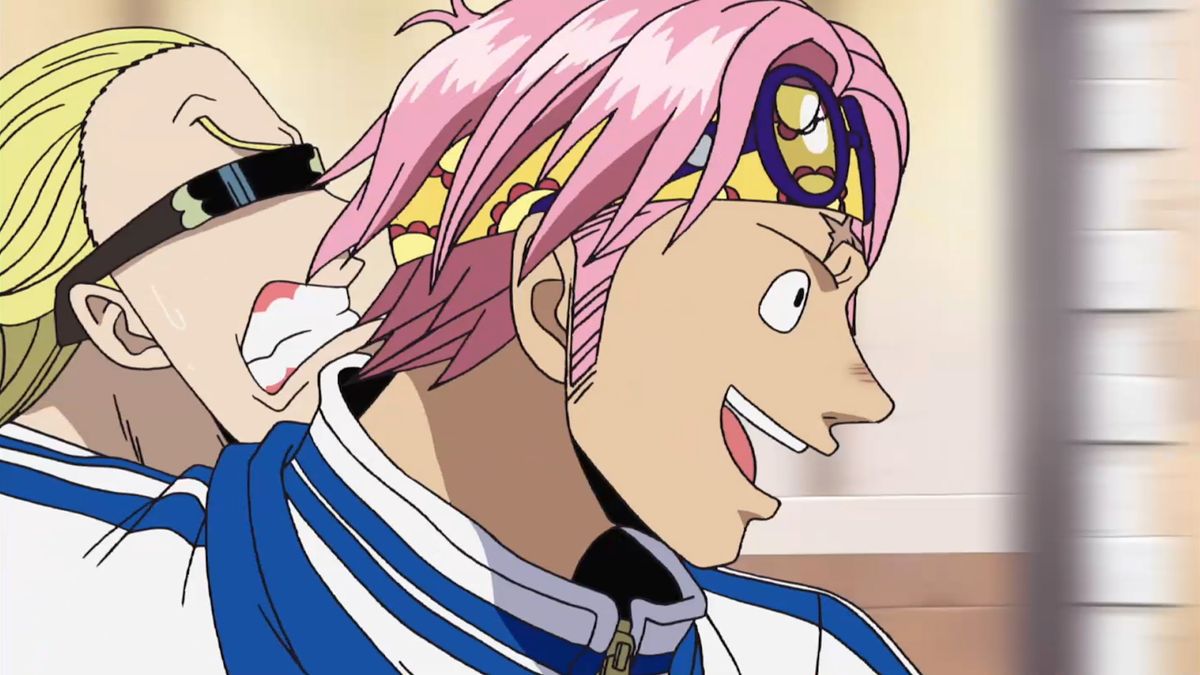
One Piece Episode 315 reunites Luffy with Coby and Helmeppo, then turns friendship across enemy uniforms toward the New World.
The short version
Episode 315 reunites Luffy with Coby and Helmeppo, shows how far Garp’s training carried them, and explains the New World waiting beyond the Red Line. Friends can stand on opposite sides of Marine and pirate law while still recognizing the promises that began in East Blue.
Coby’s growth is visible before explanation
The frightened cabin boy now moves, speaks, and dreams with trained confidence. Progress changes his posture without erasing the kindness that made Luffy trust him.
Helmeppo also chose work after privilege collapsed
Morgan’s son lost status and could have remained resentful. Training forces him to build capacity no family name can hand over.
Friendship survives institutional opposition
Coby remains a Marine and promises to capture Luffy. The friendship is not based on pretending their goals align. Respect includes taking one another’s chosen path seriously.
The New World gives the map a second horizon
Grand Line danger no longer represents the final scale. The sea beyond the Red Line holds the strongest pirates and the route toward the next phase of Luffy’s dream.
Coby makes a promise large enough to guide growth
Becoming an admiral once sounded impossible. Declaring the ambition to Luffy turns private hope into accountable direction.
RaeRae’s receipt
I love that Coby does not need to become a pirate to prove Luffy changed his life. Freedom gave him permission to choose the Marines honestly. Their friendship respects difference without becoming vague neutrality.
Episode facts and receipts
Episode 315 aired June 24, 2007. ONE PIECE.com credits Naoki Koga, Yoko Ikeda, Masahiro Shimanuki, Miho Shiraishi, and Michiyo Kawasaki.
Classification: numbered manga-canon post-Enies Lobby television episode and RaeRae React. Anime, Anime Series, Japanese Anime, and Anime Reacts, not Anime Reviews.
Coby returns as proof that one brave decision can keep growing
The frightened boy from Alvida’s ship has not disappeared; he has been transformed through choices that began beside Luffy. Episode 315 lets posture, voice, and physical confidence show the distance before dialogue measures the dream. Coby stands upright because he learned to name what he wanted and then accepted the work required to pursue that future.
The reunion never suggests Luffy deserves ownership of Coby’s growth. Luffy opened a door by refusing the lie Coby lived under. Coby walked through that door, trained under Garp, and kept moving. Friendship can change a life without becoming possession.
The friendship survives because neither dream asks permission
Luffy wants the Pirate King’s freedom. Coby wants to become an admiral. Those ambitions place them on opposing institutional sides, yet their first bond came from recognizing the same cage. Coby escaped fear through Marine service; Luffy escaped every demand that tried to prescribe his future. Their methods diverge while the original hunger for self-direction remains shared.
Episode 315 refuses cheap conversion. Coby does not announce that all Marines are wrong, and Luffy does not suddenly endorse the institution. Respect exists without ideological surrender. That makes the promised future confrontation feel meaningful rather than manufactured.
Coby’s capture promise is affection spoken in his chosen language
Promising to capture Luffy sounds hostile on paper. In the room, the vow carries recognition. Coby takes Luffy seriously enough to place him inside the future Coby is building. He will not repay liberation by becoming a follower. He will repay liberation by becoming strong enough to meet his friend honestly across the line both selected.
Luffy hears the respect beneath the threat. His delight matters because he wants friends to chase their own dreams, even when those dreams eventually collide with his. Freedom that only tolerates agreement would not be freedom.
The admiral dream no longer sounds like borrowed fantasy
In Episode 1, Coby’s goal felt impossibly large beside his fear. Now the ambition has muscle behind the words. Training has not completed the journey, but visible progress changes how the promise lands. Audacity becomes credible when effort accumulates around the declaration.
The story also preserves distance. Coby is not suddenly an admiral because a time gap occurred offscreen. He remains a young Marine with a long climb ahead. Growth receives celebration without pretending aspiration and arrival are the same state.
Helmeppo’s presence makes the reunion a shared receipt
Helmeppo began as everything Coby feared authority could become: entitled, cruel, and protected by somebody else’s rank. Seeing both men train together under Garp reveals how thoroughly their original positions changed. Coby gained courage. Helmeppo lost the shelter that let cowardice masquerade as power. Discipline gave each man a different correction.
Their partnership demonstrates that accountability need not end with permanent exile from growth. Helmeppo’s improvement does not erase former harm. Improvement proves he stopped demanding that his worst introduction remain his permanent identity.
Garp’s training produces strength without identical personalities
Coby and Helmeppo share a mentor, schedule, and institutional destination, but they do not emerge as copies. Coby retains earnest admiration. Helmeppo retains sharper pride and embarrassment. Garp’s influence develops capacity while their personal histories keep shaping how that capacity appears.
The contrast with Garp’s plan for Luffy is revealing. Training can support a dream somebody already owns. Training becomes control when the mentor decides the dream in advance. Coby chose the Marines, which lets hardship function differently from Luffy’s imposed childhood preparation.
The New World enters as a promise and a warning
Discussion of the sea beyond the Red Line changes the horizon after Enies Lobby. The Straw Hats have accomplished something enormous, yet the next waters contain powers that make current triumph look like entry rather than completion. Expansion arrives exactly when a lesser story might let victory create complacency.
The name itself carries mythic force. New World suggests geography, danger, and a different scale of competition. Coby provides the explanation as someone studying the same global map from the opposite side, which turns lore into information shared between future rivals.
One Piece lets the horizon grow without insulting earlier victories
Lucci does not become weak because stronger figures exist elsewhere. Enies Lobby does not become a tutorial because another sea waits. The crew paid real costs, changed real lives, and reached the limit of their present bodies. Future scale adds context rather than retroactively emptying accomplishment.
That balance matters in a long-running adventure. Escalation can make yesterday feel disposable. Episode 315 instead treats survival as qualification to hear about the next impossible place. The crew earned a wider horizon.
Coby becomes a messenger between two views of the sea
Marine intelligence maps danger through ranks, territories, and strategic balance. Pirates experience the same ocean through routes, dreams, rival crews, and freedom. Coby carries official knowledge into a friendly conversation with Luffy. The information crosses a boundary because their relationship existed before their uniforms.
That exchange shows why personal bonds unsettle rigid systems. Institutions prefer information and loyalty to travel along approved channels. Friendship creates another channel, one built from memory and mutual respect rather than command.
Luffy’s excitement confirms danger remains an invitation
Warnings about the New World do not make him calculate a retreat. Greater difficulty means a larger adventure and stronger people to meet. The response is predictable, but predictability becomes character consistency rather than laziness. Luffy has never wanted a safe imitation of freedom.
His excitement also reassures the crew after loss. Merry is gone, Robin has returned, and the ship question remains open. A new horizon reminds everyone that grief and forward motion can coexist. Continuing does not betray the companion they mourned.
The reunion gives Episode 1 a beautiful second chapter
Long-form storytelling earns special power when an early relationship returns changed but recognizable. Coby still admires Luffy. Luffy still responds to Coby’s dream with uncomplicated belief. Everything around those feelings has grown: bodies, reputations, stakes, uniforms, and the size of the promised future.
The scene rewards memory without requiring nostalgia to replace present movement. We are not asked to wish both boys back aboard Alvida’s ship. We are asked to appreciate how far one honest conversation carried them.
Coby’s admiration never becomes self-erasure
He could easily have been written as a fan whose identity revolves around celebrating Luffy. Episode 315 gives him a goal that will eventually oppose the hero directly. Admiration becomes fuel for self-development rather than an excuse to live secondhand.
That choice respects Coby and strengthens Luffy. A hero who inspires independent people is more compelling than a hero who collects permanent agreement. Coby honors the encounter by becoming more fully himself.
Luffy celebrates a rival before the rivalry exists
Coby has not reached the strength required to capture him. Luffy still treats the promise as worthy because he recognizes conviction before results. He hears the same courage that emerged when Coby finally spoke against Alvida. The scale changed, but the emotional note remains familiar.
Celebrating somebody’s future capacity is a form of faith. Luffy offers that faith freely because another person’s rise does not threaten his own dream. His confidence has room for other people to become formidable.
The Marines gain faces the audience wants to believe in
After the Buster Call, Coby and Helmeppo prevent the uniform from becoming a single moral shortcut. Their decency cannot absolve the institution that destroyed Ohara and targeted Robin. Their decency creates a question about whether honorable individuals can change, resist, or become trapped by that institution.
The tension is healthier than a clean division between good pirates and evil Marines. One Piece builds a world where labels describe alignment without completing moral judgment.
The conversation plants future pain alongside joy
A sincere promise to capture Luffy means a future meeting may demand action neither friend can laugh away. Rank will bring responsibility. Piracy will bring consequences. Their affection makes the potential conflict painful before any battle begins.
Episode 315 does not rush toward tragedy. The current reunion deserves warmth. Still, the vow places a shadow at the edge of the frame, reminding viewers that dreams eventually require difficult proof.
New World talk reframes the crew’s current readiness
The Straw Hats possess courage, specialized skills, and a captain capable of defeating a government assassin. They also lack a ship, carry fresh injuries, and know little about the powers ahead. Readiness becomes a process rather than a simple yes or no.
That framing creates anticipation for preparation. The next stage will demand better tools, deeper knowledge, and stronger mastery without asking the crew to become emotionally unrecognizable. Growth should expand who they are, not replace them.
The episode values information as an adventure event
No central fight drives the hour, yet the world changes through conversation. A father’s identity, a friend’s evolution, and a new ocean’s danger rearrange our understanding of the journey. One Piece knows revelation can create momentum as surely as a punch.
The key is emotional delivery. Facts arrive through people with history. Coby’s New World explanation matters because the frightened boy who once needed rescue now teaches Luffy something about the sea ahead.
RaeRae’s final receipt
Coby’s glow-up works because the story remembers the terrified child beneath the new confidence without trapping him there. He does not return to thank Luffy by giving up his own direction. He returns strong enough to promise a future clash. That is gratitude with a spine, and I love every second.
The New World reveal then turns their friendship into a compass pointing forward. Luffy will sail into greater danger. Coby will climb through the Marines. Someday those roads are supposed to meet with both men capable of honoring the promise. Episode 315 makes rivalry feel like another form of belief: I know you will become strong enough to stand there, and I plan to become strong enough too.
The promise gives both men a future witness
Dreams can become lonely when nobody remembers how small they looked at the beginning. Luffy remembers Coby before the uniform fit. Coby remembers Luffy before the bounty and global headlines. Each man carries evidence that the other’s ambition existed before the world considered either ambition credible.
That shared memory will matter when distance, rank, and reputation make honest recognition harder. Their next meeting will contain more power, but Episode 315 protects the humble origin beneath every future title.
Their promise keeps courage alive across every mile still waiting ahead.