RaeRae Reacts · One Piece Episode 310
The Going Merry Answers When Every Escape Route Sinks
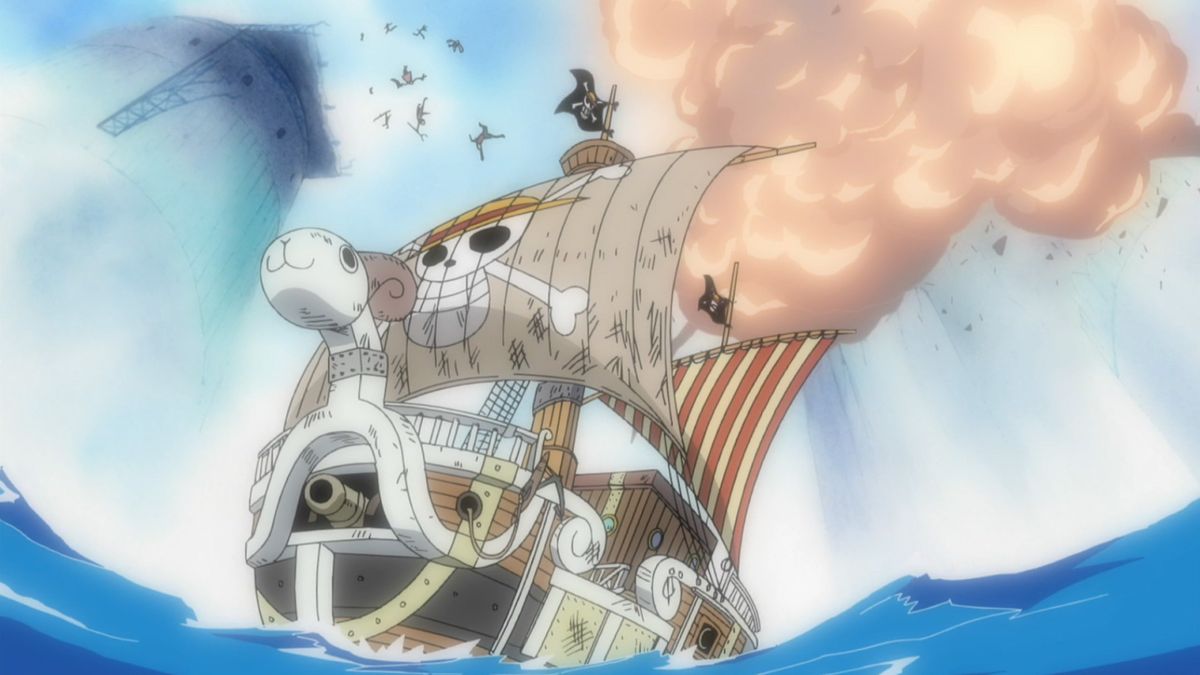
One Piece Episode 310 strands the crew under Buster Call cannons before a familiar voice and their first ship answer from the sea.
The short version
Episode 310 takes away the escape ship, surrounds an exhausted Luffy with cannons, and lets a familiar voice rise from the sea. The Going Merry reaches Enies Lobby because the crew’s first home refuses to let their story end without one last rescue.
Winning every major fight still does not create escape
CP9 has fallen and Robin is free, but the vessel the group expected to use sinks under fire. The episode separates combat victory from logistical survival. A route home remains necessary.
Luffy cannot move after defeating Lucci
Jet Gatling consumed the final reserve. His immobility protects the cost of the victory and makes the surrounding cannon towers terrifying. The captain saved everyone from Lucci and now needs everyone to save him.
The mysterious voice reaches people who know it
The crew hears a call that should not exist in the middle of the Buster Call. Recognition arrives emotionally before the source becomes visually certain. A relationship speaks across chaos.
Merry answers after being declared unable to sail
Water 7 established the ship’s broken keel and impossible future. Reaching Enies Lobby does not overturn that diagnosis as though Usopp was technically correct. The voyage is extraordinary precisely because the damage remains terminal.
A ship becomes a crewmate through accumulated life
Merry carried meals, arguments, repairs, dreams, storms, and celebrations. The voice makes explicit what the series built through shared experience: home can become a participant in the family formed aboard the ship.
RaeRae’s receipt
The arrival works because One Piece never asks us to forget the Water 7 conflict. Merry cannot continue forever. Merry can still choose one final journey toward the people who loved, damaged, repaired, and lived aboard her.
The rescue is impossible, emotional, and completely earned by memory.
Episode facts and receipts
Episode 310 aired May 20, 2007. ONE PIECE.com credits Ryo Suga for the script, Yoshihiro Ueda for direction, Kazuya Hisada for animation direction, and Miyuki Sato with Michiyo Kawasaki for art.
Classification: numbered manga-canon Enies Lobby television episode and RaeRae React. Anime, Anime Series, Japanese Anime, and Anime Reacts, not Anime Reviews.
The lost escape ship removes the obvious ending
The crew has defeated CP9, recovered Robin, and reached a vessel. Cannon fire sinks that solution before triumph can settle. The story insists that winning fights and surviving institutions are different tasks.
Every conventional route now belongs to the fleet or lies broken beneath bombardment. The sudden absence creates space for a rescue tied to the arc’s deepest unresolved relationship.
Luffy becomes the person left behind
He stayed with Lucci because nobody else could contain the agent. After Jet Gatling, his body cannot carry him toward the bridge. The captain who repeatedly grabbed crewmates out of danger now waits under cannon aim.
That reversal keeps leadership reciprocal. Protecting everyone does not exempt Luffy from needing protection in return.
A crew is not one permanent rescuer followed by grateful dependents.
The surrounding cannons make immobility terrifying
Luffy can see or sense danger without possessing the strength to answer. The Buster Call has no respect for the duel he just won or the body he spent securing victory. Artillery treats exhausted heroism as another target coordinate.
The scene makes the cost of Gear Second and Jet Gatling material. Victory has emptied the very body escape requires.
A voice enters before the ship
The crew hears an invitation to jump into the sea. Under ordinary conditions, the instruction would sound suicidal. Recognition changes the meaning. The voice carries familiarity built across voyages, repairs, storms, laughter, and conflict.
Sound allows Merry to arrive emotionally before the visual reveal. The family hears home calling through the noise of government weapons.
The Klabautermann thread receives its answer
Skypiea introduced the mysterious figure repairing Merry when no ordinary shipwright was present. Usopp’s experience suggested that extraordinary care had awakened a presence within the ship.
Episode 310 turns that earlier mystery into rescue. The voice is not a last-minute invention dropped into Enies Lobby. The series planted the possibility when the crew’s care and the ship’s damage first became impossible to separate.
Merry’s arrival does not prove the keel was repairable
This distinction matters after Water 7. Iceburg and the Galley-La shipwrights diagnosed fatal structural failure. The final journey exceeds reasonable capacity because Merry is spending the last of herself, not because professional knowledge was false.
Usopp’s love was true. Luffy’s decision was necessary. The ship’s arrival allows both facts to remain intact.
Grief becomes richer when nobody needs to become a liar for emotion to count.
Iceburg helps the miracle reach the sea
Merry does not travel from Water 7 through desire alone. Iceburg hears the ship’s wish and performs the physical work needed to let the vessel attempt one final departure. Human skill cooperates with the extraordinary bond.
That combination protects the story from treating care as a substitute for maintenance. Love hears the request. Shipwright knowledge gives the request a temporary body.
The first ship returns as an active crewmate
Merry carried the Straw Hats from East Blue into the Grand Line, through storms, sky, war, and ordinary days nobody counted as historic. Those accumulated journeys turned transportation into relationship.
The voice confirms what the crew’s behavior already established. They ate, slept, argued, celebrated, mourned, and dreamed inside this body.
Home has arrived to carry the people who once carried home through repairs.
The rescue answers Usopp’s deepest fear without validating denial
Usopp fought Luffy because leaving Merry felt like declaring their shared past disposable. The ship’s return proves the bond mattered and that Merry loved the crew back.
The terminal damage remains terminal. Love can produce one final gift without promising indefinite continuation.
Episode 310 respects Usopp’s emotional truth while preserving the practical truth that forced Luffy’s decision.
Jumping requires trust beyond evidence
The crew cannot perform a complete inspection or calculate the vessel’s remaining integrity while shells fall. They hear the voice, recognize the relationship, and leap.
Trust here is not blind allegiance to a stranger. Hundreds of episodes supply the evidence. Merry protected them through every sea the hull could cross.
The leap becomes a reunion enacted before safety can be guaranteed.
A small ship challenges a military fleet
Buster Call warships represent state scale, industrial firepower, and standardized authority. Merry is visibly smaller, damaged, and built for a much earlier stage of the crew’s journey.
The contrast makes the rescue defiant. Power measures capability through size and weapons. Relationship creates an action no admiral planned for.
The fleet can target objects. The fleet cannot understand why this particular object answers like family.
The ship’s agency changes the moral language of farewell
If Merry were only property, the crew’s earlier argument would reduce to owners disagreeing over replacement. The voice makes the ship a participant whose wishes deserve attention.
Merry wants to sail toward the crew despite terminal damage. Later, the crew will need to listen when the body can no longer continue.
Agency includes the right to offer a final act and the right to reach a final limit.
Yoshihiro Ueda directs revelation through recognition
The episode delays certainty long enough for the audience to share the crew’s disbelief. The voice, the sea, Luffy’s vulnerability, and the fleet’s pressure converge before the ship becomes fully visible.
Kazuya Hisada’s animation direction gives Merry movement that feels determined without turning the vessel into a human body.
The ship remains wood and sail while emotion teaches viewers how to read the motion.
The miracle arrives with an expiration date
One Piece does not use Merry’s return to restore the old status quo. Visible damage and Water 7’s diagnosis remain present. The rescue is powerful because viewers understand this voyage cannot establish another season of ordinary sailing.
A final act may be extraordinary without becoming a cure.
The episode asks us to celebrate arrival while beginning to understand what arrival costs.
The crew’s bond becomes audible
People often describe a ship as carrying memories, but Episode 310 lets memory answer. The voice gathers every repair, apology, adventure, and moment of shelter into direct communication.
Merry does not list achievements or ask for recognition. The ship offers the thing the crew needs: a way home.
That simplicity makes the scene more devastating than a grand speech could.
RaeRae’s second look
I reject the false choice between shipwright facts and fandom emotion. Merry’s keel was broken beyond continued repair. Merry also became family through care and shared life. Both truths produce this rescue.
The ship does not arrive to prove Luffy wrong. The ship arrives because Luffy, Usopp, and everyone aboard mattered enough for one last impossible crossing.
Episode 310 turns home into a voice saying, “I came for you,” when every official route has disappeared.
Merry reaches the people who once gave the ship a voice
The crew’s care did not always look careful. They damaged rails, patched holes badly, and demanded voyages beyond ordinary design. They also treated the deck as home, spoke to the figurehead, repaired wounds with affection, and filled the hull with shared life.
The returning voice grows from that imperfect relationship. Merry answers people who never loved perfectly but loved consistently enough for a ship to recognize family.
The rescue makes reciprocity visible
For years, the crew relied on Merry to carry them. They defended the ship, repaired damage, and fought over the meaning of the ship’s future. Episode 310 reverses the direction once more.
Merry comes for them. Care was never flowing only from owner to possession. The final voyage reveals a bond where both sides acted for the other’s survival.
The voice offers instruction rather than explanation
Merry does not pause the Buster Call to describe metaphysics. The ship tells the crew where to jump and promises a route. Urgency keeps communication grounded in rescue.
Viewers understand identity through accumulated memory. A long technical lecture would weaken the recognition already happening in every face.
The sea receives the crew instead of swallowing them
Moments earlier, water nearly drowned several members inside the tunnel. Now jumping into the sea becomes the path toward Merry. The element remains dangerous, but trust and timing change the outcome.
One Piece repeatedly treats the ocean as threat, home, road, and mystery at once. Episode 310 gathers all four meanings around the leap.
Merry’s final agency complicates the language of replacement
The crew needs another ship capable of future seas. That practical need never makes Merry interchangeable. A new vessel can perform the job without becoming the same relationship.
The return clarifies what Water 7 was mourning. They were not merely losing equipment. They were facing the end of a companion whose body could no longer meet the voyage.
The rescue validates grief before the funeral begins
People often need proof that a relationship mattered when loss becomes unavoidable. Merry provides that proof directly by crossing impossible water and calling the crew home.
The next goodbye will still hurt. The hurt no longer has to compete with uncertainty about whether the ship understood their love.
RaeRae’s final receipt
Merry’s arrival is not a loophole and not a correction of the shipwrights. The broken ship makes one last choice with help from Iceburg, reaches the crew, and offers the remaining strength freely.
That truth is sadder and more beautiful than a surprise repair. Home does not promise forever. Home says, “Jump. I found you,” while the cannons close in.
The arrival turns the crew’s oldest memories into present help
Every island carried aboard Merry seemed safely behind them until the ship returned. Episode 310 makes history active. Repairs from Skypiea, promises from East Blue, and ordinary days on deck all travel into Enies Lobby.
The past does not trap the crew. The past arrives as support for one final movement toward a future Merry cannot physically share.
Merry reaches Enies Lobby without promising another ordinary voyage. The ship offers rescue rather than recovery. That difference preserves every hard Water 7 truth while letting affection become active one final time. The crew jumps because home has found them before home disappears.
Merry turns memory into transportation one final time. The crew receives rescue from the home they feared they had already lost.
The final voyage makes that shared love visible across the impossible sea.