RaeRae Reacts · One Piece Episode 307
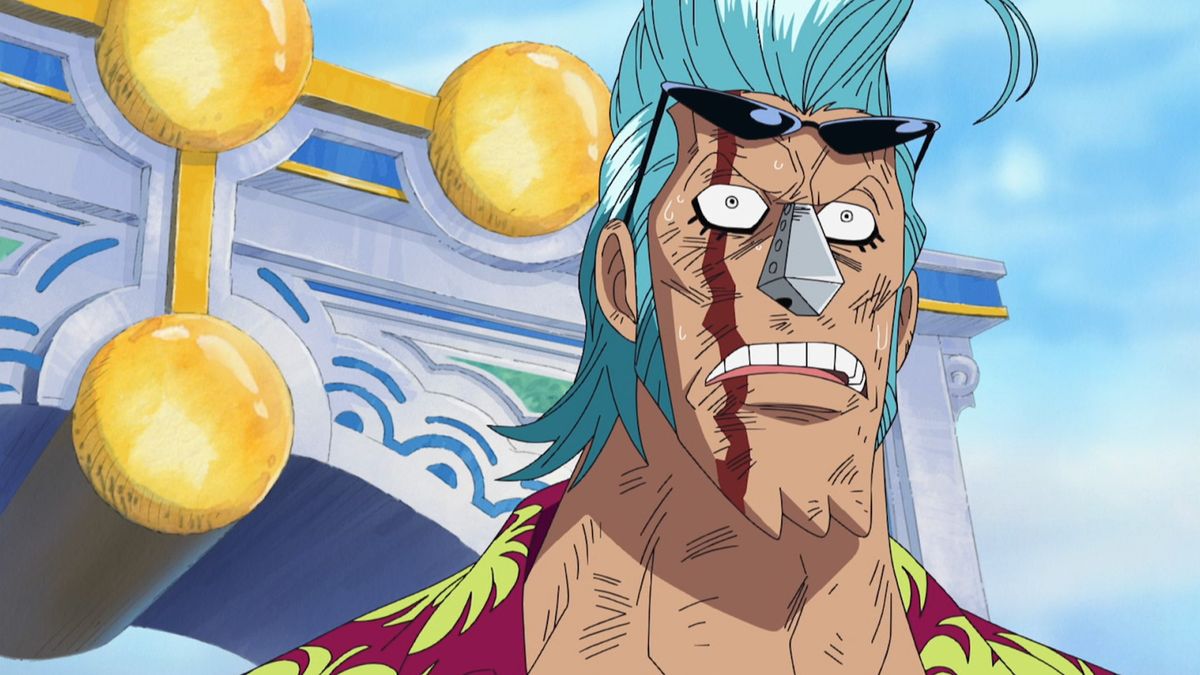
The Buster Call Burns Allies Beneath Franky’s Helpless Cry
One Piece Episode 307 reunites Robin with the escape group while government cannons target the Franky Family and Galley-La still on the island.
The short version
Episode 307 reunites Robin with the escape group while the Buster Call turns Enies Lobby into fire and threatens allies still trapped on the island. Freedom has a boat waiting, but nobody can celebrate cleanly while Luffy fights and the Franky Family with Galley-La remain beneath government cannons.
Robin reaches people who came for her
The reunion gives physical proof that her declaration at the courthouse changed the story. She is no longer being marched toward disappearance. Friends surround her on a vessel aimed away from government custody.
The crew still waits for its captain
Escape without Luffy would violate the rescue’s meaning. He stayed behind because Lucci could hunt everyone else. The group honors that sacrifice by holding the route open rather than treating his absence as an acceptable cost.
Enies Lobby burns under its own authority
The island advertised permanent daylight and perfect justice. Cannon fire reduces that image to smoke, rubble, and indiscriminate death. Government weapons reveal how little the institution values even its own landmark once control feels threatened.
The Franky Family and Galley-La remain exposed
The supporting allies did not receive protagonist immunity by joining the charge. They fought through gates and agents, carried wounded people, and created openings. Now bombardment treats their lives as disposable debris.
Franky’s cry refuses easy victory
He can see the place where his people struggle beneath fire. Reaching Robin does not cancel responsibility toward everyone who made that success possible. His grief keeps the episode’s moral attention wide.
The Buster Call repeats institutional abandonment
Marines and government employees remain on the island, yet the fleet fires. Obedience offers no durable protection when leadership decides erasure is more convenient than rescue. The system consumes its own servants.
RaeRae’s receipt
Episode 307 makes the escape ship feel hopeful and unbearable at the same time. Robin is free. Luffy is missing. Allies are under fire. The crew has achieved something enormous without reaching a safe ending.
That unfinished emotional accounting is why the Buster Call works as more than background spectacle.
Episode facts and receipts
Episode 307 aired April 29, 2007. ONE PIECE.com credits Naoki Koga for the script, Hiroyuki Kakudo for direction, Takeo Ide for animation direction, and Miyuki Sato with Michiyo Kawasaki for art.
Classification: numbered manga-canon Enies Lobby television episode and RaeRae React. Anime, Anime Series, Japanese Anime, and Anime Reacts, not Anime Reviews.
The reunion proves Robin has crossed back into choice
Robin reaches Nami and the others without cuffs controlling her arms or Spandam controlling her direction. That change is physical, emotional, and political. She stands among people who heard her say she wanted to live and treated the statement as a binding mission.
The escape ship is not safety yet, but the deck already offers something Enies Lobby denied: a future shaped through relationship rather than custody.
Robin can look toward the next danger as a participant instead of evidence being transported.
Kokoro’s rescue turns near-death into renewed movement
The flooded passage almost ended several stories after the major duels were already won. Kokoro’s mermaid body carries the group past an environmental threat strength could not solve.
Reaching the vessel means her intervention continues producing consequences. Every person now defending Robin owes the opportunity to an older woman whose form surprised them.
One Piece keeps its ensemble honest by letting support work remain visible after the immediate rescue ends.
Waiting for Luffy refuses sacrificial captain mythology
Luffy stayed with Lucci so everybody else could move. A cruel version of leadership would treat the captain’s death as the noble price of success and order the ship away. The Straw Hats reject that arithmetic.
His sacrifice creates time, not permission to abandon him. They prepare to escape together because the crew’s promise applies to the person making the promise too.
Robin cannot be saved through repeating the logic that somebody valuable must disappear for everyone else.
The Buster Call turns official property into acceptable loss
Enies Lobby houses courts, agents, Marines, workers, prisoners, and generations of government symbolism. The fleet fires anyway. Preserving institutional prestige matters less than erasing evidence of defeat.
The destruction exposes a system willing to burn its own stage once the performance of control fails.
Permanent daylight never meant moral clarity. Cannon smoke finally makes the darkness visible.
Government employees discover loyalty is not reciprocal
Many people on the island served the institution without access to Spandam’s decisions or the fleet’s strategy. Their obedience does not earn evacuation before bombardment. They become collateral inside the organization they helped operate.
That does not erase individual responsibility for participating in Enies Lobby. The abandonment still reveals how power values its lower ranks.
A hierarchy demanding loyalty while offering disposability is not a family. The episode makes that contrast with the Straw Hats brutal.
The Franky Family paid for belonging with action
Franky’s people began as enemies who attacked Usopp and stole crew money. Water 7 forced conflict, reckoning, and eventually a shared target. At Enies Lobby they rammed gates, fought guards, carried injuries, and kept moving toward Robin.
The Buster Call does not distinguish their growth from their criminal label. Government artillery flattens every story into target coordinates.
Franky refuses that flattening because he knows their names, loyalties, and ridiculous individual habits.
Galley-La workers chose truth over institutional convenience
Paulie, Lulu, Tilestone, and their companions learned that trusted colleagues were CP9 infiltrators. They could have retreated into humiliation or protected the company’s reputation. Instead, they joined the rescue route and confronted the people who used Water 7.
Their presence beneath cannon fire is not incidental. Ordinary workers chose solidarity after deception shattered their workplace.
Episode 307 makes the cost of that choice visible without declaring the choice mistaken.
Franky’s cry carries leadership without control
He can see danger reaching his family while standing too far away to physically shield them. That helplessness cuts against his usual confidence in mechanical solutions and bodily force.
Leadership sometimes means loving people whose choices place them beyond your ability to guarantee safety. Franky cannot reduce them to followers who should have stayed home.
His cry recognizes their agency and the unbearable possibility of losing them anyway.
Success and grief occupy the same deck
Robin is present. The cuffs are gone. The escape vessel waits. Those facts deserve celebration. The island burns behind them, Luffy remains in combat, and allies stand beneath artillery. Those facts forbid a clean victory pose.
Episode 307 trusts viewers to hold contradictory emotions rather than selecting one official mood.
Rescue progress can be real while safety remains uncertain and grief begins accumulating.
The fleet makes violence impersonal on purpose
Lucci and Spandam give government cruelty recognizable faces. The Buster Call expands cruelty into ships, coordinates, orders, and synchronized cannon fire. Individual sailors can claim they only performed assigned tasks.
That distribution of responsibility helps institutions create devastation without one person feeling ownership of the whole.
Robin’s history teaches why the machinery is terrifying. Nobody needs personal hatred when procedure can carry the shells.
Ohara returns through fire, but Robin is no longer alone
The visual language resembles her childhood catastrophe: overwhelming government force, an island marked for destruction, and escape narrowed toward the sea. Trauma recognizes the pattern before hope can make an argument.
The present difference is relational. Robin stands with people who invaded the government’s strongest courthouse because her life mattered to them.
The Buster Call repeats its method. The Straw Hats interrupt the isolation that made the earlier method nearly complete.
Luffy’s unseen fight controls every visible choice
The crew cannot watch each exchange with Lucci, yet their strategy depends on Luffy holding the agent back. His absence becomes a pressure inside every conversation on the vessel.
Trust has to operate without updates. Nobody can demand reassurance while the island collapses.
Episode 307 turns offscreen labor into emotional presence. The captain remains part of the scene because everybody plans around bringing him home.
The escape ship represents possibility, not ownership
A government vessel was designed to transport power according to official command. The rescue party repurposes that object as a route away from custody. Tools do not carry permanent moral allegiance to the institution that purchased them.
Holding the ship means converting state infrastructure into freedom.
The theft feels appropriate because Enies Lobby already used law to steal Robin’s future.
Hiroyuki Kakudo directs simultaneous scales of loss
The episode moves between Robin’s immediate reunion, Franky’s personal anguish, allies under bombardment, and an island collapsing beneath a military operation. Hiroyuki Kakudo keeps those scales connected through lines of sight and cause.
Takeo Ide’s animation direction gives destruction physical weight while preserving readable human reactions.
Spectacle becomes meaningful because the camera remembers who is watching the fire and why those distant figures matter.
The episode refuses disposable supporting characters
The Franky Family and Galley-La could have vanished from attention once Robin reached the ship. Episode 307 returns to them because a rescue story loses moral credibility when helpers become expendable after completing their function.
Franky’s horror keeps their survival inside the main objective.
Chosen family widens the circle of people an ending must account for.
RaeRae’s second look
Episode 307 hurts because every victory receipt has another name written underneath. Robin reaches the vessel because dozens of people created the route. Watching shells fall on those people turns gratitude into panic.
I love that Franky does not pretend rescuing Robin balances any possible loss. Human beings are not interchangeable points in a heroic calculation.
The Buster Call sees targets. Franky sees family. That difference is the episode’s moral center.
The cannon fire cannot erase what the allies already changed
Even if the fleet destroys buildings and routes, the Franky Family and Galley-La have already altered Robin’s fate. They broke open paths the government expected to remain sealed and carried the Straw Hats farther than individual strength could manage.
Their work survives inside every person who reached the vessel. Destruction can threaten bodies without undoing the solidarity those bodies created.
Franky’s helplessness deserves space
Heroes are often allowed anger but denied the terror of watching loved ones beyond reach. Franky’s cry refuses that restriction. He has enormous strength, a rebuilt body, and weapons hidden everywhere. None can instantly close the distance between the ship and his family under fire.
The emotion does not make him less capable. The emotion proves those people were never disposable followers.
Robin’s rescue widens rather than narrows responsibility
Saving one person does not require ignoring everyone else caught in the operation. The story keeps Robin central while returning attention to the workers, outlaws, giants, and civilians whose choices enabled her freedom.
That widening is important. A liberation story becomes morally thin when the named survivor is treated as the only life worth counting.
Episode 307 keeps the ledger open until every possible escape has been pursued.
The burning island destroys the myth of controlled violence
Spandam activated the Buster Call through incompetence, but the fleet executes the order with disciplined force. One man’s error becomes institutional catastrophe because the weapon contains no meaningful safeguard for the human reality below.
Power calls this controlled procedure. The screen shows uncontrolled loss.
Any system capable of erasing an island because a single authorized voice pressed the wrong button was already built recklessly.
RaeRae’s final receipt
Robin standing on the escape vessel is a victory I refuse to minimize. Franky watching shells fall on his people is a grief I refuse to trade away for that victory. Both belong in the same frame.
Episode 307 understands that chosen family keeps multiplying obligations. The more people help one another, the more lives the ending must honor. That is not narrative clutter. That is the point.
The sight of fire changes what reunion means
Robin rejoins the group while the island behind them becomes another government-made ruin. Her freedom cannot depend on forgetting the people still inside that landscape. The crew has to look backward as well as toward escape.
Episode 307 makes memory immediate. Every survivor carries the obligation to name who helped, who was endangered, and which institution fired the cannons. Celebration without that accounting would repeat the erasure the Buster Call was designed to create.
The smoke cannot hide the human debt. Every ally under fire remains part of the rescue story and part of its required ending.