RaeRae Reacts · One Piece Episode 306
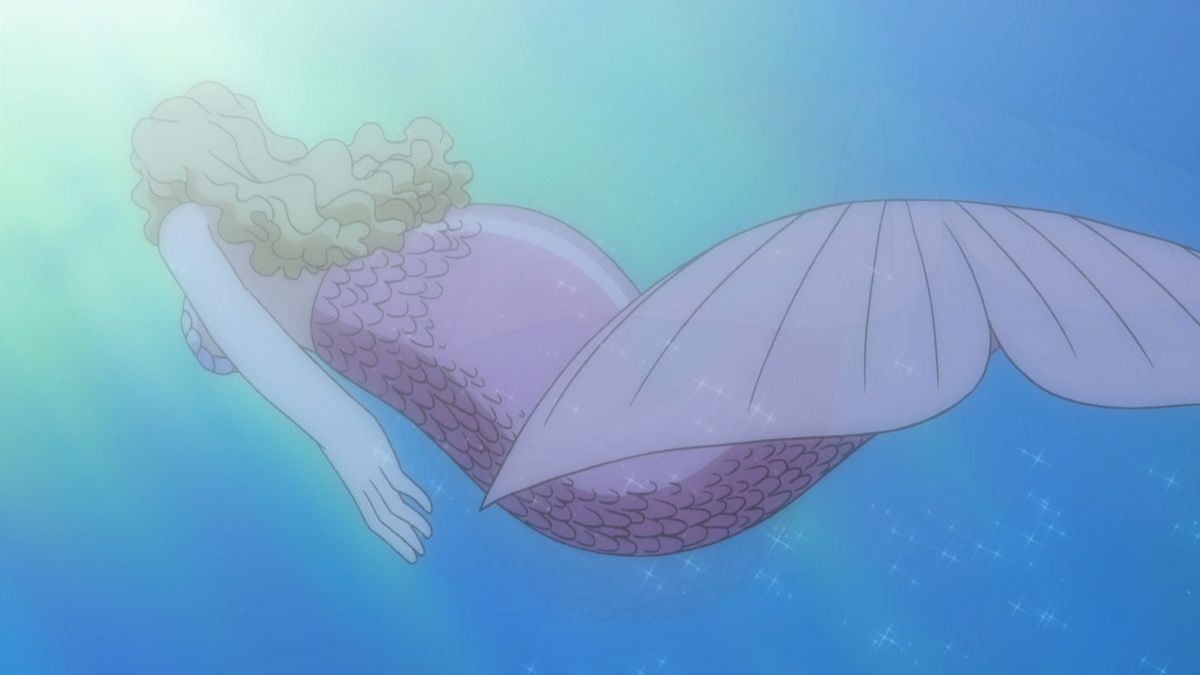
Kokoro’s Mermaid Reveal Saves the Drowning Escape Team
One Piece Episode 306 lets Franky crush Spandam for Tom, then reveals Kokoro as the mermaid who can save the flooded crew.
The short version
Episode 306 lets Franky finally crush Spandam, then reveals Kokoro as the mermaid who saves the drowning escape team. One payoff is years of grief becoming a giant elephant-shaped blow. The other is a ridiculous secret becoming the reason several friends live.
Franky’s strike carries Tom’s memory
Spandam manufactured the case that destroyed Tom’s life and spent years protected by the institution that rewarded the lie. Franky cannot reverse that loss. He can stop the same man from dragging Robin through another government-made sentence.
Personal revenge serves a present rescue
The blow satisfies an old wound, but timing matters. Franky acts while Spandam still threatens Robin. Memory gives the strike emotional force; protecting a living person gives the force direction.
Funkfreed becomes the instrument of humiliation
Spandam relied on the elephant sword as borrowed strength. Franky turns that symbol against him. A man who treats creatures, agents, and institutions like extensions of his ego gets flattened by the spectacle he used to look powerful.
The flooded tunnel changes the danger completely
Zoro, Sanji, Nami, Chopper, Sogeking, and the others survived assassins only to face water in an enclosed passage. Devil Fruit vulnerability, exhaustion, and limited air make strength rankings nearly irrelevant. The environment does not care who won a duel.
Kokoro’s reveal is comedy with life-saving consequences
The mermaid reveal is played for shock because nobody imagined the older stationmaster carried that identity. Beneath the gag sits practical salvation. Kokoro can move through the water that immobilizes several rescuers.
A grandmother becomes the rescue vehicle
Anime often reserves miraculous physical reveals for young bodies designed to impress. Kokoro refuses that narrow expectation. Age, unconventional beauty, and heavy drinking never cancel her competence or her place inside Water 7’s history.
RaeRae’s receipt
I love that Episode 306 delivers two different corrections. Spandam learns that stolen authority cannot protect him forever. The drowning crew learns that dismissing Kokoro’s strangeness was their mistake.
Franky answers an old betrayal. Kokoro answers immediate panic. Both acts keep Robin’s chosen future alive.
Episode facts and receipts
Episode 306 aired April 22, 2007. ONE PIECE.com credits Ryo Suga for the script, Keisuke Onishi for direction, Kazuyuki Ikai for animation direction, and Miho Shiraishi with Kumiko Fukuzawa for art.
Classification: numbered manga-canon Enies Lobby television episode and RaeRae React. Anime, Anime Series, Japanese Anime, and Anime Reacts, not Anime Reviews.
Franky has waited years to touch the source of the wound
Spandam framed Tom with weaponized Battle Frankies, turned government procedure into theater, and left Water 7 carrying damage that never received legal repair. Franky rebuilt his body, gathered a family, and kept the memory alive beneath swagger.
Episode 306 finally places Spandam within reach while he is repeating the pattern against Robin.
The strike is not random revenge entering the rescue. The past and present crime have become the same target.
Tom’s teaching keeps revenge from consuming the scene
Tom taught pride in creation, responsibility for what a person builds, and refusal to disown work simply because somebody else abuses the creation. Franky spent years struggling with that lesson after Spandam used his ships.
Crushing Spandam cannot restore Tom, but protecting Robin lets inherited grief produce a future-facing action.
Franky honors his teacher more fully through rescue than through suffering alone.
Spandam’s body finally experiences the force he outsourced
Throughout Enies Lobby, subordinates, prisoners, weapons, and institutions absorbed consequences for his decisions. He gave orders while other bodies bled. Franky’s blow closes that distance.
The moment is exaggerated because One Piece understands the appetite for visible accountability after prolonged abuse.
No courtroom delivered justice for Tom. The man who corrupted the court meets somebody the court failed.
Funkfreed symbolizes borrowed grandeur
Spandam carries a sword that becomes an elephant, allowing him to display threat without developing courage. Funkfreed makes his office look physically impressive while remaining another living being used as equipment.
Franky turning elephant-scale force back on him makes the humiliation specific. The borrowed spectacle cannot maintain the fantasy of competence.
Spandam’s authority was always larger than the person holding the office.
Robin witnesses somebody answer the architect of her pain
Franky’s history with Spandam differs from Robin’s, yet both lives were damaged by the same man’s ambition and the same government’s willingness to believe useful lies.
The strike creates solidarity across separate wounds. Franky does not need identical trauma to recognize the person in front of him as dangerous.
Shared opposition becomes another reason Robin no longer faces the institution alone.
The episode pivots from revenge to rescue without losing either
After the blow, the story moves toward the flooded passage where crew members are losing consciousness. That transition refuses to let catharsis become the ending.
One enemy suffering does not guarantee everybody else survives. The rescue ledger remains open.
Franky’s emotional payoff and Kokoro’s intervention sit beside each other because One Piece measures victory through people carried forward, not only villains knocked down.
Water defeats power rankings
Zoro’s swords, Sanji’s kicks, Chopper’s transformations, and Sogeking’s range cannot provide oxygen inside a flooded tunnel. Devil Fruit users face an additional physical disadvantage. The environment resets the hierarchy.
That reset is healthy for ensemble storytelling. Different dangers reveal different forms of competence.
Kokoro can solve the crisis because her body belongs to water in a way the fighters’ bodies do not.
The mermaid reveal challenges a narrow fantasy
Chimney encouraged assumptions about what a mermaid relative should look like, and the crew carried familiar ideas about youth and conventional beauty. Kokoro’s tail detonates those expectations.
The comedy is broad, but the rescue gives the reveal authority. Everybody laughing or screaming still owes survival to the woman who did not match the fantasy.
Beauty standards become especially silly when the supposedly disappointing body is the capable body in the room.
Age expands Kokoro’s usefulness rather than shrinking it
Kokoro carries history with Tom, the sea train, Water 7, and the choices that shaped Franky. Her age gives context, judgment, and a lifetime of navigating dangerous water.
The episode adds direct physical rescue to that list. She is not merely the elder who explains the past while younger heroes act.
An older woman becomes the person whose movement determines whether the adventure continues.
Kokoro’s drinking never erases her reliability
The story uses her alcohol consumption for comedy and texture, but Enies Lobby repeatedly shows that Kokoro understands danger and acts when action becomes necessary. She drove Rocketman into chaos, supported the rescue party, and now enters floodwater.
Unconventional habits do not automatically equal incompetence.
When the crisis becomes aquatic, Kokoro is clearer about the solution than everybody who underestimated her.
Chimney and Gonbe belong inside the rescue ecosystem
The child and rabbit-cat companion bring curiosity, nerve, and accidental discovery to situations adults approach through plans. Their presence also raises the stakes of every collapsing passage and cannon blast.
Kokoro does not move through the tunnel as an isolated miracle. Family relationships shape her urgency and the group’s willingness to trust.
Enies Lobby succeeds because its rescue party includes bodies and ages most battle arcs would leave outside the gate.
The drowning sequence makes consciousness fragile
Victories remain present in memory, yet oxygen loss strips away the ability to act. The episode lets perception blur and certainty weaken before the mermaid form becomes visible.
That staging makes Kokoro’s arrival feel dreamlike without turning the rescue into unexplained magic.
The survivors later have to reconcile an impossible image with the ordinary woman they thought they understood.
Comedy becomes a release valve after real fear
The mermaid shock allows laughter immediately after the possibility of group drowning. Relief comes through character reaction rather than a separate joke pasted over danger.
One Piece often survives emotional intensity by letting absurdity enter the same event that caused the fear.
The humor says life has returned strongly enough for everyone to be appalled by the details of salvation.
Keisuke Onishi balances two kinds of impact
Franky’s confrontation needs force, accumulated anger, and a satisfying reversal. Kokoro’s reveal needs disorientation, fluid movement, and comic timing. Keisuke Onishi’s direction moves between those modes while keeping rescue as the shared thread.
Kazuyuki Ikai’s animation direction gives the episode bodies under different pressures: one body delivering a long-awaited blow, several bodies losing air, and one mermaid body moving naturally through water.
The contrast makes the hour feel varied rather than scattered.
Spandam and Kokoro represent opposite uses of history
Spandam inherits authority and repeats harm. Kokoro carries history and uses experience to preserve life. Both stand near Tom’s legacy, but only one treats other people as more important than status.
The episode never needs to announce that comparison. Action supplies the judgment.
One person turns the past into entitlement. The other turns the past into responsibility.
RaeRae’s second look
I cheered when Franky flattened Spandam, and I laughed when Kokoro’s tail rearranged everybody’s assumptions. Both reactions belong. The episode understands that justice can feel cathartic and rescue can look ridiculous.
The deeper receipt is connection. Franky refuses to watch Spandam destroy another life. Kokoro refuses to let powerful young fighters drown because the tunnel found their weakness.
Episode 306 gives overlooked people the decisive actions and makes the entire rescue stronger because of their actions.
The mermaid rescue restores breath and perspective
When the crew surfaces, survival arrives before anybody can process the identity of their rescuer. That order is perfect. Kokoro’s body first functions as safety; only afterward does the cast turn the reveal into shocked comedy.
The sequence quietly rebukes appearance-based assumptions. The woman they did not imagine as a mermaid performs the exact work their imagined mermaid would need to perform.
Franky’s revenge has limits, and those limits protect him
Spandam suffering cannot become Franky’s only future relationship with Tom. If revenge consumed every choice, the government would still define Franky’s life through the wound the government created.
Helping Robin, building ships, loving the Franky Family, and carrying Tom’s lessons forward expand the story beyond the man who caused the loss. The strike matters because Franky can deliver the blow and keep moving toward life.
Kokoro turns hidden identity into practical trust
She never owed strangers a performance of mermaid beauty or a tidy personal disclosure. When danger requires action, she reveals the body capable of carrying people through water. Trust grows from what she does, not from satisfying curiosity earlier.
The crew’s surprise belongs to them. Kokoro’s reliability was visible long before the tail.
The rescue validates Water 7’s extended family
Tom, Kokoro, Iceburg, Franky, Galley-La, the Franky Family, Chimney, and Gonbe form a messy network rather than one conventional household. Enies Lobby shows how that network preserves memory and mobilizes care.
Kokoro saves Straw Hats because relationships built around Tom’s legacy have expanded toward Robin. Chosen family keeps creating new obligations without requiring blood or tidy labels.
Franky and Kokoro both refuse disappearance
Spandam wanted Tom’s truth buried and Robin delivered into permanent custody. Floodwater threatens to erase more witnesses before they reach the bridge. Franky answers one erasure with force. Kokoro answers another with movement.
Episode 306 links their actions through survival. Memory remains alive because people refuse to let institutions, shame, or water carry everyone away.
RaeRae’s final receipt
Franky finally gives Spandam a fraction of the pain he scattered across Water 7, and the satisfaction is earned. Kokoro then steals the episode by proving that the person everybody underestimated has the body, experience, and nerve required to save them.
The combination is pure One Piece: old grief, giant slapstick, drowning terror, an elderly mermaid, and a rescue that works because usefulness never followed conventional beauty rules.
Survival arrives through the person nobody ranked first
If the escape team had voted on likely saviors before entering the tunnel, Kokoro probably would not have topped the list. That assumption is exactly why the reveal works. Crisis exposes the limits of judging usefulness through youth, glamour, or combat reputation.
Kokoro enters the water with knowledge nobody else possesses and a body built for the environment swallowing them. Her rescue is not a sentimental exception. Competence was present before the crew learned how to recognize that competence.
The episode leaves both women with agency
Robin survives because Franky breaks Spandam’s control and Kokoro saves the approaching allies. Neither woman becomes an object proving a man’s heroism. Robin chooses life and movement. Kokoro chooses disclosure and rescue.
Episode 306 lets women occupy different ages, bodies, histories, and roles without asking one version of femininity to validate the other.