RaeRae Reacts · One Piece Episode 305
Lucci’s Childhood Turns Dark Justice Into a Massacre Receipt
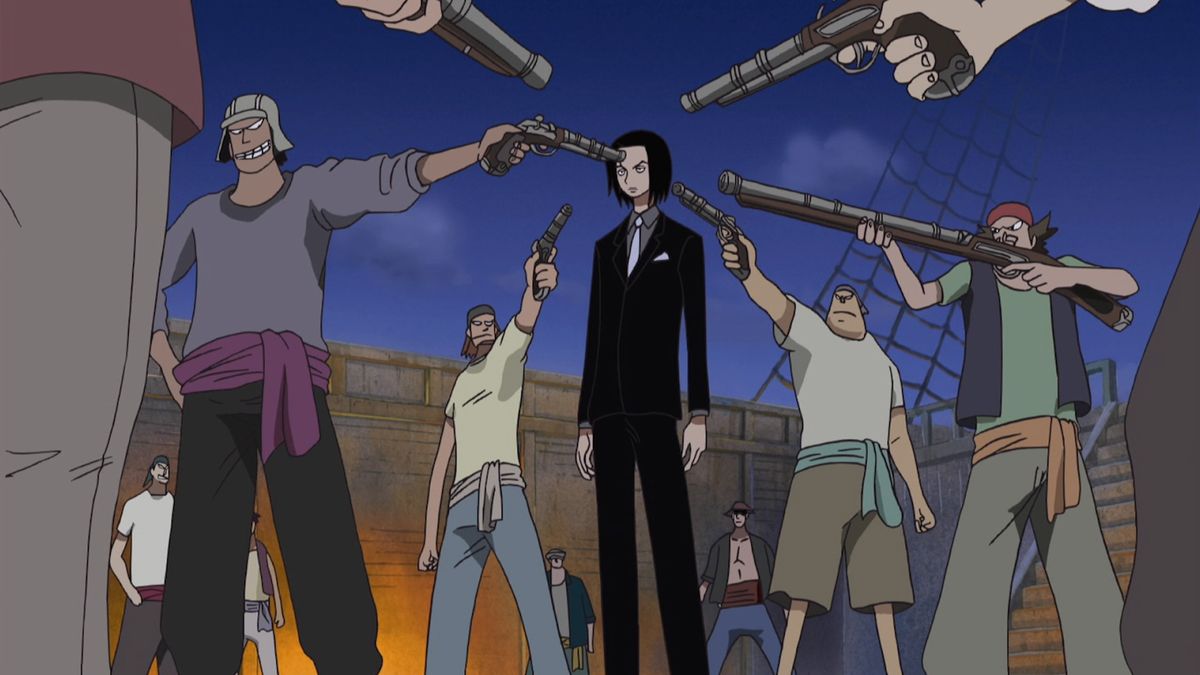
One Piece Episode 305 reveals thirteen-year-old Lucci murdering five hundred hostages and a government that rewarded slaughter as useful justice.
The short version
Episode 305 reveals that Rob Lucci’s “dark justice” was already mass murder when he was thirteen. Sent to resolve a hostage crisis, he killed five hundred captive soldiers before taking the pirate captain’s head. The government saw a useful weapon. I see a child shaped into proof that official approval cannot turn slaughter into justice.
The flashback explains Lucci without excusing him
Backstory can show how a person formed without asking viewers to forgive the adult choices that followed. Lucci entered government service young and received praise for lethal certainty. That conditioning matters. So does every later moment when he embraces cruelty as pleasure.
Five hundred hostages expose his moral equation
Lucci decides soldiers who surrendered are unworthy of survival because their continued existence might burden the kingdom. He treats human beings as failed components rather than prisoners needing rescue. Efficiency replaces compassion before adolescence has even ended.
The government rewards the outcome
An institution committed to justice would investigate the slaughter of its own captive forces. The World Government instead keeps Lucci, trains him, and expands his authority. His career becomes evidence that brutality is not an accident at the edge of the system. Brutality is a qualification.
Dark justice is violence with paperwork
Lucci’s ideology sounds disciplined because official language surrounds the doctrine. Strip away the uniform and the logic remains simple: people deemed weak or inconvenient may die if power calls the result order. Episode 305 shows the blood beneath the phrase.
Luffy fights the adult product of that system
The current duel gains historical weight. Luffy is not facing a neutral martial artist assigned to capture pirates. He is holding back somebody taught that mass death proves resolve. Letting Lucci reach Robin would place her life inside the same ruthless calculation.
Childhood competence becomes horror
A thirteen-year-old defeating armed pirates might normally read as prodigious heroism. The murdered hostages reverse the fantasy. Technical brilliance without moral restraint becomes terrifying, especially when adults reward the child rather than interrupting the worldview.
RaeRae’s receipt
I will not romanticize Lucci’s past as proof that he was always cool. Five hundred captive people died because he decided vulnerability cancelled their humanity. The government then gave that decision a career path.
Episode 305 makes him more compelling and more condemnable at once. Explanation should sharpen judgment, not dissolve responsibility.
Episode facts and receipts
Episode 305 aired April 15, 2007. ONE PIECE.com credits Naoki Koga for the script, Katsumi Tokoro for direction, Kenji Yokoyama for animation direction, and Miyuki Sato with Kunihiro Chida for art.
Classification: numbered manga-canon Enies Lobby television episode and RaeRae React. Anime, Anime Series, Japanese Anime, and Anime Reacts, not Anime Reviews.
The hostage crisis becomes a test the government fails
A pirate force seizes a kingdom and five hundred soldiers become hostages. The obvious rescue assignment would prioritize bringing those captives home while stopping the people who took them. Lucci decides the prisoners have already failed by surrendering.
That decision exposes his worldview before any later slogan can decorate the decision. Vulnerability becomes guilt. Survival becomes weakness. A person who cannot prevent capture loses the right to be rescued.
The government accepts that equation because the pirate captain dies and the political problem appears solved.
Thirteen is not old enough to carry this moral authority
Lucci possesses extraordinary physical ability, but combat talent cannot manufacture ethical maturity. Adults send a child into a crisis and then allow the child’s lethal certainty to define acceptable resolution.
The flashback indicts more than Lucci. Somebody trained him, briefed him, deployed him, and evaluated the outcome. The institution built conditions where mass murder could look like initiative.
A child soldier does not emerge from nowhere, even when the child later embraces the weapon he became.
The captives die for failing an impossible standard
Lucci treats surrender as betrayal because the soldiers’ capture gives pirates leverage over the kingdom. That logic ignores coercion, fear, injury, and the possibility that surrender saved civilian lives in the immediate attack.
He judges five hundred people without hearing one account of what happened. Their individual histories collapse into a category marked weak.
Dark justice begins by refusing complexity. Once every captive becomes a liability, killing them can masquerade as clean arithmetic.
Rescue and punishment trade places
The hostage force should fear government intervention. Instead, the hostages receive Lucci’s first sentence. The mission punishes the people already harmed before addressing the captor who created the crisis.
That reversal survives into Enies Lobby. Robin endured persecution for Ohara’s knowledge, yet the government treats her survival as the crime needing correction.
Lucci fits the institution because both redirect violence toward the person with less power and call the result order.
The pirate captain’s defeat cannot cleanse the massacre
Lucci eventually takes the pirate leader’s head, producing an outcome officials can announce as victory. Five hundred dead hostages become invisible once the enemy commander falls.
Episode 305 refuses that convenient accounting by showing the bodies within Lucci’s legend. A successful tactical conclusion does not retroactively make every method just.
Anybody praising efficiency has to include the human cost in the calculation. Otherwise “success” only means power got the headline power wanted.
Lucci’s scars become a badge inside a violent mythology
The wounds across his back document the confrontation, but CP9 culture reads damage through endurance and lethality rather than vulnerability. Surviving violence confirms status. Inflicting greater violence confirms worth.
The body becomes part of the story that Lucci and the government tell about him: a prodigy willing to do what ordinary people cannot.
The missing clause is moral refusal. The legend celebrates that he could kill everyone without asking whether anybody should.
Dark justice protects appetite behind doctrine
Adult Lucci speaks as though philosophy compels his actions. His excitement during combat reveals something less abstract. Government service grants legal access to the violence he enjoys.
The doctrine gives appetite a uniform. Calling slaughter necessary allows him to avoid examining pleasure, contempt, or the desire to dominate.
That makes Lucci more dangerous than Spandam. Spandam hides cowardice behind office. Lucci combines genuine competence with an ideology designed to bless his worst instinct.
Competence cannot serve as moral evidence
Lucci mastered Rokushiki, infiltration, patience, disguise, and Zoan combat. None of those achievements answer whether his targets deserve harm. Fandom sometimes lets excellence become an accidental argument for goodness.
Episode 305 supplies the correction. A person can execute a mission brilliantly and still commit an atrocity.
Admiring choreography should never require pretending the character’s worldview has integrity. Skill describes capacity. Ethics evaluates use.
The flashback changes every calm expression
Lucci’s composure once looked like professional confidence. The history reveals a person who learned early that emotional detachment makes mass death easier to present as judgment.
Silence and stillness stop reading as neutrality. They become part of the ritual through which he turns people into targets before acting.
Luffy’s loud emotional transparency stands opposite that performance. The pirate names who he loves and why he fights. Lucci hides desire inside procedure.
Luffy refuses the premise that weakness forfeits life
The Straw Hats repeatedly protect people who cannot win their own fights. Nami asked for help. Vivi needed allies. Robin finally declared a desire to live. Luffy never treats dependence as proof that rescue would be wasted.
That difference makes the duel philosophical without speeches. Lucci kills captives for failing to save themselves. Luffy grows stronger because friends need protection.
Each punch answers a different definition of human worth.
Robin would become another liability in Lucci’s arithmetic
The government labels her knowledge dangerous to global order. Lucci does not need personal hatred to kill her. The category supplies all the permission his worldview requires.
Her fear at Enies Lobby is therefore precise, not exaggerated. She understands the machinery and the people chosen to operate the machinery.
Luffy cannot negotiate a compassionate exception from someone who believes compassion weakens justice. Lucci has to be prevented from reaching her.
The kingdom’s soldiers deserved names and futures
The flashback presents a large number because Lucci himself thinks in totals. Ethical viewing has to resist that abstraction. Five hundred means hundreds of families, relationships, ambitions, mistakes, and possible recoveries erased in one decision.
We do not receive their biographies, but absence of biography does not reduce personhood.
Mass violence depends on turning individual lives into a manageable statistic. The episode gives enough information to reject the maneuver.
The government created a reusable precedent
Rewarding Lucci taught every observer that extreme violence would be tolerated when the official result looked decisive. The lesson shapes future operations even if nobody writes the policy aloud.
Institutions communicate through promotions, assignments, silence, and protection. Lucci’s continued career tells agents that restraint is optional when power approves the target.
Enies Lobby becomes the mature form of that precedent: destroy an island rather than risk losing control of one prisoner.
Katsumi Tokoro lets the horror arrive without glamour
The direction has to show Lucci’s extraordinary ability without turning the murdered hostages into applause for a prodigy. The coldness of the account creates distance from heroic framing. Kenji Yokoyama’s animation direction supports a child whose movements are controlled while the moral result is monstrous.
The contrast matters. Spectacular technique can attract the eye, so story context must keep the victims inside the viewer’s judgment.
Episode 305 makes capability unsettling instead of aspirational.
A backstory is not a pardon application
Understanding institutional grooming can produce compassion for the child Lucci was. That compassion does not require excusing the adult who continues choosing murder, expresses enjoyment, and rejects every alternative.
Two truths can coexist: adults exploited a gifted child, and the grown man became an enthusiastic agent of cruelty.
Good character analysis resists the false choice between context and responsibility.
RaeRae’s second look
Episode 305 makes Lucci fascinating because the flashback removes every easy excuse about neutral duty. He did not reluctantly follow one terrible order. He invented a massacre and received institutional confirmation that the result was admirable.
The government found a child already willing to reduce people to utility and polished that willingness into doctrine.
Luffy stands between that doctrine and Robin. No amount of technical brilliance makes Lucci the just man in that room.
The flashback makes the present fight a rescue from ideology
Luffy is not only trying to overpower a leopard Zoan user. He is preventing Lucci’s belief system from reaching Robin again. The agent has already demonstrated what happens when vulnerable people enter his definition of liability.
Robin’s knowledge makes her useful to the government as a threat narrative and disposable as a person. Lucci accepts both claims without friction. Defeating him becomes another way of refusing the category placed around her life.
Mercy would not have made the kingdom weaker
Lucci assumes rescued soldiers would create future instability because their surrender proved insufficient loyalty. That claim imagines cruelty as preventative policy. The actual result is a kingdom learning that government help may kill victims before confronting captors.
Mercy could have preserved soldiers, families, knowledge, and trust. Dark justice destroys those resources while pretending destruction removed risk.
CP9 turns moral numbness into professional culture
Lucci is the most extreme expression, but the organization rewards emotional distance throughout Enies Lobby. Agents discuss bodies, keys, and assassination targets as technical assignments. Personal doubt would interfere with efficiency, so doubt becomes weakness.
That culture matters because atrocities rarely depend on one extraordinary villain alone. Systems need colleagues willing to normalize vocabulary, follow orders, and admire results.
RaeRae’s final receipt
A tragic childhood could have opened another road for Lucci. The government instead found his capacity for violence useful and kept rewarding the worst conclusion he reached at thirteen. Adult Lucci now defends that conclusion with skill, pride, and pleasure.
I can recognize the exploited child without laundering the grown assassin. Episode 305 gives context, not absolution. Five hundred hostages remain the receipt every “dark justice” speech must carry.
The final judgment belongs to the lives Lucci dismissed
Lucci’s legend asks viewers to admire decisiveness. The five hundred dead hostages demand a different standard. Justice should protect people during their most vulnerable hour, not execute them for needing rescue.
Luffy’s resistance matters because Robin faces the same contempt in another form. Her need for help never reduces her worth. Episode 305 makes that contrast impossible to ignore.