RaeRae Reacts · One Piece Episode 298
Diable Jambe Turns Sanji’s Anger Into Rescue Progress
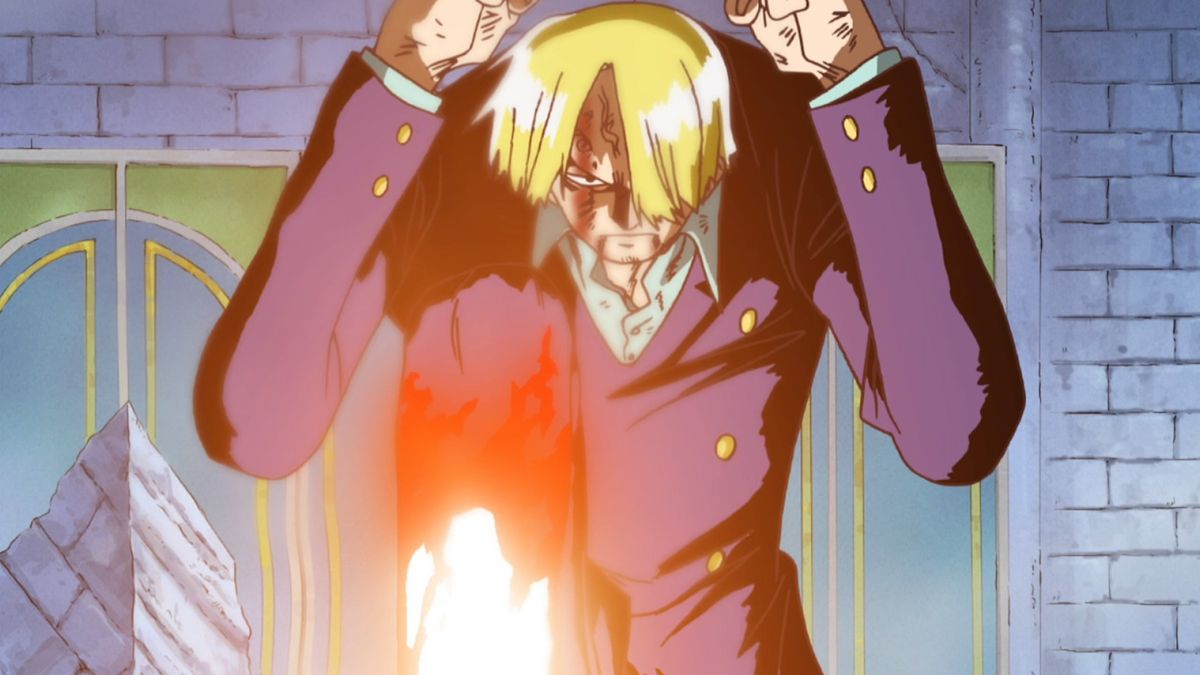
One Piece Episode 298 sends Sanji through Jabra’s Iron Body defense with a red-hot Diable Jambe and another recovered key for Robin.
The short version
Episode 298 turns Sanji’s anger at Jabra’s insults into Diable Jambe, a red-hot technique that finally converts emotional heat into rescue progress. Jabra’s Iron Body martial arts withstand ordinary kicks. Sanji raises the temperature, breaks through the defense, and secures the key.
Jabra lies because identity is a battlefield
His claim that Robin is a lost sister is absurd, yet the lie shows how easily he treats family language as a weapon. Kinship becomes disposable performance.
Sanji recognizes the manipulation
He does not lose time debating. Jabra already used false surrender against Sogeking. Another story cannot create trust after the method has been exposed.
Insulting Robin gives anger a clear target
Sanji’s rage is most useful when attached to another person’s dignity rather than his own pride. Jabra turns Robin into an object of contempt. Sanji answers as a crewmate.
Diable Jambe transforms friction into language
The burning leg visualizes intensity before the finishing blow. Heat changes the interaction with Iron Body. A defense built around hardness must confront temperature.
Power arrives after tactical recognition
Sanji learns that normal kicks are insufficient. The new technique is not decoration. The opponent’s defense creates the need.
The victory still depends on Sogeking surviving
Sanji’s entrance has meaning because a vulnerable crewmate stayed alive long enough to be protected. Ensemble victories have witnesses and costs outside the final attacker.
The key restores access
Defeating Jabra matters because CP9 scattered Robin’s freedom across pockets. Sanji turns a finishing technique into one recovered possibility.
Adaptation and performance
Naoki Koga’s script and Hiroyuki Kakudo’s direction pace the heat escalation around Jabra’s confidence. Katsumi Ishizuka’s animation direction gives Diable Jambe a distinct physical threat.
RaeRae’s final reaction
Episode 298 gives Sanji a gorgeous finish and a better use of care. He protects Sogeking, rejects Jabra’s contempt for Robin, and retrieves the key. The win does not rewrite Episode 287, but this action belongs on the positive side of the ledger.
Episode facts and receipts
Episode 298 aired February 25, 2007. ONE PIECE.com credits Naoki Koga, Hiroyuki Kakudo, Katsumi Ishizuka, Miyuki Sato, and Kunihiro Chida.
Classification: numbered manga-canon Enies Lobby television episode and RaeRae React. Anime, Anime Series, Japanese Anime, and Anime Reacts, not Anime Reviews.
Jabra’s Iron Body turns defense into aggression
Tekkai usually appears as stillness capable of absorbing impact. Jabra integrates hardness into a martial style and attacks without surrendering the defensive advantage. Sanji faces an opponent who makes contact expensive.
Ordinary combinations demonstrate skill and fail to change the core condition. The fight needs a method that alters what contact does.
Heat answers hardness through material logic
Diable Jambe does not merely announce a higher power level. The red-hot leg changes temperature at the point of impact. Jabra’s defense can harden muscle and still experience heat.
The technique feels satisfying because the counter speaks to the obstacle. Sanji solves a property rather than shouting through resistance.
The spinning preparation turns risk inward
Generating heat places stress on Sanji’s own leg and balance. New power enters through a body willing to become part of the mechanism. The attack is not free.
That physical cost matters after Chopper’s Rumble Ball. Both fighters push bodies beyond familiar operation, but Sanji retains agency and control over the result.
Jabra’s sister lie trivializes Robin’s actual family losses
He invents a relationship because family language may disrupt an opponent. Robin lost her mother, Saul, Ohara, and years of possible belonging. Using kinship as cheap bait displays contempt for that history.
Sanji refuses the story quickly. The crew has already defined family through action. A wolf’s last-minute claim cannot compete with people invading a government island.
Robin becomes family without biological proof
The Straw Hats do not need shared blood to justify rescue. They accepted Robin through travel, meals, danger, humor, and her eventual declaration that she wants to live.
Jabra’s lie accidentally highlights the stronger bond. Chosen family proves itself through cost rather than genealogy.
Sanji’s anger is useful when directed at dehumanization
He responds to Jabra insulting Robin because language participates in the violence. CP9 needs Robin to appear undeserving so captivity feels normal.
Sanji’s heat converts solidarity into pressure on the person preserving that story. Anger serves another person’s dignity instead of masculine pride.
The fight allows Sanji to use his entire skill set
Against Kalifa, his rule removed the finishing half of combat before the fight began. Against Jabra, observation, speed, combinations, defense, and finishing force remain available.
The contrast proves the limitation was never lack of strength. The limitation was a gender rule that decided one opponent’s accountability in advance.
A spectacular win does not create moral consistency
Diable Jambe makes Sanji look powerful and heroic. Visual triumph can tempt viewers to smooth the character’s recent contradictions. The editorial job is to keep both receipts.
He can fail Nami in one room and save Sogeking in another. Complexity begins when affection survives accurate accounting.
Sogeking witnesses a crew member choosing him
Usopp’s break with the crew left him unsure whether belonging can survive conflict. Sanji’s intervention answers through action before the formal reconciliation happens.
The rescue says that disagreement did not make his life disposable. Found family can hold boundaries and continue showing up.
Jabra’s deception fails once the crew shares information
The first false surrender worked because Sogeking encountered the lie alone. Sanji arrives with evidence already visible in Usopp’s wounds. The manipulation cannot reset the scene.
Networks resist deception by carrying memory between people. A predator loses advantage when the next target knows the pattern.
The finishing sequence is a full course for a reason
Sanji’s attack names often translate cooking language into combat. The metaphor connects professional identity to physical discipline. A cook understands sequence, heat, timing, and the transformation of material.
Diable Jambe expands that vocabulary. The leg becomes a controlled cooking surface aimed at an opponent whose defense depends on remaining unchanged.
The key makes the finish operational
A defeated Jabra is not merely one less CP9 agent. The crew gains another chance to unlock Robin or the chained fighters. The object converts personal victory into shared capacity.
Sanji’s best action is therefore the complete chain: protect Sogeking, defeat Jabra, recover access, and keep the rescue moving.
The production makes red heat a character beat
The visual escalation distinguishes Diable Jambe from another rapid kick combination. Color announces that Sanji has changed the material stakes of contact.
Katsumi Ishizuka’s animation direction gives Jabra’s Iron Body enough weight that the burning counter feels necessary rather than ornamental.
RaeRae’s second look
I can cheer Diable Jambe without pretending Sanji has solved every problem in his code. Episode 298 gives his anger a worthy target: a liar who attacked Usopp and dehumanized Robin while guarding her captivity.
This is the version of chivalric care that works for me. A person is in danger. Sanji uses the force he has. The key moves closer to the person asking to live.
Diable Jambe changes Sanji’s relationship with his own body
His legs are protected from blade work because a cook’s hands must remain available for food. Turning a leg into a heated weapon intensifies that division. The limb associated with combat takes on greater risk so the hands associated with care remain intact.
The technique connects violence and service inside one professional identity.
Heat carries culinary knowledge into combat
Cooking depends on temperature, timing, distribution, and understanding how material changes under heat. Diable Jambe converts those principles into an attack.
The move feels like Sanji because the innovation does not abandon the kitchen. The kitchen’s logic enters the battlefield.
Jabra’s Iron Body mistakes hardness for invulnerability
A hard defense assumes impact is the primary threat. Heat introduces another pathway. The body can resist deformation and still suffer temperature.
Sanji wins by changing the kind of problem Jabra must solve. That is strategy inside spectacle.
The red leg visualizes contained fury
Sanji has every reason to rage after finding Nami, learning Robin’s danger, and seeing Sogeking wounded. Diable Jambe focuses emotion through a controlled limb.
Contained does not mean calm. The technique gives anger direction, target, and an endpoint.
Robin’s dignity becomes part of combat motivation
Jabra continues insulting a woman already facing state execution. The language supports the institution by making the victim appear unworthy of rescue.
Sanji’s response rejects the narrative through force. He cannot undo twenty years of propaganda, but he can stop one agent from using the story as cover.
Chosen family invalidates Jabra’s fake genealogy
Robin does not need to be Sanji’s biological sister for her life to matter. Shared travel and chosen commitment create enough obligation.
The absurd sister lie exposes a villain who thinks family is only a claim used for advantage. The crew understands family as action repeated under cost.
Sanji’s finish protects Usopp’s unfinished return
Usopp has not apologized or formally rejoined. Sanji does not make belonging conditional on completing that process before an attack.
Boundaries around crew membership and immediate protection can coexist. The conflict waits. The rescue cannot.
The technique arrives through necessity, not a tournament ladder
No instructor announces a new level. Jabra’s defense creates a material problem during an emergency. Sanji produces an answer because the crew needs one now.
The organic arrival keeps power attached to character and context.
Victory completes a chain of corrections
Nami corrected the Kalifa matchup. Sanji corrected the Jabra threat. Sogeking survives. Another key enters crew hands. Progress comes through several people repairing failures without a clean reset.
Enies Lobby makes teamwork look like revision under pressure.
The key belongs to Robin’s agency
CP9 treats the object as leverage over a captive body. The crew wants the same object so Robin can act again. Possession serves opposite politics.
Sanji’s victory matters because the key changes hands from control toward restoration.
A “full course” attack carries generosity and violence together
Sanji normally constructs meals meant to sustain people. Attack names borrow that sequence while targeting someone preserving captivity.
The tension is deliberate. A cook’s discipline can nourish friends and dismantle an enemy when both actions protect life.
RaeRae’s third look
Diable Jambe is iconic because the technique could only belong to Sanji. Heat, legs, culinary language, style, and anger converge in one image. The move is not a generic aura painted red.
My applause remains specific. He saves Sogeking, defends Robin’s dignity, and obtains a key. I do not use the moment to excuse the burden Nami carried. I use the moment to show that Sanji is capable of aligning care with consequence.
Diable Jambe becomes memorable through narrative timing
The technique arrives after Sanji failed against Kalifa, returned injured, and found Sogeking under Jabra’s claws. Heat emerges from accumulated frustration and a corrected purpose.
A new move lands harder when the story earns emotional temperature before the limb begins glowing.
Sanji retrieves agency from a fight that suits him
Jabra can be attacked under Sanji’s rule, which returns his full tactical vocabulary. The contrast should not imply men are naturally legitimate targets. The contrast reveals how an inherited gender rule limits judgment.
Sanji’s competence becomes visible again because self-imposed restriction no longer blocks action.
The victory offers a standard for future care
He protects the endangered person, respects the opponent’s agency enough to hold him accountable, adapts technique to the defense, and recovers the object the crew needs. Care and effectiveness align.
That pattern is worth carrying forward. Chivalry becomes useful when real people and consequences replace abstract categories.
RaeRae’s closing receipt
Diable Jambe deserves the iconic reputation. The image is stylish, specific, and attached to a rescue. My praise belongs to the whole sequence, not the red leg alone.
Sanji’s heat matters because Sogeking lives and Robin’s key moves. Spectacle serves people.
Heat becomes character language
Diable Jambe works because the fire does more than decorate a stronger kick. Sanji has spent the battle watching Robin’s captors turn lies, keys, and bodies into leverage. The technique converts that accumulated fury into disciplined rescue work.
The distinction between anger and cruelty matters here. Jabra enjoys fear and deception. Sanji directs anger toward stopping the person manufacturing both. The episode lets rage become protective without pretending every angry action is automatically righteous.
That emotional clarity is why the debut still feels larger than a routine power upgrade.
Sanji wins by making power answer responsibility. That is the receipt.