RaeRae Reacts · One Piece Episode 282
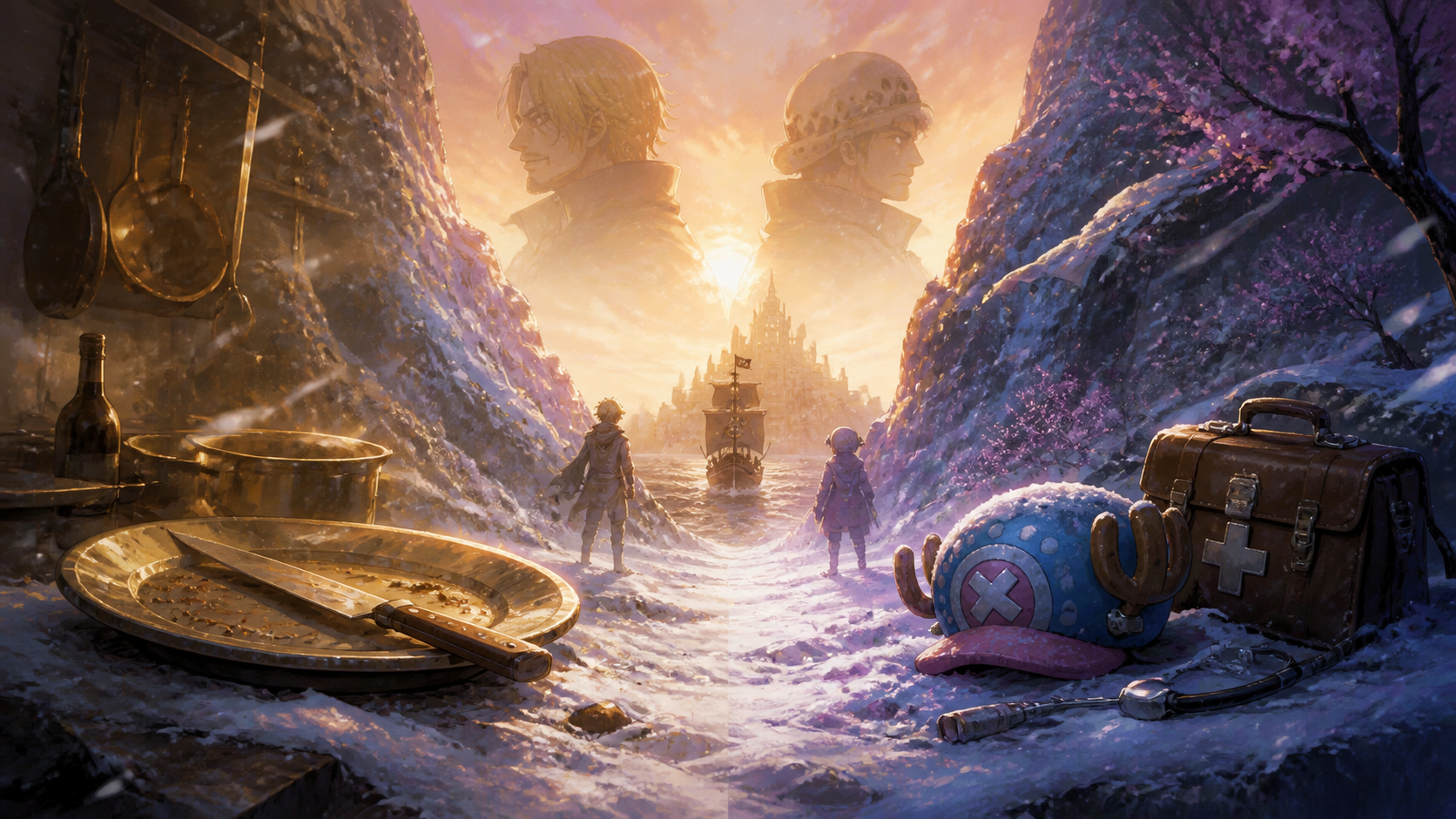
Sanji and Chopper Carry Their Mentors Into the Rescue
One Piece Episode 282 connects Sanji and Chopper through separation, care, hunger, medicine, and the people who gave rejected children a future.
The short version
Episode 282 puts Sanji and Chopper together and finds a shared wound beneath wildly different comedy: both had to leave the person who taught them care in order to carry that care into the world.
Sanji’s kitchen and Chopper’s medicine look like separate crew jobs until this recap lines up the departures behind them. Zeff and Hiriluk did not simply hand over skills. They gave two rejected children a future larger than the place where each child learned to survive. Enies Lobby asks whether Robin can believe the crew offers that same kind of future without demanding repayment.
What this recap is actually doing
Sanji’s Baratie history ties food to dignity. Chopper’s Drum history ties medicine to the refusal to call a life disposable. Both professions are practical forms of care, and both men hide tenderness behind performance,Sanji with swagger and insults, Chopper with panic and denial. The recap lets the audience see the emotional labor their jokes often cover.
Zeff loses a leg and refuses to let Sanji starve. Hiriluk dies while insisting that a person survives in the memories of others. These are not clean parental stories. They are loud, flawed, sometimes manipulative, and still transformative. One Piece understands that found family can save a child without becoming perfect. That honesty gives Robin’s choice more weight than a simple “friends are good” speech.
The choice that matters now
Sanji went after Robin before the rest of the crew understood the plan. Chopper keeps seeing the person inside bodies that governments and pirates label monsters. Their histories explain those instincts. They do not wait for a committee to certify that somebody deserves rescue. They recognize isolation, then act through the skills their mentors helped them claim.
Hunger and health are never politically neutral in One Piece. Whoever controls food, medicine, movement, and legal identity controls who gets to survive. Zeff feeds enemies. Chopper treats people who fear him. Both choices reject scarcity as an excuse for cruelty. The World Government does the opposite: that manufactures danger around Robin, then cites that danger as proof she must disappear.
Adaptation, pacing, and the awkward truth
Combining two backstories makes this recap dense, and the emotional peaks can start competing instead of supporting one another. The episode works when separation becomes the bridge: leaving did not erase love; that turned love into practice. that feels padded when long familiar sequences play without a new editorial connection to Enies Lobby.
The short comedy material is ridiculous by design. After two histories involving starvation, illness, and death, ridiculous may be the only available reset. that still interrupts the rescue, but at least that refuses the solemnity trap that would make One Piece stop sounding like itself.
RaeRae’s final reaction
Sanji and Chopper are not supporting furniture waiting for Luffy to make every moral decision. Their own histories brought them to Robin. Episode 282 is another badly timed recap with a worthwhile character thesis inside that: people who were loved through hunger, exile, and ridicule can recognize when somebody else has mistaken disappearance for protection.
Episode facts and receipts
One Piece Episode 282 aired in Japan on October 22, 2006. The official ONE PIECE.com episode record classifies that inside the Enies Lobby story and identifies that as a recap installment. That distinction matters: this React judges how the anime reframes established material at this exact rescue-story pressure point rather than pretending the flashbacks are new plot.
Classification: numbered television episode, recap-heavy anime-original presentation, RaeRae React. that belongs in Anime and Japanese Anime, and that does not belong in Anime Reviews.
Care is skilled labor on this ship
Sanji and Chopper are often reduced to comic habits: heart eyes, nosebleeds, panic, praise denial, emergency yelling. Episode 282 works when the recap looks beneath those habits and remembers that both characters perform essential care work. Meals and medicine keep a crew alive. Neither job happens through vibes. Both require knowledge, preparation, observation, timing, and a willingness to serve people at their least glamorous.
That labor also carries power. A cook controls access to food. A doctor controls access to treatment and private bodily knowledge. Sanji and Chopper repeatedly choose to use those positions against cruelty. Sanji feeds hungry enemies. Chopper treats people who fear or insult him. Their ethics came from mentors whose methods were chaotic but whose central lesson rejected disposable life.
Zeff and the politics of hunger
Zeff’s sacrifice during the rock-island starvation story permanently links food with moral obligation for Sanji. Hunger strips hierarchy down to the body. Titles, pride, criminal labels, and grand dreams all become secondary when no calories remain. Sanji learns that feeding somebody can be more urgent than judging somebody.
That belief clashes with institutions that use scarcity as discipline. One Piece repeatedly shows rulers controlling grain, water, medicine, trade, or access to safe land. Sanji’s kitchen becomes political because he refuses the idea that survival must be earned through obedience. Such refusal does not make him gentle in every interaction. His treatment of women, men, and personal boundaries deserves criticism elsewhere. A character can carry a strong food ethic and still contain ugly habits.
Hiriluk, Kureha, and medicine beyond respectability
Chopper learns from two adults who refuse respectable presentation. Hiriluk’s medical competence is questionable, his performance is enormous, and his belief in emotional possibility changes Chopper’s life. Kureha brings actual clinical expertise, brutal honesty, and a refusal to age quietly for anybody’s comfort. Together they prevent the doctor narrative from becoming one tidy mentor story.
Chopper’s own body complicates the profession. Humans call him monster. Reindeer reject him. The Devil Fruit leaves him between categories other people treat as natural. Medicine gives him a language for bodies that does not depend on social approval. A patient can be strange, frightening, hostile, or politically inconvenient and still remain a patient.
Separation does not cancel belonging
Sanji leaves Zeff to pursue the All Blue. Chopper leaves Kureha and Drum Island to pursue medical knowledge and adventure. Departure hurts because the relationships are real, not because departure proves ingratitude. Episode 282 places those goodbyes beside Robin’s belief that leaving the Straw Hats will protect them.
The contrast matters. Healthy separation creates room for growth and preserves the possibility of return. Coerced separation serves the captor. Sanji and Chopper carry mentor love onto the ship. Robin tries to remove herself from every future because the World Government has trained her to treat connection as a weapon aimed at other people.
Chosen family cannot mean permanent physical proximity or total access. Such a demand would recreate control with friendlier branding. The Straw Hats answer Robin because she does not freely choose distance. CP9 sets the terms, threatens the crew, and exploits her history. Rescue protects her ability to choose later.
Sanji noticed before the explanation arrived
Sanji operates separately during Water 7 and Enies Lobby, following Robin and the sea train while information remains fragmented. That initiative comes from observation, suspicion, and trust in his own reading of danger. He does not need Luffy to assign every task. The crew’s strength depends on members who act from their own expertise.
Chopper also notices what others miss because animal communication and medical attention change his field of perception. The King Bulls are not disposable transportation. Injuries are not merely dramatic decoration. Bodies report the cost of every strategy. Chopper keeps the rescue honest by caring about casualties while fighters chase objectives.
Masculinity, tenderness, and performance
The episode title frames separation as something that refines men. That language carries a familiar masculine script: pain builds character, men leave, feeling becomes acceptable only after transformation into strength. Sanji and Chopper complicate the script because both express care constantly, even when comedy gives them cover.
Sanji cooks. Chopper heals. Neither contribution fits the narrow belief that masculine value comes only from winning fights. One Piece sometimes slides back into gender clichés, especially around Sanji, so praise needs boundaries. Episode 282 still offers a useful picture of men whose central crew roles depend on nurturing skill.
Recap craft and Japanese performances
Hiroaki Hirata’s Sanji performance moves easily between swagger, irritation, flirtation, tactical calm, and the softer register attached to food and Zeff. Ikue Otani gives Chopper vulnerability without erasing intelligence. The voices help familiar footage function as character continuity rather than a silent clip package.
The edit has too much emotional material competing for one episode. Baratie and Drum Island each earned full arcs. Compression can turn specific relationships into a sequence of famous tears. The recap improves whenever departure serves as the organizing idea. The episode weakens whenever one emotional climax follows another without enough room for the viewer to process why the pairing matters now.
RaeRae’s placement verdict
Episode 282 remains recap-heavy and badly timed. That criticism stays. The installment also clarifies why Sanji and Chopper refuse Robin’s self-erasure. Both men became themselves because flawed mentors chose care over social rules and then allowed them to leave toward larger dreams.
Robin deserves the same future-facing love. The crew does not rescue her so she can remain permanently indebted. They rescue her so she can return to archaeology, terrible jokes, quiet reading, dangerous curiosity, and whatever choices come after survival. Sanji and Chopper understand that care should create more life, not ownership.
The crew survives through maintenance
Battle stories reward visible breakthroughs. Meals, bandages, sanitation, sleep, and repair happen between the celebrated moments, even though nobody reaches the next fight without them. Sanji and Chopper embody maintenance as character work. Their recap reminds viewers that adventure depends on repeated care, not only spectacular sacrifice.
Maintenance also creates intimacy. Sanji learns preferences, hunger cues, and the emotional meaning of food. Chopper learns injuries, limits, fear responses, and private vulnerabilities. Both men know the crew through bodies that need attention. That knowledge helps them recognize Robin’s self-removal as a crisis rather than a noble conclusion.
Why imperfect mentors still matter
Zeff, Hiriluk, and Kureha do not offer a clean parenting manual. Their choices include violence, deception, pride, recklessness, and genuine care. One Piece lets love arrive through flawed adults without claiming flaws disappear under good intentions. Sanji and Chopper inherit lessons, not complete personalities. They choose what to carry forward. Robin’s future with the crew offers the same possibility: belonging can influence her without demanding that she become a copy of the people who saved her.
Watch notes for Episode 282
Sanji and Chopper’s shared file becomes stronger when viewers track work rather than only tragedy. Cooking and medicine are repetitive disciplines. Every voyage requires both long after the dramatic mentor flashbacks end. Zeff, Hiriluk, and Kureha shape those disciplines through sacrifice, provocation, technical training, and permission to leave. The episode asks what a mentor gives a child besides affection: a practice the child can carry into future communities. Sanji feeds the crew he chose. Chopper treats the crew he chose. At Enies Lobby, both men apply that inherited care to Robin before she can imagine returning. The recap compresses too much and interrupts too much, but the pairing reveals maintenance as a form of loyalty.
One last care note
Sanji and Chopper also show why care cannot remain invisible on a fandom site. Episode discussions often count attacks, victories, and new powers while treating meals and treatment as transitions. That hierarchy mirrors the real-world habit of celebrating public achievement while ignoring maintenance labor. The Straw Hats would not reach Enies Lobby without bodies fed, wounds assessed, medicine prepared, and exhaustion noticed. Episode 282 gives familiar footage a worthwhile purpose when the recap moves that labor into the center. Sanji and Chopper are fighters when required, but their deepest authority comes from sustaining life after the dramatic scene ends.
One last care note
Sanji and Chopper also show why care cannot remain invisible on a fandom site. Episode discussions often count attacks, victories, and new powers while treating meals and treatment as transitions. That hierarchy mirrors the real-world habit of celebrating public achievement while ignoring maintenance labor. The Straw Hats would not reach Enies Lobby without bodies fed, wounds assessed, medicine prepared, and exhaustion noticed. Episode 282 gives familiar footage a worthwhile purpose when the recap moves that labor into the center. Sanji and Chopper are fighters when required, but their deepest authority comes from sustaining life after the dramatic scene ends. Rescue requires that quieter authority every bit as much as force. Their histories prove that survival depends on people willing to keep doing unglamorous work after applause fades.