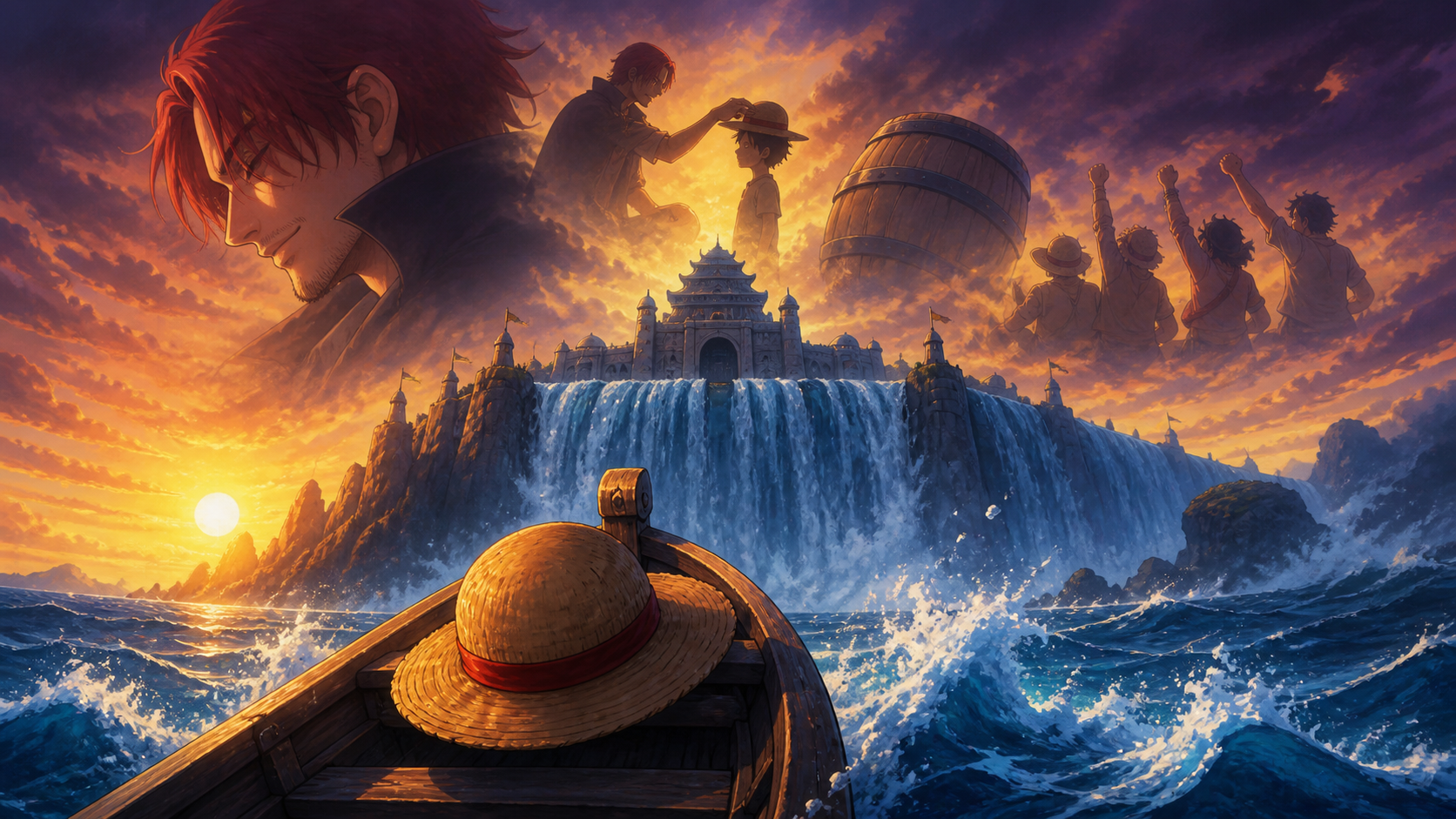
RaeRae Reacts · One Piece Episode 279
Luffy’s Old Promises Answer Robin’s New Wish
One Piece Episode 279 pauses for Luffy’s history and asks why the boy who built his life on impossible promises can hear Robin’s wish without bargaining that away.
The short version
Episode 279 stalls the charge toward Robin, but its best idea is brutally clear: Luffy’s whole life has been one long refusal to let fear choose his family for him.
We just came off Robin finally saying she wants to live. The sensible next move is to sprint across Enies Lobby and make the World Government regret having architecture. Instead, the anime hits the brakes for a Luffy recap. Yes, I noticed. Everybody noticed. The timing is aggravating because Episode 278 earned momentum the hard way. Still, the placement gives old material a new question: what in Luffy’s history made him capable of hearing the wish Robin was too terrified to say?
What this recap is actually doing
This is not a neutral “previously on One Piece” package. The memories pull Luffy from Shanks and the straw hat through his first departures and crew promises while the present-day rescue hangs over every scene. The repeated material becomes evidence. Luffy learned early that a promise can outlive distance, humiliation, injury, and common sense. That stubborn emotional math is exactly why Spandam cannot bargain with him.
The barrel, the tiny boat, and the impossible declaration of becoming Pirate King used to look like comedy with nerve. At Enies Lobby, they look like training. Luffy has always announced the future before he possessed the resources to reach that. Robin’s rescue works the same way. He declares her survival before the crew has beaten CP9, crossed the bridge, found the handcuff key, or escaped a government island built to erase dissent.
The choice that matters now
Luffy’s gift is not perfect empathy. He misses fear, context, and basic explanations constantly. His gift is that once somebody names what they want, he treats the desire as real. Robin says she wants to live, and he does not ask whether saving her is practical. Episode 279 uses his origin to show why: he built his own life around adults who treated a child’s ridiculous dream as something worth answering.
The World Government demands that everyone accept its definition of criminality. Luffy refuses the premise. He does not need Robin declared innocent by the same institution that destroyed Ohara. He needs Robin alive, speaking, and free to decide where she goes. That is not a legal defense. that is a direct challenge to the government’s claimed authority over personhood.
Adaptation, pacing, and the awkward truth
Five consecutive recaps during the climax are still five consecutive recaps. Broadcast scheduling may explain the decision; that does not magically improve the weekly viewing experience. The episode works best when the editing makes past promises answer the present crisis. that drags when that simply replays famous beats and trusts recognition to do all the emotional labor.
The Straw Hat Theater material at the end loosens the pressure with absurd alternate-character comedy. Your tolerance will depend on whether you wanted a breath or wanted CP9 punched immediately. I laughed, then resented laughing, which feels about right for this placement.
RaeRae’s final reaction
I would never hand Episode 279 to somebody as proof that One Piece pacing is disciplined. I would hand that to somebody asking why Luffy could stand at a government stronghold and choose Robin without hesitation. The episode is a detour, but the argument inside the detour is solid: the boy who survived because people honored his dream now honors Robin’s life with the same unreasonable certainty.
Episode facts and receipts
One Piece Episode 279 aired in Japan on October 1, 2006. The official ONE PIECE.com episode record classifies that inside the Enies Lobby story and identifies that as a recap installment. That distinction matters: this React judges how the anime reframes established material at this exact rescue-story pressure point rather than pretending the flashbacks are new plot.
Classification: numbered television episode, recap-heavy anime-original presentation, RaeRae React. that belongs in Anime and Japanese Anime, and that does not belong in Anime Reviews.
Luffy’s memory file is not a victory lap
A weak recap treats the lead character’s past like a highlight reel: famous pose, familiar music, applause sign. Episode 279 becomes more interesting when those memories are read as a record of dependency. Luffy did not invent himself alone. Shanks protected him, challenged him, laughed at him, and trusted him with a symbol that carried adult history long before a child understood the weight. Makino fed him. Foosha Village gave him somewhere to be loud. Ace and Sabo taught him brotherhood through competition, grief, and a promise no government approved. The future Pirate King begins inside relationships, not individual greatness.
That history matters at Enies Lobby because Robin has spent twenty years learning the opposite lesson. Every relationship looks temporary. Every safe room carries an expiration date. Every person who offers shelter may discover that the bounty is worth more than loyalty. Luffy’s confidence can sound childish beside that experience, yet Episode 279 shows why his answer reaches her. He speaks from a life where promises created continuity across separation. Robin speaks from a life where power deliberately destroyed continuity. Their argument is not optimism versus pessimism. Their argument is two different archives of what people do after saying they care.
The waterfall makes the choice physical
Franky’s leap toward the falls keeps the present tense alive while the recap moves backward. The geography of Enies Lobby is ridiculous in the best One Piece way: water drops into a bottomless void, government buildings sit above annihilation, and the rescue path demands forward motion across spaces designed to make hesitation fatal. The setting turns Luffy’s emotional rule into physical staging. Nobody reaches Robin by standing safely on the edge and discussing probability.
That does not excuse recklessness. Luffy’s choices routinely force Nami, Sanji, Zoro, Chopper, and everyone else to solve the engineering after he commits the crew. Episode 279 benefits from keeping that tension visible. Courage can free people, and courage can transfer risk to friends. The Straw Hats accept that risk here because Robin’s own choice has finally entered the plan. Before her declaration, Luffy pushes against silence. After her declaration, the crew acts on consent. That sequence keeps rescue from becoming possession.
Shanks, the hat, and borrowed faith
The straw hat functions as more than branding. Shanks lends Luffy a future and establishes a condition: return the hat after becoming a great pirate. The object therefore carries faith, obligation, and delayed reunion. Robin has no comparable object from Ohara that promises a living person will meet her later. Saul gives her laughter and the possibility that friends exist somewhere, but the Buster Call immediately surrounds that hope with fire and loss.
At Enies Lobby, Luffy becomes the person willing to lend Robin a future before she can prove she deserves one. The crew does not ask for a repayment schedule. They ask her to come back to sea. That echoes Shanks without copying him. Faith arrives first; growth comes afterward. Such faith can become dangerous when granted without listening, so Robin’s spoken wish remains essential. Luffy cannot merely decide her future on her behalf and call that freedom.
Recap pacing versus emotional architecture
The scheduling reality remains visible. A weekly audience waited after one of the series’ biggest declarations and received old footage. Modern binge viewers can skip or accelerate the episode, but the original frustration belongs in any honest React. Production context explains why long-running television protects schedules, catches up with source material, and uses recap blocks. Explanation does not turn interruption into good rhythm.
The editorial question is whether placement creates a new frame. Episode 279 partly succeeds. Luffy’s childhood now sits beside Robin’s request, so old scenes answer a current moral choice. The episode fails whenever music and recognition are expected to replace construction. A recap should select, contrast, and transform. Famous moments do not become freshly meaningful merely because the broadcast repeats them.
Japanese performance and emotional continuity
Mayumi Tanaka’s Luffy performance carries continuity across comedy, hunger, anger, and absolute conviction. The younger energy never disappears entirely from the present-day captain, which keeps his declarations from sounding like calculated leadership speeches. Luffy believes before strategy catches up. That vocal through-line helps the recap connect an impulsive village child to the captain standing against the World Government.
The performance also protects Luffy from becoming a motivational poster. Tanaka lets selfishness, delight, irritation, and appetite live beside loyalty. Robin is not saved by a flawless moral philosopher. She is heard by a messy person whose emotional priorities become exceptionally clear once a friend speaks. That distinction fits RaeRae’s preferred reading: affection does not require sanding away the traits that make somebody exhausting.
The little comedy after the giant feelings
Straw Hat Theater changes scale on purpose. The short segment turns established personalities into a compact joke after a recap already delayed the rescue. Some viewers will welcome the tonal release. Others will stare at the screen and demand the anime return to Robin. Both responses make sense. One Piece has always treated comedy as part of survival, not a reward unlocked after trauma ends.
The danger comes when comedy dissolves consequence. Episode 279 avoids the worst version because the main story’s stakes remain untouched. The bonus does not tell us Ohara was secretly fine or government violence was a misunderstanding. The short simply lets familiar character rhythms operate in an absurd side space. RaeRae can laugh while still filing a pacing complaint.
What Episode 279 adds to the complete route
Viewers following only canon advancement can identify Episode 279 as recap-heavy and make an informed choice. Completion does not mean pretending every broadcast installment carries equal narrative necessity. A proper episode archive labels the job honestly, preserves the historical broadcast record, and gives the installment a specific editorial question.
For this React, that question is why Luffy’s confidence reaches Robin when ordinary reassurance failed. His history supplies the answer. Other people treated his impossible future as real, and that experience became a practice he extends to friends. The episode remains awkwardly placed. The character logic remains worth discussing. Both statements can sit in the same review of the viewing experience without one canceling the other.
Leadership without a policy manual
Luffy’s leadership frustrates anyone who wants a captain to explain the plan before launching his body at a fortress. He rarely offers that comfort. Episode 279 suggests another leadership function: establishing the moral boundary that strategy must serve. Robin comes home. The crew can argue about routes, timing, opponents, and survival after that boundary becomes clear. Nami and Sanji often provide the planning Luffy omits, while Zoro protects the authority structure when internal conflict threatens cohesion. This arrangement is neither democratic perfection nor simple dictatorship. The crew continually negotiates around a captain whose greatest clarity arrives in moral emergencies.
That structure works because membership remains voluntary. Each Straw Hat carries a dream that does not collapse into Luffy’s ambition. The Pirate King goal creates a shared route, not a demand that everyone abandon private purpose. Robin’s archaeology, Nami’s map, Sanji’s All Blue, Zoro’s swordsmanship, Chopper’s medicine, and Usopp’s brave-warrior dream all retain separate value. When Luffy chooses Robin, he protects the conditions under which those separate futures can continue together.
What I watch differently after Enies Lobby
Earlier Luffy scenes change once the viewer knows how forcefully he will defend a friend’s stated desire against global authority. His apparent simplicity becomes selective clarity. He can misunderstand a room and still identify the coercive lie at the center. That does not make every impulsive decision correct. The pattern makes his strongest decisions legible. Episode 279 earns a place in the archive by tracing that line, provided the page tells readers honestly that most footage comes from earlier episodes.
Watch notes for Episode 279
The recap label belongs near the top of the reader’s decision, not buried after several screens. Viewers arriving from the episode directory should know that the broadcast revisits Luffy’s history, includes anime-original Straw Hat Theater material, and pauses the immediate Enies Lobby advance. That context prevents disappointment from masquerading as analysis. The page can then ask a better question: whether the old footage reveals something new about Luffy at this exact moment. My answer remains mixed. The scheduling damages momentum, the repeated origin sometimes coasts on recognition, and the connection between borrowed faith and Robin’s spoken wish gives the episode a real reason to exist.