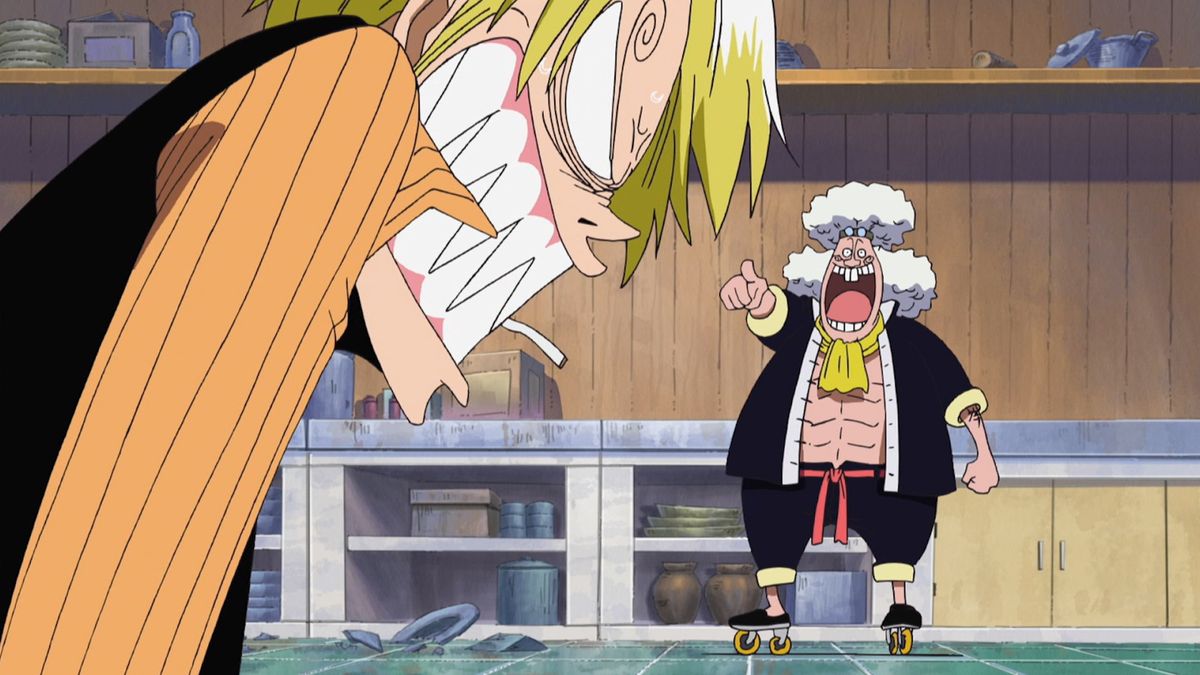
RaeRae Reacts · One Piece Episode 259
Sanji Treats Food Like Labor, Not a Weaponized Joke
One Piece Episode 259 pits Sanji against Wanze and turns a ridiculous food fight into an argument about craft, waste, dignity, and the ethics of feeding people.
Bottom line: Sanji beats Wanze because a real cook understands food as craft, not a disgusting costume
One Piece Episode 259 puts Sanji against a government agent who turns noodles into weapons, armor, and bodily spectacle. Wanze calls the method Ramen Kenpo and produces food through his nose and mouth with enough enthusiasm to make dinner file a restraining order. The joke is grotesque by design, but Sanji’s anger gives the fight a serious center.
Food is labor, nourishment, memory, and professional responsibility to Sanji. Wanze treats ingredients as disposable extensions of ego. Sanji answers as both fighter and cook, using culinary skill to dismantle the noodle armor before his legs finish the argument.
The official episode record
ONE PIECE.com lists Episode 259, “Cook-Off! Sanji vs. Ramen Kenpo,” with a Japanese broadcast date of March 12, 2006. Hirohiko Kamisaka wrote the screenplay, Ken Koyama directed, Noboru Koizumi served as animation director, and Miyuki Sato and Kumiko Fukuzawa handled the credited art work.
The official title frames the battle as a contest between cooks, but the episode quickly shows that the men hold incompatible ideas about what cooking means.
Wanze’s Ramen Kenpo is designed to be funny before being dangerous
He kneads ingredients inside his mouth, pushes noodles through his nose, and turns a train carriage into a kitchen no health inspector would enter voluntarily. The body horror arrives wearing slapstick timing.
The method becomes dangerous because absurdity does not stop sharp noodles, confinement, or an agent willing to use every surface as part of an attack.
Sanji’s disgust is professional before becoming personal
He has survived hunger severe enough to reshape his entire life. Zeff taught him that feeding a hungry person matters more than pride, money, or affiliation. The Baratie treated food as survival carried through disciplined work.
Wanze uses edible material for vanity and waste. Sanji sees disrespect toward the ingredient, the cook, and every hungry person who would value the meal being thrown around.
The fight remembers that cooking requires technique
Sanji does not merely complain that the noodles are gross. He reads texture, construction, thickness, and the way the armor has been assembled. Professional knowledge reveals where the strange defense can be cut apart.
Competence becomes visible through observation and tool choice instead of a speech announcing that Sanji is a genius.
Sanji reaches for knives because the opponent covered himself in food
Sanji normally protects his hands for cooking and fights with his legs. Wanze’s noodle armor creates a rare exception. The blades are being used on food, even when the food has been shaped around an enemy.
The distinction preserves Sanji’s professional code while letting culinary technique become combat technique.
The knife work is not a random power upgrade
Years in a restaurant kitchen built speed, precision, grip, control, and an understanding of how ingredients respond to a blade. The fight reveals an existing skill under unusual conditions.
That reveal feels earned because the ability comes from labor Sanji performed long before joining Luffy.
Wanze mistakes novelty for mastery
Ramen produced through the body is unforgettable. Unforgettable does not mean well made. His technique depends on shock, confusion, and the belief that an opponent will be too disgusted to analyze the material.
Sanji gets angry enough to look more closely, which is exactly the wrong response for Wanze’s advantage.
The noodle armor tries to turn softness into defense
Layered strands absorb and redirect attacks while giving Wanze a larger shape. The design is ridiculous and mechanically purposeful.
Sanji does not keep kicking the thickest surface. He changes tools and removes the structure that makes the armor useful.
Cutting the armor separates ingredient from bad intention
The noodles are not evil. Wanze chose to waste and weaponize them. Sanji’s blades reduce the impressive costume back into material that no longer obeys the agent’s plan.
The scene fits Tom’s lesson from the previous block. A creation and the person misusing the creation are not the same source of responsibility.
Sanji’s hands remain connected to care even during violence
The same control that portions food now removes armor without losing track of the carriage, prisoners, or route ahead. Skill does not become less culinary because the context is dangerous.
The fight shows how care work can build physical discipline without pretending every cook should become a combatant.
Wanze serves the government without the dignity he imagines
He occupies a train transporting Robin and Franky toward institutional disappearance. The uniformed purpose gives his strange technique official backing, not moral weight.
The World Government has room for polished assassins and grotesque specialists as long as both protect the transfer of valuable prisoners.
The carriage layout prevents Sanji from treating the battle as private
Every minute spent with Wanze leaves Robin farther ahead. Damage to the train could strand allies or send prisoners into the ocean. Sanji has to win inside boundaries.
The deadline keeps culinary outrage connected to the rescue rather than letting the episode become a detached tournament match.
Sogeking’s presence changes what Sanji can delegate
Sanji no longer has to solve every distant target while handling Wanze at close range. The masked marksman can cover mechanisms, guards, and openings from positions Sanji cannot reach with one kick.
Different skills allow the advance team to keep moving even when one member gets trapped in a specialized fight.
Franky understands the value of a person whose craft shapes combat
Franky built his body from shipwright knowledge. Sanji applies kitchen knowledge to Wanze’s armor. Neither man separates practical work from survival.
The parallel helps turn recent enemies into people capable of recognizing one another’s competence.
Robin remains the reason Sanji cannot enjoy the fight for long
Sanji likes dramatic entrances and stylish victories. The government train gives no room for extended celebration. Robin is still surrounded by CP9 farther ahead.
Winning matters because winning opens the next car.
Wanze’s food waste lands differently after Sanji’s childhood hunger
Sanji and Zeff nearly starved on a rock with dwindling supplies. That experience made discarded food impossible to treat as harmless decoration.
The reaction is not abstract moral purity. Sanji remembers what one bag of food means when no other meal exists.
The Baratie taught Sanji that feeding an enemy can still be right
He fed Gin despite danger because hunger came before affiliation. That ethic defines food as a need shared across social and political lines.
Wanze reverses the ethic by using food to guard a state operation that treats people as objects.
The episode lets gross comedy expose entitlement
Wanze assumes anything produced by his body deserves admiration. He fills the carriage with noodles and expects everyone else to accept his definition of culinary achievement.
The disgusting presentation becomes a personality problem. He values attention more than the people who might eat, clean, or be hit by the result.
Sanji’s anger becomes useful because technique controls the anger
Rage alone could make him reckless around knives, train walls, and allies. Professional discipline gives the emotion a precise path.
He cuts what needs cutting, protects his hands, preserves the route, and saves the final punishment for a kick.
The finishing attack restores Sanji’s ordinary combat language
Once the noodle structure has been removed, Wanze is no longer a food problem. Sanji returns the knives to culinary purpose and uses his legs against the man.
The transition keeps his code coherent. Food receives knife technique. The enemy receives the kick.
The fight gives Sanji an ICONIC moment without flattening him into cool poses
The style works because character and profession support every choice. He is not impressive only because the animation makes him fast.
Sanji becomes memorable here because the weirdest possible opponent forces him to reveal how seriously he takes ordinary kitchen labor.
The victory also clears space for prisoners to become allies
Removing Wanze reduces the number of government specialists controlling the rear cars. Franky and Sogeking gain more freedom to contribute to the advance.
Each defeated guard changes the balance inside Puffing Tom before Rocketman arrives.
CP9’s transport system depends on specialists protecting one another
Wanze does not need to defeat the whole Straw Hat crew. He needs to delay one infiltrator while the train moves Robin closer to Enies Lobby.
Sanji wins by understanding that delay is part of the enemy’s objective and refusing to fight at Wanze’s preferred pace.
The battle asks what professional pride should protect
Wanze uses a cooking label to enlarge himself. Sanji uses cooking knowledge to protect hungry people, crewmates, ingredients, and the dignity of work.
Pride becomes worthwhile when pride creates responsibility rather than permission to waste.
Food safety is part of the joke because somebody always performs the invisible cleanup
Wanze sprays ingredients across walls, floors, clothing, and machinery as though the carriage will reset after his scene ends. Real kitchens cannot operate that way. Somebody has to scrub surfaces, protect ingredients from contamination, manage waste, and keep tools safe for the next meal.
Sanji’s horror recognizes that invisible labor. The insult is not only that Wanze’s method looks disgusting. He creates a sanitation disaster and calls the disaster culinary mastery because other people would bear the consequences after he leaves.
That practical detail belongs in the argument because food fandom often celebrates presentation while ignoring the workers maintaining the space behind the plate. Sanji respects the whole process. Wanze respects the applause.
The face-changing gag shows Sanji’s kicks as controlled force and still lands with mean edges
Sanji can strike Wanze’s face with enough precision to rearrange features rather than merely knock the agent unconscious. The technique is absurdly specific and proves how much control exists inside his leg strength.
The joke also leans on the idea that one face is ugly and another face deserves admiration. I can enjoy Wanze’s shocked vanity without pretending appearance should determine human value. Wanze deserves punishment for guarding kidnapped people and wasting food, not for failing a beauty standard.
The strongest version of the scene keeps the target on his entitlement. He believes a new face changes the moral account. Sanji knows better and resumes the fight.
Sanji protects his hands because a future meal matters after the current victory
Fighters often treat every body part as expendable once battle starts. Sanji’s rule remembers tomorrow. If he destroys the hands needed to prepare food, the cost continues after Wanze falls and after Robin is rescued.
That long view is not cowardice. The crew will need meals during pursuit, recovery, and whatever comes after Enies Lobby. A cook who preserves the ability to work is protecting the group beyond the dramatic minute.
The knife exception remains narrow for the same reason. Sanji can use a professional tool on the edible armor without turning that tool against ordinary flesh. Boundaries make the skill more interesting because every option carries purpose.
Those boundaries also separate Sanji from government agents who treat every talent as permission. CP9 recruits unusual bodies and techniques for control, then measures success by whether a prisoner reaches the next locked door. Sanji measures his skill against people fed, crewmates protected, and work completed without betraying the craft that made the skill possible. Both sides value competence. Only one side asks whom competence serves.
That question follows Sanji beyond this carriage because every meal and every fight places another person’s body inside the consequences of his choices.
RaeRae verdict: Wanze makes ramen unforgettable, and Sanji proves unforgettable food can still be an insult
Episode 259 is gross, funny, and much smarter about Sanji than the premise has any right to be. Ramen Kenpo gives him a reason to use knives without abandoning the rule that protects his hands, and the noodle armor turns culinary knowledge into the key to victory.
I laughed, I gagged, and I wanted somebody to clean that entire carriage with fire. Sanji earns the replay because he treats cooking as real work even when the opponent treats dinner like a personality disorder. Then he clears the next car and keeps moving toward Robin.