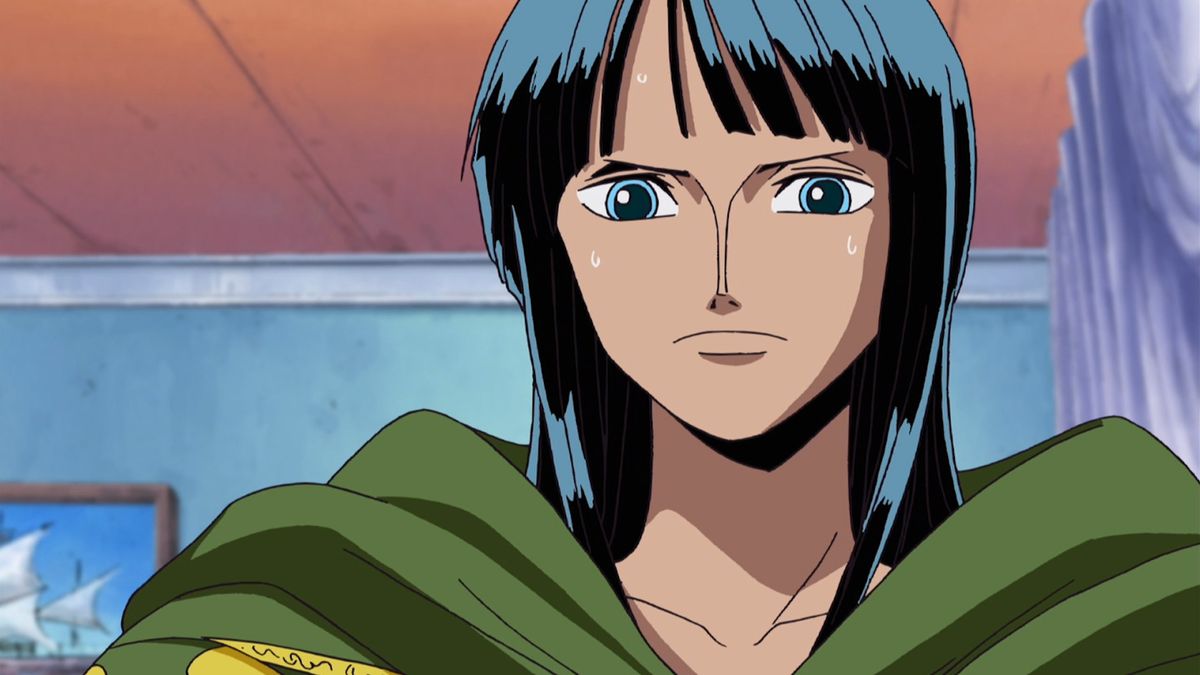
RaeRae Reacts · One Piece Episode 251
Robin’s Betrayal Was a Hostage Bargain, Not a Change of Heart
One Piece Episode 251 reveals that Robin surrendered because CP9 threatened the Straw Hats and made their survival the price of her cooperation.
Bottom line: Robin betrays the crew because the government made their survival the price of her surrender
One Piece Episode 251 finally gives Robin enough room to explain the choice that looked like betrayal. CP9 did not convince her that the World Government was right. They threatened the six people who gave her a home, then offered one narrow bargain: cooperate, accept whatever happens at Enies Lobby, and the Straw Hats may leave Water 7 alive.
Robin chooses the crew over herself because twenty years of pursuit taught her to expect abandonment the moment danger becomes expensive. The tragedy is not that she stopped loving them. She loves them so completely that she cannot imagine they would knowingly accept the cost of keeping her.
The official episode record
ONE PIECE.com lists Episode 251, “The Truth Behind Her Betrayal! Robin’s Sorrowful Decision,” with a Japanese broadcast date of November 27, 2005. Hirohiko Kamisaka wrote the screenplay, Ken Koyama directed, Kenji Yokoyama served as animation director, and Miyuki Sato and Tadami Shimokawa handled the credited art work.
The official record places Robin’s explanation at the center of the episode. CP9 demanded cooperation with the assassination plot and departure for Enies Lobby. In exchange, the government agents promised not to attack the Straw Hats while the crew remained in Water 7.
Chopper finds Nami alive before the truth can reach the rest of the crew
Water floods the room where Nami was left after CP9’s attack, and Chopper reaches her before Aqua Laguna finishes the job. The rescue gives the crew its first reliable witness to Robin’s conversation with the agents. Nami does not have a vague feeling or a hopeful theory. She heard the terms.
The timing matters because Luffy and Zoro remain trapped between buildings, Sanji has disappeared into his own investigation, and Usopp is still separated from the crew. Information exists, but Water 7 has scattered every person who needs to hear the information.
Nami understands the difference between rejection and sacrifice
Robin’s earlier words sounded final. She said she had a wish the Straw Hats could not grant and enemies they could never defeat. Nami now knows those words were shaped to make the crew release her, not to describe what Robin actually wanted from them.
That distinction changes the entire rescue. The crew is no longer chasing a woman who chose another side. They are trying to reach a friend who surrendered because she believed friendship would get everyone killed.
Robin’s bargain was never a fair agreement
CP9 presents the arrangement as a choice because coercion looks cleaner when the victim has to say yes. Robin may cooperate and preserve the Straw Hats for one night, or resist and watch government assassins kill them under cover of the storm.
Neither option gives her safety, freedom, or a future. The World Government controls the threat, the deadline, the destination, and the definition of compliance. Calling that arrangement a bargain does not make consent appear.
The Buster Call sits behind every word Robin says
Robin knows what government extermination looks like because she survived Ohara. Warships erased her island, scholars, neighbors, and mother, then the state turned a child survivor into a wanted criminal. CP9 does not need to describe every cannon when that history already lives in her body.
The threat against the Straw Hats reaches the oldest wound she has. If another home burns because she stayed, Robin will blame herself before she blames the institution that chose the violence.
Twenty years of running taught Robin to leave before affection becomes evidence
Every organization that sheltered her eventually discovered the bounty, the danger, or the value of betrayal. Adults used a child archaeologist, sold information about her, and treated survival beside her as a temporary business decision.
The Straw Hats changed the emotional pattern but not Robin’s expectation of the ending. She assumes warmth has an expiration date. CP9 only has to convince her that the date has arrived.
Robin thinks the crew’s dream matters more than her life
Luffy wants the One Piece. Zoro carries a promise toward the title of greatest swordsman. Nami is drawing the world. Usopp wants to become a brave warrior of the sea. Sanji searches for All Blue. Chopper wants to cure every disease.
Robin sees six futures and one hunted archaeologist. From her position, surrender looks like arithmetic. One life disappears so six dreams may continue. Love becomes a reason to remove herself from the count.
The crew would reject Robin’s arithmetic immediately
Luffy does not rank dreams by efficiency. A crewmate is not cargo to throw overboard when the route becomes dangerous. The Straw Hats have already risked death for Nami, Vivi, Chopper, and one another because shared danger is part of the relationship they chose.
Robin never gives them the decision because trauma tells her the answer will change once they understand the scale. She tries to protect their love from the test, even though refusing the test also refuses their agency.
Robin’s lie is loving and still unfair to the people who love her
The episode does not need to make her sacrifice foolish to admit the damage. Robin manipulates the crew’s understanding, participates in Iceburg’s attack, and plans to vanish without allowing anyone to answer the threat beside her.
Her motive deserves compassion. The consequences still hurt. A relationship cannot become mutual while one person decides alone which sacrifices everyone else is permitted to make.
CP9 weaponizes Robin’s best quality
Robin notices danger quickly and thinks several moves ahead. She is also fiercely protective beneath the calm delivery. CP9 turns those strengths inward by making self-erasure look like the most intelligent and caring plan available.
The agents do not need to break her affection for the crew. They need that affection to become stronger than her belief that her own life deserves protection.
Spandam’s promise depends on a technical limit Robin cannot enforce
The condition protects the Straw Hats only while they remain in Water 7 and only if Robin continues obeying. CP9 decides whether the terms were satisfied. No independent court, witness, or power can punish the government for breaking its word.
Robin accepts because a weak chance for the crew feels better than guaranteed attack. Desperation can make an unenforceable promise carry enormous weight.
Iceburg sees the child beneath Robin’s practiced calm
Iceburg has every reason to resent the woman standing beside the agents who shot him. He also knows the World Government has hunted the Pluton blueprints for years and understands how government pressure reshapes a person’s available choices.
His questions push past the crime scene toward motive. Robin’s composure stops reading like cold allegiance and starts reading like the discipline of someone already walking toward death.
Franky recognizes another life distorted by the blueprints
Franky spent years hiding Pluton’s plans because Tom’s death proved what the government would do to obtain ancient weapons. Robin spent years running because she can read the language connected to the same history.
The two inherited different halves of one danger. CP9 wants the plans and the reader. Their captivity brings Tom’s legacy and Ohara’s legacy into the same government operation.
The Ancient Weapon hunt makes Robin a person the state refuses to see as human
Government officials define her through capacity. She can read the poneglyphs, so they treat every relationship, desire, and future around that ability as disposable. Her mind becomes contraband attached to a body.
That reduction helps explain why Robin struggles to ask for rescue. The state has spent most of her life insisting that her existence is a weapon other people must fear.
Enies Lobby is presented as a destination with no return
Once the sea train reaches the judicial island, Robin expects transfer into government custody and disappearance. The architecture of the process creates inevitability: arrest, transport, judgment, and punishment all belong to the same authority.
CP9 benefits when a prisoner believes the route itself has settled the outcome. Hopelessness begins before the courtroom because every stage points in one direction.
Nami refuses the idea that the World Government is too large to fight
Nami understands fear better than most of the crew. Arlong controlled her village, used her talent, and built a bargain around the lives of people she loved. She knows what coercion sounds like when an oppressor calls compliance practical.
That history makes her response to Robin especially sharp. The size of the enemy does not change the truth of the relationship. Robin is still their friend, and the crew still gets to answer.
The Arlong Park echo gives Nami information Robin cannot yet trust
Nami once tried to carry an entire community’s ransom alone. She lied, stole, pushed Luffy away, and believed private suffering was the only responsible route. Luffy destroyed the room where Arlong had turned her skill into imprisonment.
Robin has not learned that story from inside Nami’s fear. Nami can now recognize the same structure and knows that rescue may require breaking the bargain rather than fulfilling the impossible terms.
Chopper’s role is practical before the crew can become dramatic
Chopper rescues Nami, treats injuries, listens, and helps carry the truth through a city facing disaster. His work gives the emotional revelation a route toward the people who can act on the revelation.
One Piece often lets devotion look like labor before devotion becomes a speech. Finding one injured friend is the first step toward reaching another friend already aboard the train.
Luffy being physically trapped mirrors Robin’s false conclusion
Luffy is wedged between buildings while Robin believes the crew is powerless against the government. The image is almost rude in its simplicity. He looks defeated because the environment has pinned him, not because he accepted defeat.
Once Nami reaches him with the truth, the question will not be whether he approves of the odds. The question will be how quickly he tears through the obstacle in front of him.
Zoro’s entrapment shows strength cannot solve missing information
Zoro can cut steel, but a chimney and a scattered crew still delay him. Raw power has no useful direction while Robin’s motive remains hidden and the sea train prepares to leave.
The episode makes communication part of the rescue problem. Every minute spent locating crewmates and correcting the betrayal story becomes distance between Water 7 and Robin.
Sanji acts on suspicion before receiving the full explanation
Sanji noticed Robin’s behavior, followed the movement around the station, and placed himself near the route CP9 planned to use. His habit of disappearing can frustrate the crew, but the same independence lets him reach threats before a formal plan exists.
He does not know every term of Robin’s bargain yet. He knows enough to refuse a clean government departure.
Usopp’s absence makes Robin’s sacrifice even sadder
Robin tries to save a crew already broken by the argument over Merry. She has seen Luffy and Usopp fight, watched Usopp leave, and witnessed the emotional cost of one member believing he no longer belongs.
Instead of asking whether the family can survive another fracture, Robin makes herself the next person to disappear. Trauma converts a temporary crisis into proof that departures are inevitable.
Robin and Usopp are both asking whether weakness cancels belonging
Usopp fears the crew will discard him after the damaged ship. Robin fears the crew will discard her after the government names the danger attached to her history. Both try to control the feared rejection by leaving first.
Their circumstances differ, but the emotional question overlaps. Can a person remain family when keeping that person costs more than expected?
The episode lets the answer arrive through Nami’s anger
Nami does not respond to Robin’s sacrifice with polite gratitude. She gets angry because Robin decided the crew’s position without them and because CP9 treated their lives as leverage.
That anger carries love without making love soft. Nami wants Robin back, wants Luffy informed, and wants the government’s terms rejected. Affection becomes direction.
The production keeps Robin controlled while everyone around her moves
Robin’s stillness fits a person conserving emotion under surveillance. CP9 members move with professional certainty, Water 7 floods, Chopper searches, and Nami pushes toward the others. Robin speaks as though her future has already ended.
The contrast makes her sorrow heavier than a louder breakdown would. She cannot afford visible hope while the agents holding the bargain remain close enough to punish hope.
Robin’s decision is understandable because the threat is real
The World Government destroyed Ohara and has the military, courts, intelligence network, and propaganda power to pursue another target. Pretending Robin simply underestimated a harmless enemy would flatten the choice.
She correctly understands the institution’s capacity. Her mistake is assuming the crew should be protected from choosing how to face that capacity.
The rescue must answer more than the locked train door
Reaching Robin physically will not erase twenty years of evidence telling her that survival beside other people ends in betrayal or death. The crew must make their choice impossible to misread.
They need to say that the danger is known, the cost is real, and Robin still belongs. Anything softer could sound like kindness offered before the full bill arrives.
RaeRae verdict: Robin did not abandon the Straw Hats, but she still denied them the right to love her back
Episode 251 turns the mystery of Robin’s betrayal into a painful family problem. She cooperates with CP9 because the crew matters more to her than her own future. The government exploits that love and the fear left by Ohara.
I understand why Robin made the bargain, and I am still glad Nami refuses to honor the decision. Sacrifice does not become healthy because the motive is loving. The Straw Hats deserve the truth, Robin deserves the chance to live, and CP9 deserves the exact chaos coming toward that sea train.