RaeRae Reacts · One Piece Episode 237
Water 7 Has No Room Left for One Crisis at a Time
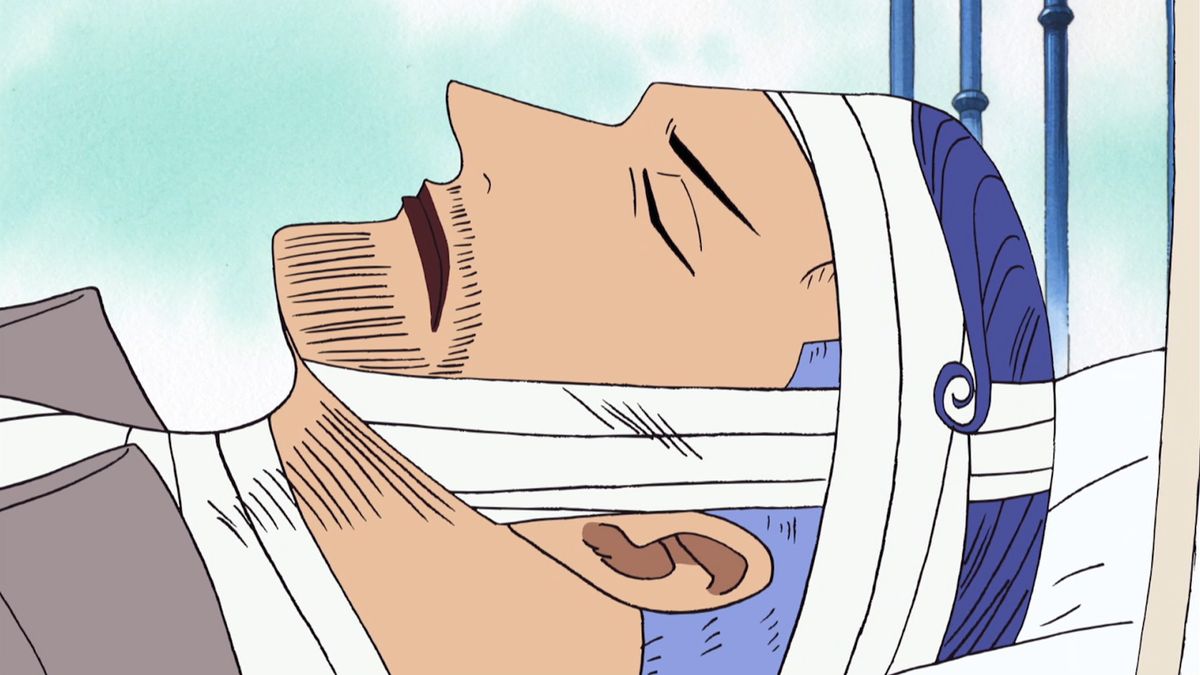
One Piece Episode 237 leaves Usopp alone, reveals Iceburg was shot, warns that Aqua Laguna is coming, and brings Franky home to the ruins of his family.
Bottom line: Water 7 has no room left for one crisis at a time
One Piece Episode 237 opens after Luffy and Usopp have already broken each other’s hearts, then refuses to give the crew a quiet morning to process the damage. Iceburg has been shot inside his own home. Robin is still missing. Aqua Laguna is moving toward the city. Franky returns to find his family beaten and Franky House destroyed. Everybody has a legitimate emergency, and every emergency points toward somebody else as the problem.
The episode works because Water 7 stops feeling like a colorful port and starts behaving like a crowded political community. News moves faster than proof. Loyalty decides which rumor feels believable. Public space narrows as workers, criminals, pirates, and residents defend their people. Nobody has enough information, but several people have enough pain to start a fight.
The official episode record
ONE PIECE.com lists Episode 237, “The City of Water Is Shaking! Iceburg Was Targeted!,” with a Japanese broadcast date of July 3, 2005. The episode adapts material from manga Chapters 334 and 335 during the Water 7 arc. Hirohiko Kamisaka wrote the screenplay, Yoko Ikeda directed, Eisaku Inoue served as animation director, and Miyuki Sato and Tadami Shimokawa handled the credited art work.
Those credits matter because the episode has to connect emotional fallout, civic panic, storm preparation, and Franky’s theatrical return without making the hour feel like unrelated updates. The direction keeps changing location, but the pressure moves in one direction. Every cut shows another relationship or institution losing control.
Usopp gets the silence he demanded and never wanted
Usopp remains with the Going Merry after losing the duel. He won the ship and lost the crew. The distinction sounds absurd until the quiet makes the cost visible. No celebration follows his victory. No one asks what supplies he needs. The deck holds memories, damage, and one exhausted man who has mistaken ownership for belonging.
The scene refuses to turn Usopp into a clean villain. He made the challenge. He said cruel things. He also heard the decision about Merry through every fear he already carried about being weak. Alone with the ship, Usopp cannot perform confidence for anybody. The result looks less like independence and more like a wound with legal custody.
The crew’s hotel room is not a home
The remaining Straw Hats secure a place to stay, but the room only emphasizes how badly the crew has fractured. Robin is absent. Usopp chose the Merry. The others are grouped together without feeling whole. One Piece has spent years making the ship and the crew’s shared routines feel domestic. A hotel can provide beds. A hotel cannot replace the small systems that made these people a household.
Sanji and Chopper plan to search for Robin because waiting would be unbearable. Zoro carries the hard boundary around Usopp’s decision. Luffy has captaincy sitting on his shoulders after the least triumphant victory of his life. Nobody gets a speech about healing. They get another emergency.
Nami brings the news that rearranges the whole city
Nami reports that someone shot Iceburg inside his home. The news lands differently from a pirate brawl because Iceburg is not merely a wealthy shipbuilder. Water 7 treats him as mayor, employer, civic symbol, and proof that the city’s shipbuilding skill still commands the world’s respect. An attack on Iceburg feels like an attack on the city’s order.
Luffy and Nami decide to check on him. Their concern is genuine. Iceburg welcomed them, valued their gold honestly, and arranged the Merry inspection. The Straw Hats have no reason to want him dead. That innocence will mean very little once Water 7 starts asking who had access, motive, and a missing archaeologist.
A mask is evidence, but not enough evidence
The only public clue is an ornate mask associated with the attacker. Masks make a perfect weapon for a political crime because a mask gives witnesses something vivid to remember while protecting the face that could prove identity. Water 7 receives an image without an answer.
Galley-La workers and residents begin naming suspects. Government involvement sounds possible. Rival pirates sound possible. The Franky Family sounds possible because criminals make convenient explanations. Every theory reflects an existing grievance. Nobody has a full chain of evidence, and the city does not wait for one before suspicion starts organizing behavior.
Iceburg’s employees respond like family and infrastructure
Paulie, Kaku, Lulu, Lucci, Kalifa, and the other Galley-La workers do more than worry about a boss. Iceburg’s condition threatens payrolls, contracts, city leadership, and the emotional center of their workplace. Their loyalty carries affection, but their reaction also shows how much Water 7 has concentrated around one man.
That concentration creates vulnerability. An attacker does not need to destroy every dock when removing Iceburg can throw the entire company into confusion. The workers immediately become guards, investigators, and crowd control. Skill with ships does not automatically make them good detectives, especially when fear gives the first convincing accusation too much weight.
Lucci and Kalifa already look trusted enough to disappear inside trust
Lucci and Kalifa visit the wounded Iceburg as familiar members of his professional circle. Nothing about their placement looks strange to the people around them. That normal access is the point. Water 7 respects competence, and both have built identities that fit the institution perfectly.
The episode does not need to announce the full CP9 structure yet. The tension comes from watching trusted faces move through protected space while the city searches outside for a masked stranger. A disguise works best when the institution supplies the keys, schedules, habits, and excuses. Galley-La’s trust is not stupidity. Years of convincing work made the betrayal possible.
Luffy and Nami travel toward a door already closing
Luffy and Nami ride a Yagara toward Dock One because Water 7’s canal system remains the fastest route through town. The same transport that felt delightful during arrival now carries them into a public emergency. The city’s design has not changed. Their relationship to the city has.
Nami approaches the problem through information. Luffy wants to see Iceburg and understand what happened. Neither realizes how quickly their position will shift from concerned visitors to suspects. They still behave as if honest intent will earn a hearing. Water 7 is already moving toward collective defense.
Nami finding Usopp cannot undo the duel
Nami sees Usopp unconscious in the street. The image is ugly because the duel was supposed to settle something. Usopp claimed the Merry, but his body still carries the robbery, the Franky Family beating, the fight with Luffy, and the exhaustion of trying to prove that pain can substitute for strength.
Nami cannot simply pull him back into the crew without addressing the terms of his departure. She also cannot stop caring because the argument became official. One Piece understands that boundaries do not erase attachment on command. Usopp remains their friend, even while his choices have made ordinary help complicated.
Franky comes home to consequences
Franky returns from spending the stolen money and finds Franky House demolished. The building was loud, tacky, criminal, and still home to his people. Luffy’s retaliation delivered a message to the gang, but Franky was absent when the message arrived. He sees the wreckage before hearing the entire chain of cause and effect.
His anger is not difficult to understand. The Franky Family attacked Usopp and stole the crew’s money. Luffy answered. Franky now sees injured subordinates and a destroyed home. Each side can describe the other as the aggressor by choosing a convenient starting point. Violence keeps producing fresh beginnings for revenge.
The Franky Family tells the truth with selective framing
The surviving gang members explain that the Straw Hats destroyed Franky House. Their report is factually correct and morally incomplete. The gang had already beaten Usopp twice and spent the repair money. Franky knows enough about his family’s work to understand that they did not meet pirates through polite negotiation, but loyalty makes the visible injuries louder than the missing context.
Selective truth drives much of Water 7. Iceburg was shot. A mask was found. Robin is missing. Franky House was destroyed. Usopp left the crew. Every statement can be accurate while the combined story remains wrong. Facts need chronology, motive, and relationship or they become tools for whoever speaks first.
Aqua Laguna does not care who wins the argument
Kokoro recognizes the wind and warns that Aqua Laguna is approaching. The annual high tide floods lower Water 7 and forces residents toward higher ground. The storm turns the city’s beautiful relationship with water into a survival schedule. Canals provide trade, transport, and identity. The same water can climb the streets and take whatever residents failed to secure.
The timing matters. People must evacuate while Iceburg lies wounded and rumors spread. Institutions have less time for careful investigation because a physical disaster demands immediate labor. Criminals, government agents, and frightened citizens all receive cover from the confusion.
Kokoro knows the city beneath the tourist view
Kokoro reads the weather without needing a dramatic instrument panel. Her warning comes from experience, routine, and a lifetime connected to Water 7’s rail and tide systems. The Straw Hats arrived as visitors enchanted by water elevators and Yagara rides. Kokoro understands the maintenance, danger, and annual preparation behind the spectacle.
That knowledge makes her more than comic relief at a station. She belongs to the practical network keeping people alive. Water 7 survives because residents know which streets flood, when trains stop, where families move, and how fast the tide can rise.
Sanji and Chopper search for one missing woman inside a moving city
Sanji and Chopper keep looking for Robin while residents prepare for the storm. Their task grows harder as crowds shift, businesses close, and routes change. Chopper’s nose gives them an advantage, but a city filled with water, wind, animals, food, fuel, and frightened people is not a clean tracking field.
Their search also reflects how the crew understands Robin. She is capable, secretive, and calm under pressure. Those qualities make her disappearance easy to misread as a choice. Sanji and Chopper act on the simpler truth: Robin vanished during a dangerous day, so friends go looking.
Water 7 turns public affection into public force
The crowd around Dock One is not only curious. Residents want information about Iceburg, and their concern gives Galley-La enormous informal authority. Workers can close gates, push people back, and define who belongs near the wounded mayor. The city accepts those decisions because affection for Iceburg and dependence on his company overlap.
Public love can protect. Public love can also become a weapon once a suspect is named. The same people who welcomed the Straw Hats as strange visitors can chase them as assassins if Iceburg’s testimony points their way. Community feeling does not guarantee justice.
Franky’s entrance is ridiculous because his anger is real
Franky arrives with music, posing, and enough performance to turn revenge into a stage show. The entrance should break the tension. Instead, the spectacle makes him feel more dangerous because nobody else knows which part is theater and which part is a weapon.
His grief for Franky House comes through the noise. Franky does not present himself as a detached crime boss. He is furious for people he considers family. That loyalty complicates the easy version of him as the villain who hurt Usopp. A loving leader can still run a violent gang. Affection does not cancel accountability.
Luffy meets the man behind Usopp’s beating
Luffy finally sees Franky and understands that the loud stranger leads the gang responsible for attacking Usopp. The fight becomes immediate because both men arrive carrying injuries done to somebody else. Luffy sees Usopp’s blood. Franky sees his people in the ruins. Neither starts from the stolen money or the choices that created the feud.
This is Luffy’s strongest and weakest instinct. He protects his people without hesitation. He also moves so quickly toward the person in front of him that larger systems can operate around the fight. CP9 needs exactly that kind of noise.
The episode keeps Robin present through absence
Robin barely needs screen time to control the emotional direction. Sanji and Chopper search for her. Iceburg’s attack carries a mysterious second figure. A mask protects one face. Robin’s missing presence makes every clue feel worse because the crew cannot ask her what happened.
Her history also changes the stakes. Robin survived by leaving organizations before they could hand her over, betray her, or die around her. The crew knows pieces of that pattern without knowing the full machinery chasing her. Silence looks like distance to them. For Robin, silence may feel like protection.
The direction uses movement to keep grief from settling
Yoko Ikeda’s direction rarely lets one emotional problem occupy the whole frame for long. The episode moves from Merry to the hotel, the hospital, canals, Franky House, the lighthouse, city streets, and Dock One. That movement does not weaken the feelings. The constant relocation shows how nobody gets enough time to understand one loss before another demand arrives.
The approach matches crisis days in real life. People learn terrible news while commuting, working, searching, evacuating, or answering somebody else’s anger. Water 7 becomes convincing because the story gives disaster a schedule.
What changed after another watch
Franky’s entrance landed as comedy the first time. On another watch, the important detail is how quickly he understands the attack on his family as a personal obligation. He and Luffy share the same protective reflex before either recognizes how much they resemble each other.
The quieter shift belongs to Water 7. The city is not betraying the Straw Hats for plot convenience. Residents are frightened because somebody shot a mayor they trust while a flood approaches. Their fear is reasonable. The people manipulating that fear are counting on reason stopping one step too early.
RaeRae verdict: everybody has receipts, and nobody has the whole bill
Episode 237 turns the aftermath of Luffy versus Usopp into a larger lesson about partial truth. Luffy has proof that Franky’s gang hurt Usopp. Franky has proof that Luffy destroyed his home. Water 7 has proof that Iceburg was attacked. The crew has proof that Robin disappeared. None of those facts explains the full day.
The episode hits harder than a simple transition into the next fight. Water 7 is beautiful, organized, and vulnerable to the same human shortcut as anywhere else: when fear rises, the first story connecting the visible damage can become more powerful than the truth. Meanwhile, Aqua Laguna is coming, because apparently the emotional flood was not enough.
Receipts and where to watch
The official ONE PIECE.com Episode 237 record supplies the Japanese title, July 3, 2005 broadcast date, Water 7 placement, manga connection, and official story image used on this page. The credited production record identifies Hirohiko Kamisaka, Yoko Ikeda, Eisaku Inoue, Miyuki Sato, and Tadami Shimokawa. Crunchyroll carries licensed One Piece streaming availability by region.
This React follows the anime’s Episode 237 stopping point. Later Water 7 and Enies Lobby knowledge explains more about Robin, Iceburg, Franky, and the masked attacker, but later answers do not get to rewrite what the crew could honestly know during this hour.