RaeRae Reacts · One Piece Episode 369
Zoro Tests Shusui Against Oars While Kuma Brings News of Blackbeard’s Warlord Appointment
One Piece Episode 369 React connects Zoro’s newly received blade to the Oars fight while Kuma tells Moria that Blackbeard will replace Crocodile.
One Piece Episode 369 React: Zoro tests Shusui against Oars while Bartholomew Kuma meets Moria and announces that Blackbeard will take Crocodile’s vacant Warlord seat.
What happened in Episode 369
The crew’s local struggle intersects with the larger political system. A sword gained through Ryuma’s defeat enters combat as the Government adds Marshall D. Teach to its sanctioned pirate structure.
RaeRae’s opening receipt
One appointment made far away can redraw the danger around every pirate. The World Government calls the arrangement stability while choosing which violence receives a title.
Zoro tests Shusui against a problem worthy of the blade
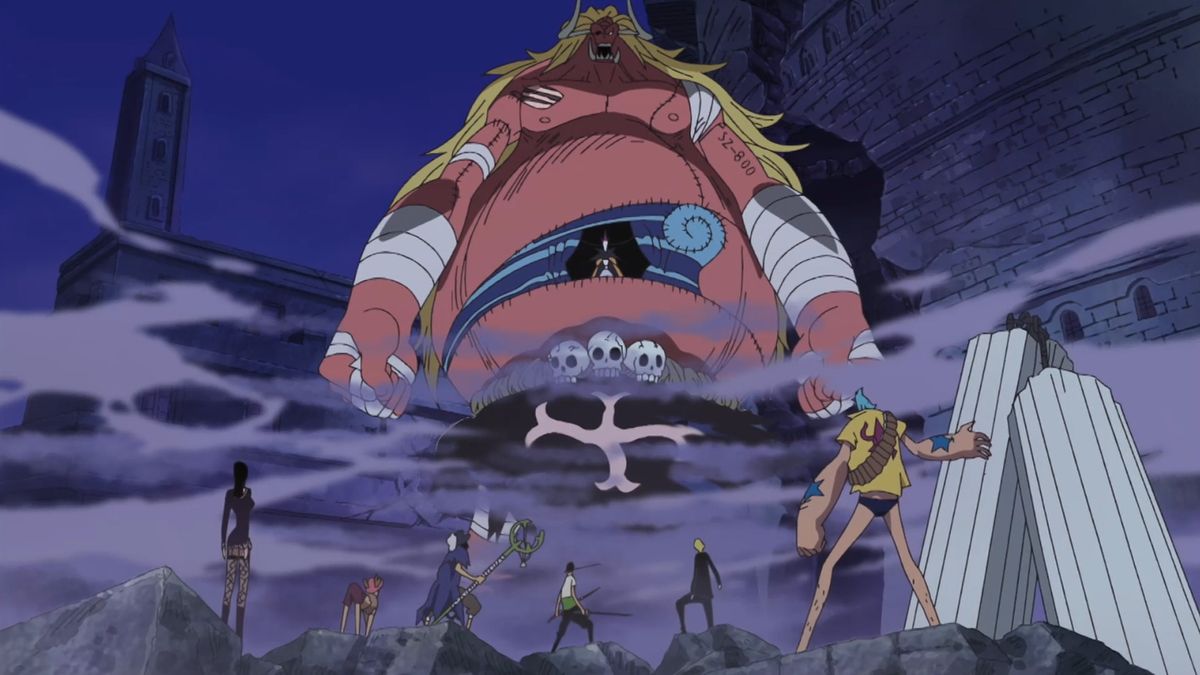
Episode 369 gives Zoro no gentle practice round with Shusui. The newly inherited sword meets Oars, a giant zombie whose size makes ordinary feedback almost useless. Zoro has to learn the blade while surviving the target.
That pressure suits him. Mastery begins as responsibility under conditions that refuse patience.
Shusui arrives carrying another swordsman’s history
Ryuma did not hand Zoro a blank tool. The black blade comes with reputation, craftsmanship, and the memory of a duel that Zoro treated seriously. Carrying Shusui means carrying proof that another life shaped the weapon first.
Zoro honors inheritance through use rather than display. Respect becomes discipline in motion.
A heavier blade changes the body holding the style
Zoro’s three-sword technique depends on balance across all three positions. A blade with different weight and temperament changes timing, grip, and force. The adjustment cannot remain isolated to one hand.
New equipment requires a new relationship across the whole system. Strength alone cannot replace calibration.
Oars makes every measurement brutally clear
A strike that would settle a human duel can disappear against Oars’s scale. The giant therefore becomes an unforgiving test of reach and consequence. Zoro learns what Shusui can carry because the target refuses to flatter him.
Thriller Bark turns training into combat without pretending those activities are identical.
Zoro does not confuse possession with mastery
Winning Shusui gave him the right to carry the sword. The duel did not instantly provide complete fluency. Episode 369 respects the labor between acquisition and command.
Ownership is paperwork. Mastery is an ongoing conversation between hand, blade, judgment, and consequence.
The crew’s fight remains a shared experiment
Zoro tests Shusui while everybody else keeps Oars occupied. His discovery depends on openings created by friends, and their survival depends on what he learns. Individual growth takes place inside collective risk.
No Straw Hat develops in a sealed room. Their progress changes what the crew can attempt together.
Oars still looks like Luffy from the wrong distance
The giant’s movements recall Luffy, but scale and command distort every familiar quality. Playfulness becomes devastation. Improvisation becomes a weapon for Moria’s control.
The resemblance hurts because viewers know the relationships missing from the copied behavior.
Zoro faces stolen identity with earned inheritance
Oars carries a shadow taken without consent. Zoro carries a sword received after a duel and acknowledgment. Both fighters enter with something shaped by another person, but the ethical paths could not be further apart.
One inheritance honors agency. The other begins by removing agency.
Kuma and Moria bring the Warlord system into conversation
Elsewhere, Kuma meets Moria as a fellow member of the Seven Warlords. Their exchange transforms a title from background lore into an active network. These pirates do not merely share a label. They receive information and pressure through the institution behind that label.
Government power reaches Thriller Bark through a quiet conversation between dangerous men.
Crocodile’s empty seat still shapes the world
Crocodile lost his position after Alabasta, but removal did not dissolve the system that empowered him. The government seeks a replacement. Institutional continuity matters more than reflection on why the vacancy exists.
A fallen Warlord becomes an administrative opening before becoming a lesson.
Blackbeard’s appointment rewards calculated ambition
Marshall D. Teach did not stumble into consideration. His choices created leverage, spectacle, and usefulness for the World Government. Becoming Crocodile’s replacement confirms that disruption can be converted into official status when authorities see advantage.
The system does not need to trust Blackbeard. The system only needs to believe his power can serve present goals.
The name Marshall D. Teach carries history into the room
Kuma’s announcement connects Thriller Bark to a man whose actions already affected Luffy, Ace, and the wider pirate era. Blackbeard is absent physically, yet the consequences of his rise cross the sea ahead of him.
One Piece builds scale by allowing names to move through institutions before bodies arrive.
Replacing Crocodile does not repair Crocodile’s damage
Alabasta suffered because a Warlord used government legitimacy as cover for private conquest. Filling the vacancy addresses the roster, not the wound. The structure survives by treating abuse as a personnel problem.
Episode 369 delivers that indictment without pausing for a courtroom speech.
Moria hears the news while his own kingdom shakes
The timing matters. Moria’s zombies are failing, his enemies remain active, and Oars has not delivered the clean victory he expected. Kuma arrives with information about another pirate’s ascent while Moria’s own authority is under stress.
World politics does not wait for local rulers to regain control.
Kuma’s calm makes the message feel official
He does not gossip about Blackbeard. Kuma delivers the information with the weight of somebody carrying a settled development. His restraint gives institutional news a physical presence.
Quiet speech can sound more final than a shouted threat when the speaker appears fully certain.
Moria and Blackbeard represent different appetites for power
Moria retreats into stolen labor, accumulated bodies, and a fortress designed to avoid personal loss. Blackbeard moves outward, accepts risk, and creates openings through chaos. Both exploit other people, but their ambitions travel differently.
The shared Warlord title cannot make their methods morally or strategically identical.
The World Government keeps choosing useful danger
Warlords are pirates licensed because their violence appears manageable or beneficial. Crocodile proved how fragile that calculation was. Blackbeard’s appointment repeats the wager with a man whose ambition is already difficult to contain.
Power keeps mistaking temporary alignment for control.
Kuma’s visit makes Moria look less isolated than he wants
Thriller Bark feels like Moria’s sealed kingdom, governed by his rules and hidden inside fog. Kuma’s arrival proves the outside world can enter. The government knows where Moria stands and can place another Warlord before him.
Isolation was always conditional. Official relationships breach the walls.
The episode runs two tests at once
Zoro tests whether a new blade can answer an enormous physical threat. The Warlord conversation tests whether an old political arrangement can absorb another ambitious pirate. Both systems face unfamiliar weight.
One test is honest about the work required. The other hides risk beneath appointment language.
Shusui cannot choose Zoro, but Ryuma could
A sword is an object, yet the transfer matters because Ryuma recognized the outcome of their duel. That acknowledgment places consent around the inheritance. Zoro did not steal the weapon from an unconscious opponent or strip a grave for status.
Thriller Bark keeps returning to the moral difference between taking and receiving.
Blackbeard takes institutional legitimacy without becoming legitimate
A government title can alter access, protection, and public perception. None of those changes cleans the choices that produced the appointment. Authorization and morality remain separate questions.
The Warlord system survives by encouraging audiences inside the world to confuse those categories.
Zoro’s seriousness protects the comedy around him
The crew can attempt docking poses and trade absurd reactions because Zoro remains focused on the blade, target, and next opening. His concentration provides weight without draining personality from the scene.
One Piece balances tone through characters rather than forcing every character into the same tone.
A black blade is not a shortcut through experience
Shusui’s quality expands what may be possible, but higher potential increases the demand for control. A powerful tool can expose weak technique as readily as strong technique.
Zoro’s trial against Oars honors craftsmanship by refusing magical instant competence.
The Warlord announcement expands consequences beyond the island
Defeating Moria would not settle the government’s pirate strategy. Blackbeard is already rising elsewhere, and Crocodile’s replacement changes future encounters the Straw Hats cannot yet see.
The episode keeps the arc connected to a moving world rather than sealing Thriller Bark inside a bottle.
Ace’s absence haunts Blackbeard’s promotion
Viewers know Blackbeard’s path is tied to Ace’s pursuit, even when every participant on Thriller Bark lacks the full picture. That knowledge gives the appointment an ache beyond political rearrangement.
Dramatic irony turns a factual announcement into a warning the room cannot properly read.
Kuma reveals information without revealing himself
We learn why the Warlord roster is changing, but Kuma’s own intentions remain guarded. He supplies clarity about Blackbeard while becoming a larger question.
Controlled disclosure is part of his presence. Every answer arrives beside a locked door.
The episode refuses to rank physical and political danger
Oars can crush the crew immediately. The Warlord system can reshape seas through decisions made far away. Both forms of power matter, and Episode 369 moves between them without declaring one merely background for the other.
One threat occupies the body. The other organizes the world around bodies.
Episode 369 remains an episode React
This page responds to Zoro testing Shusui against Oars and Kuma telling Moria that Marshall D. Teach will replace Crocodile among the Warlords. A complete Thriller Bark Review belongs after the arc resolves its battles and political consequences.
React classification preserves broadcast-level close reading while keeping whole-work Reviews reserved for complete arcs, seasons, series, and films.
The official local still remains canonical
The Episode 369 still serves as featured image, hero, bounded-directory card, and social preview. One local attachment preserves recognition across every discovery route.
Complete source, descriptive, accessibility, and filing metadata remain attached. No other record reuses this image.
RaeRae’s final receipt
Episode 369 hands Zoro a legendary black blade and immediately refuses to let the sword do his homework. Shusui has weight, history, and a temperament he must learn while Oars tries to turn the island into rubble. That is inheritance with responsibility attached. Zoro received the blade through recognition, and now he has to become worthy of carrying the conversation forward.
Kuma’s conversation with Moria offers the rotten institutional mirror. Crocodile’s fall created a vacancy, so the World Government fills the chair with Blackbeard as if the chair were the only problem Alabasta exposed. Authorization becomes a way to recruit dangerous ambition without confronting the structure that keeps rewarding danger. Zoro receives power and accepts discipline. Blackbeard receives status because authority finds his appetite useful. One transfer asks what the new holder owes the legacy. The other asks what the new holder can do for the roster. That contrast gives Episode 369 much more bite than a sword test and a lore update have any business carrying.
Recognition creates an obligation that appointment avoids
Ryuma’s acknowledgment gives Zoro more than a valuable sword. The exchange creates a standard. Zoro has seen the skill connected to Shusui and knows that carrying the blade invites comparison with the history already inside the name. He answers by testing himself, not by demanding that everybody admire the acquisition.
Blackbeard’s appointment moves in the opposite direction. The government offers a title because his demonstrated danger may serve their immediate interests. The arrangement asks for usefulness before accountability. Nobody pauses to establish what duty Crocodile’s successor owes the people harmed beneath Warlord protection. The chair carries privilege without requiring moral inheritance.
Both transfers will be judged by future action
Neither Shusui nor the Warlord title can settle the meaning of the recipient. Zoro must show what kind of swordsman carries Ryuma’s blade. Blackbeard will show what kind of pirate uses government authorization. Episode 369 plants both questions inside active conflict rather than announcing a final answer.
That patience is essential to One Piece world-building. A new object or title matters because future choices keep revising the meaning. The audience receives enough information to feel the change, then has to watch what the new holder does with access.
Kuma leaves the room with more knowledge than he gives
Kuma understands the appointment, the government’s concern, and his own reason for reaching Thriller Bark. Moria receives only the portion Kuma chooses to share. Their equal title does not create equal information.
The imbalance makes Kuma’s courtesy unsettling. Polite delivery cannot soften the fact that he controls the terms of the exchange. By the end of Episode 369, Shusui feels heavy because history is visible. Kuma feels heavy because history remains concealed.