RaeRae Reacts · One Piece Episode 334
Luffy Uses the Ice While Puzzle Chooses the Phoenix Flag Again
One Piece Episode 334 React uses ice against Don Accino’s heat as Puzzle defeats Campacino and joins the mission to reclaim his flag.
What happens
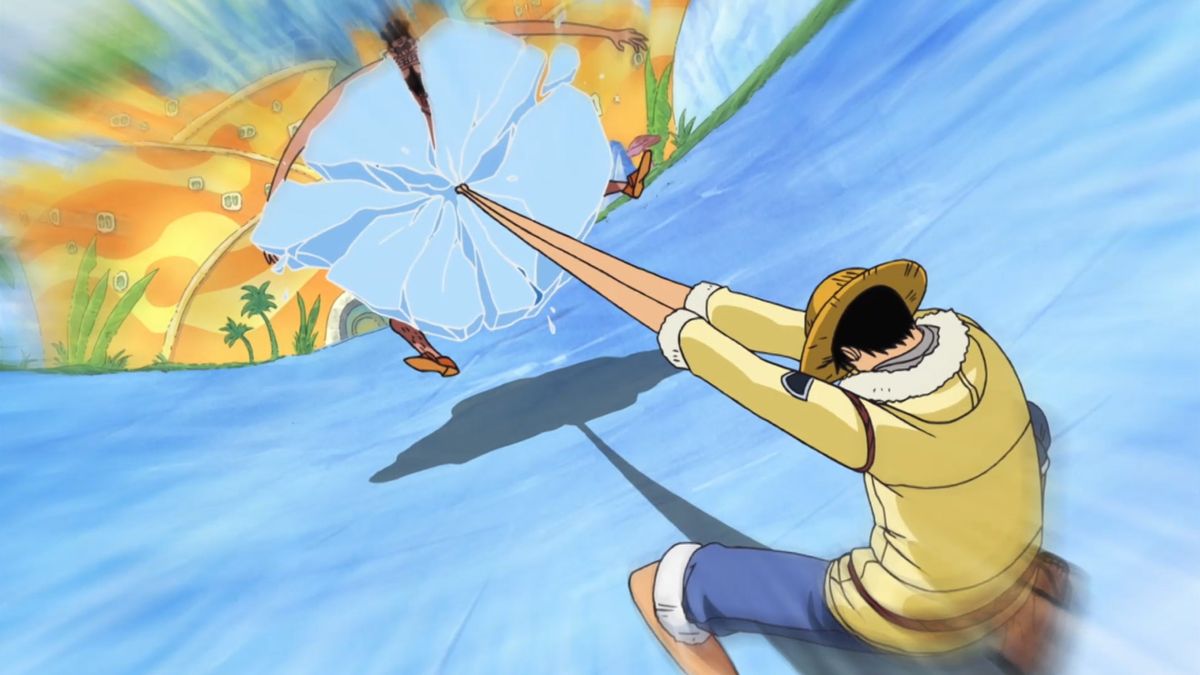
Don Accino grows too hot for Luffy to touch, so Luffy uses ice to land a Gum-Gum Bazooka. The revived Puzzle defeats Campacino, then joins Chopper and Jiro in the effort to reclaim the Phoenix Pirates’ stolen Jolly Roger.
RaeRae reacts
Luffy wins access to the fight by treating the environment as protection instead of accepting heat as an absolute boundary. Puzzle’s return is the more important recovery: he acts beside people rather than performing invulnerability for them. Reclaiming the flag becomes a chosen recommitment, not proof that the earlier defeat never mattered.
Canon note
Episode 334 is anime-original and does not adapt manga chapters.
Don Accino makes direct contact impossible
His rising temperature turns Luffy’s usual approach into self-injury. Rubber can stretch across distance, but the final strike still brings Luffy’s body near heat no skin should tolerate. The problem is not willingness. The problem is access.
Episode 334 gives the captain a fight where courage must cooperate with material reality instead of pretending determination cancels temperature.
Luffy learns from the frozen environment instead of only resisting the ice
Ice has trapped Sunny, separated friends, and helped the bounty hunters immobilize people. Luffy picks up a block and turns that hostile material into insulation for his attack. The environment changes sides through interpretation.
A tool does not carry one permanent moral meaning. The same ice used for capture can protect a hand reaching toward freedom.
The ice-assisted Bazooka is improvisation, not a power upgrade
Luffy does not discover a larger internal reserve or announce a new form. He identifies a physical barrier between himself and Accino, then places another material between skin and heat long enough to strike. The solution is beautifully ordinary beside the scale of the fight.
Intelligence can look like using the obvious object nobody else treated as useful.
Accino’s heat creates the conditions for Luffy’s answer
The Don rules Lovely Land through contrast: extreme heat surrounded by extreme cold. The frozen setting keeps his stronghold possible while also supplying the protection an opponent needs to touch him. His system contains its own countermeasure.
Power becomes brittle when a leader assumes every surrounding resource belongs exclusively to his control.
Luffy accepts temporary protection instead of demanding invulnerability
The ice will melt. The block cannot make him permanently immune to Accino’s temperature. Luffy only needs a brief opening aligned with his timing and force. That willingness to use an imperfect answer keeps him moving.
Waiting for a flawless solution would hand the fight to the person whose heat grows with every delay.
The Gum-Gum Bazooka restores contact on Luffy’s terms
Accino used temperature to decide who could approach. Luffy’s improvisation returns the choice of distance to the attacker. The strike matters because the captain recovers agency from an environmental boundary the Don treated as absolute.
Combat becomes a negotiation over who controls proximity, echoing the magnetic twins and the arc’s larger obsession with forced separation.
Accino mistakes untouchability for moral authority
Because opponents cannot reach him safely, the Don behaves as though distance proves superiority. Physical consequence cannot touch him, so he assumes judgment cannot touch him either. Luffy refuses both claims.
Being hard to challenge does not make a leader correct. Sometimes the surrounding danger only reveals how much protection power has built around bad behavior.
Luffy’s anger serves people reduced to bounty prices
The Straw Hats were separated, frozen, transported, and processed because their wanted posters promised profit. The Phoenix Pirates were attacked during retreat and stripped of their flag. Luffy’s strike answers a system that treats dreams and bodies as inventory.
His rage is not abstract loyalty to piracy. His rage protects the right of people to choose what their voyage means.
Puzzle’s return continues beyond the first brave pose
Episode 333 let him stand again. Episode 334 asks whether that recovery can survive direct opposition. Defeating Campacino gives action to the reclaimed identity without pretending one victory erases the New World wound.
A comeback becomes credible through repeated choices after the inspirational moment, especially when fear has reason to return.
Campacino represents control over who can stand together
The magnetic twins built their threat around pulling and repelling bodies. Puzzle defeating Campacino rejects the power that tried to organize relationships from outside. The Phoenix captain chooses his own proximity to crew, flag, and future.
The symbolic fit is sharp: a man recovering connection defeats an opponent who weaponizes forced connection and forced distance.
Puzzle wins without becoming the person he was before defeat
He carries knowledge that the New World can overwhelm him and that shame can distort leadership. That changed captain may be more useful than the earlier version whose confidence had never met catastrophe.
Rebirth should create continuity with difference. A phoenix that returns unchanged has learned nothing from the fire.
Jiro’s loyalty receives an answer through action
Jiro kept moving when Puzzle could not, preserved the crew’s claim to its flag, and traveled with Luffy toward Lovely Land. Now the captain fights beside the follower who helped hold possibility open.
The relationship becomes reciprocal. Leadership is no longer one person supplying courage while everyone else receives courage.
Chopper joins the flag mission because care includes identity
A doctor treats wounds, and Chopper understands that humiliation around the stolen Jolly Roger is part of what injured the Phoenix crew. Recovering the flag cannot cure trauma, but restoring the choice to raise or retire the emblem matters.
Care does not decide the future for a patient. Care helps return enough agency for the person to decide.
The three-person mission distributes recovery
Puzzle brings renewed commitment, Jiro brings loyalty sustained through despair, and Chopper brings an outsider’s protective support. No single person can claim ownership of the flag’s return.
That distribution keeps the story from framing recovery as solitary masculinity. People heal through decisions made beside people who refuse both abandonment and control.
The Jolly Roger deserves recovery because theft was not consent
Puzzle may ultimately choose another path, but the Accino Family does not gain authority over that choice by stealing the symbol during vulnerability. Returning the flag restores decision-making to the people who created its meaning.
Freedom includes the option to continue and the option to stop. Predation removes both by declaring capture the only ending.
A flag cannot perform courage for the people beneath the emblem
The emblem preserved memory while Puzzle despaired, yet cloth cannot lead a crew, apologize for harm, or prepare for another sea. The Phoenix Pirates must translate symbolic recovery into changed practice.
Reclaiming the image is a beginning. The difficult work concerns how they sail after learning where confidence alone failed.
The Phoenix crew still owes the Straw Hats accountability
Fighting a common enemy and recovering from exploitation do not erase the concealed drugs or attempted theft that began the arc. Puzzle’s pain deserves compassion, and the Straw Hats’ violated trust deserves recognition.
Redemption becomes meaningful when a person can receive help without treating help as automatic absolution.
Luffy helps without requiring the Phoenix crew to become subordinate
He fights Accino because friends and freedom are under attack, not because he wants Puzzle’s followers absorbed beneath the Straw Hat flag. Another captain’s return does not threaten his authority.
Solidarity leaves room for separate futures. The crews can part with gratitude, unresolved work, and distinct dreams after the hunters fall.
Ice and fire stop functioning as simple opposites
Accino’s heat threatens bodies and structures, while Hockera’s cold enabled capture. Neither element is morally pure. Luffy uses ice for protection, and the crew relies on warmth to survive freezing.
Meaning comes from purpose, consent, and consequence rather than a tidy elemental code. The episode’s best tactic depends on that flexibility.
The fight rewards observation learned across the arc
Nami and Franky investigated the moving ice. Separated groups learned how the family uses terrain. Prisoners communicated inside Lovely Land. Luffy’s ice-assisted strike belongs to the same progression from reaction toward understanding.
The crew is winning because conditions once controlled by the hunters have become readable and therefore reusable.
Accino grows hotter as control becomes less secure
Every escape and counterattack threatens his business and patriarchal authority. His response is escalation. Greater heat makes him harder to touch while bringing Lovely Land closer to physical collapse.
The power promises immediate dominance and guarantees long-term instability. Anger becomes a resource that consumes its own container.
Luffy’s solution cannot end the whole fight at once
The ice block creates an opening, not permanent immunity. Accino can heat further, alter distance, and force another adaptation. Episode 334 preserves momentum by letting intelligence matter without transforming one clever move into effortless resolution.
A good counter changes the contest. A good counter does not erase the opponent’s capacity to respond.
The episode allows two captain stories to advance together
Luffy learns how to reach an untouchable opponent. Puzzle proves his recovery through action and moves toward the stolen flag. Neither plot needs to diminish the other. One captain protects a crew already secure in its identity; the other rebuilds identity after collapse.
The parallel shows leadership at different stages of crisis.
Anime-original status remains explicit
Don Accino, the Heat-Heat Fruit, Campacino, Puzzle, and this flag-recovery mission belong to the television-original Ice Hunter Arc. Episode 334 does not adapt manga chapters.
Clear sourcing protects readers while allowing the React to take the television episode’s ethical and emotional choices seriously.
The title’s super-heated battle hides a quieter victory
Luffy finding a way to strike Accino supplies the spectacle. Puzzle choosing to fight beside Jiro and Chopper supplies the emotional resolution the arc has been building since Episode 328.
Heat fills the screen, but restored agency carries the episode. The flag matters because its captain can finally approach the choice again.
RaeRae’s final receipt
Episode 334 gives Luffy a problem I love because screaming harder cannot make Accino safe to touch. He has to look at the same ice that trapped the crew and recognize temporary protection. The block melts, the opening is imperfect, and the Gum-Gum Bazooka lands because intelligence, timing, and nerve cooperate. The environment stops belonging exclusively to the hunters.
Puzzle’s side of the episode matters even more. He defeats Campacino, joins Chopper and Jiro, and moves toward the Phoenix flag as someone changed by defeat rather than magically cured of defeat. His friends preserved the promise while he could not hold the promise himself. Now he chooses to carry part of the weight again. I am keeping the consent receipt from the arc’s beginning: recovery does not erase the Phoenix Pirates’ betrayal of the Straw Hats. Accountability can wait beside compassion without disappearing. The stolen flag should come home because Accino never had the right to define their ending. What the Phoenix crew does after recovery will decide whether rebirth becomes growth or another performance.
The ice block gives Luffy a boundary he can carry
He cannot lower Accino’s temperature through willpower, but he can decide what separates his body from the heat for one critical moment. The improvised shield makes a boundary visible and useful. Protection does not weaken the attack; protection allows the attack to exist.
That lesson travels beyond combat. People often need a barrier, tool, or ally before courage can become safe action.
Puzzle’s victory over Campacino rejects forced direction
Magnetic power tried to determine who could approach, retreat, or remain connected. Puzzle defeats the twin and chooses his own route toward the stolen flag. The action converts recovery from an internal declaration into restored movement.
He is not merely stronger again. He has regained authorship over where his loyalty carries him.
Chopper and Jiro keep the flag mission relational
Puzzle does not walk toward the emblem as a solitary hero proving nobody was necessary. A doctor who treated his body and a follower who protected his dream move beside him. Their presence tells the truth about recovery.
Rebirth can belong to one person while depending on care that came from many directions.
The episode refuses one definition of strength
Luffy improvises with ice, Puzzle recommits after despair, Chopper joins through care, and Jiro stays loyal without becoming passive. None of those choices looks identical. Every choice restores agency where the Accino Family tried to assign a price and route.
Strength becomes the capacity to choose responsibly after power has narrowed the available choices.