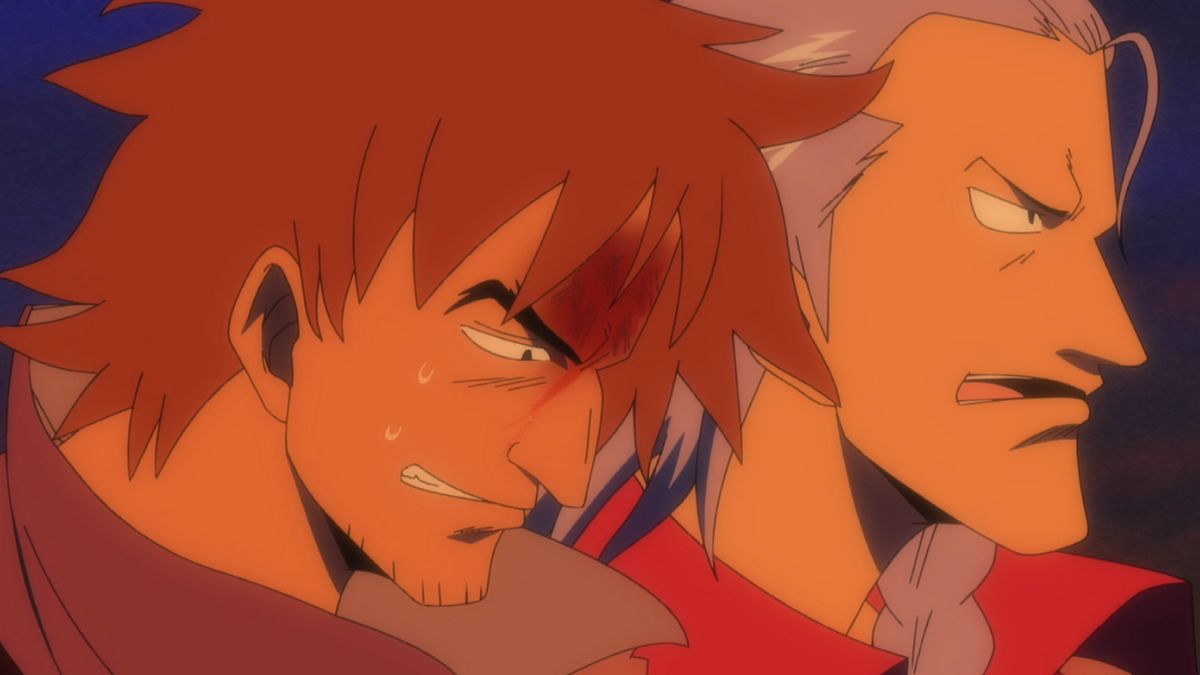
RaeRae Reacts · One Piece Episode 328
Puzzle’s Broken Dream Leaves the Phoenix Flag Without a Captain
One Piece Episode 328 React examines Puzzle’s New World despair as moving icebergs and the Accino Family trap both pirate crews.
What happens
Puzzle wakes after Chopper’s care, but the defeated captain no longer wants the New World dream his crew followed. Moving icebergs trap the ships, Accino Family hunters approach, and a flying fish steals the Phoenix Pirates’ flag while the Straw Hats become scattered.
RaeRae reacts
Puzzle’s despair gives the filler arc a useful question: what happens after the New World breaks the confidence that carried a crew there? His followers cannot restore him by demanding the old captain perform hope on command. The stolen flag makes that crisis visible because a pirate emblem means little when its captain has stopped believing in the promise beneath the cloth.
Canon note
Episode 328 is anime-original. Its New World warning can complement the anime’s themes, but the events are not manga history.
Puzzle wakes physically before his dream recovers
Chopper’s treatment helps the Phoenix captain regain consciousness, but medicine cannot automatically restore the future he believed in before the New World defeated him. His body returns to the conversation while his identity remains stranded somewhere inside the loss.
The distinction matters. Recovery is not one event. A person can survive the injury and still need language, time, community, and choice before hope feels inhabitable again.
The New World becomes a wound instead of a destination
Puzzle once led his crew toward the sea every ambitious pirate wants to reach. What they encountered forced a retreat and shattered the confidence attached to his title. The destination now signifies humiliation, danger, and proof that desire did not guarantee readiness.
Episode 328 uses an anime-original crew to preview an important truth: dreaming big does not protect anybody from being overwhelmed by the scale of the dream.
Retreat was not the moral failure Puzzle believes
Leaving a battle or sea that will kill everyone can be responsible leadership. Survival preserves the possibility of learning, rebuilding, and choosing another approach. Puzzle treats retreat as evidence that his entire pirate identity was fraudulent.
That interpretation turns a tactical decision into a permanent sentence. Shame erases every mile the Phoenix Pirates traveled before defeat and every person they kept alive by leaving.
The Accino Family attacked people who were already hurt
The bounty hunters did not meet the Phoenix Pirates at full strength in an honorable contest. They targeted the crew during retreat, when bodies, morale, and coordination were damaged. Predation looks for vulnerability because profit matters more than fairness.
Puzzle internalizes the outcome as proof of personal worthlessness, which allows the hunters’ ethics to disappear from his own account. Being exploited while injured does not make the victim responsible for the exploiter’s choice.
Losing the Jolly Roger attacks a shared identity
A pirate flag represents the promise people agree to sail beneath. The Accino Family takes more than cloth. They seize a public symbol of the Phoenix crew’s continuity at the exact moment its captain doubts whether continuity exists.
The theft becomes psychologically precise. Puzzle already fears the crew he led is gone in every meaningful sense, and the missing flag makes that fear visible above an empty mast.
Puzzle’s followers ask for the captain they remember
The crew wants him to stand, reclaim the flag, and speak the old dream with conviction. Their longing is understandable. They attached their futures to his leadership, survived disaster beside him, and need evidence that sacrifice still belongs to a larger story.
The request can also become pressure. A traumatized person cannot perform recovery simply because everyone else needs reassurance from his face.
Leadership makes private despair a collective emergency
Puzzle does not receive the luxury of suffering invisibly. His silence changes decisions, morale, and the meaning of the crew’s next move. That reality is unfair to him and unavoidable for the people he leads.
Good leadership cannot require emotional perfection. The episode asks whether a captain can admit fear honestly without making every follower responsible for carrying his unprocessed shame.
Becoming bounty hunters sounds practical because the dream feels dangerous
Puzzle proposes abandoning piracy and joining the kind of work that turned his crew into prey. The plan offers money, institutional tolerance, and a role that appears less vulnerable than sailing under a wanted flag. Fear dresses surrender as sensible career planning.
Changing a dream is allowed. The concern lies in choosing from shame so profound that the person cannot distinguish new desire from avoidance.
Joining the hunters would convert pain into identification with power
The Accino Family harmed the Phoenix Pirates when they were weakest. Becoming bounty hunters could let Puzzle imagine he has crossed from target to protected aggressor. If he resembles the people who controlled him, perhaps he will never feel that powerless again.
That strategy does not heal the original wound. The strategy risks passing the wound forward to another desperate crew.
The Phoenix name makes rebirth an uncomfortable demand
A phoenix symbolizes return after destruction, so Puzzle’s crew name seems to promise recovery before he can consent to the timeline. Symbols can inspire, but symbols can also become accusations when a person cannot embody them.
He is allowed to be exhausted beneath an emblem of rebirth. The meaningful question is whether his next life will emerge from honest choice or fear pretending to be final wisdom.
Luffy hears quitting differently because his identity has never been negotiable
Luffy can understand losing a fight, grieving, and needing help. He struggles to understand surrendering a dream because somebody else proved the road dangerous. His certainty creates a useful challenge to Puzzle without becoming a universal model for trauma.
Not everyone recovers at Luffy’s speed. His presence matters because he demonstrates that defeat does not possess automatic authority over the future.
Chopper’s care continues after the bandages
Chopper treated Puzzle as a patient before knowing the entire story. Once the captain wakes, emotional distress enters the medical picture. Chopper cannot prescribe courage, but his attention refuses to reduce healing to closed wounds and stable breathing.
The doctor understands that bodies and belonging interact. A captain surrounded by frightened followers needs space to recover and relationships capable of telling the truth.
The Straw Hats are the wrong crew for shame’s final verdict
Every current member has carried a reason to believe the dream was over. Nami lived under Arlong, Robin prepared to die, Franky punished himself for Tom, Usopp left over Merry, and Chopper learned to expect rejection. Their voyage exists because those verdicts were challenged.
They do not offer Puzzle empty optimism. Their presence is evidence that damage can remain part of a person without becoming the final author.
Usopp should recognize the temptation to quit before rejection arrives
Usopp challenged Luffy partly because losing Merry activated fear that a weak crewmate would be discarded next. Leaving let him control the separation before somebody else could choose against him. Puzzle similarly proposes a new identity before the sea can defeat his pirate self again.
Preemptive surrender can feel like agency. The cost is allowing fear to make the decision the feared enemy has not yet earned.
Franky built Sunny after creation became traumatic
Franky’s ships were used to frame Tom, turning his gift into the source of lasting guilt. He could have abandoned engineering and called avoidance responsibility. Instead, he eventually built Sunny with deliberate purpose and trusted friends to carry the creation well.
His story does not command Puzzle to recover identically. Franky proves a wounded craft or dream can be reclaimed without pretending the original harm never happened.
The moving icebergs turn internal instability into terrain
The sea around both crews refuses to stay still. Routes close, vessels become separated, and solid-looking surfaces move according to forces hidden below. Puzzle’s inner world has the same instability: the beliefs he used for navigation no longer remain where he left them.
Anime-original geography becomes useful symbolism without needing a speech to announce the connection.
Coup de Burst proves one crew’s dream has engineering behind it
Sunny can escape a dangerous position through Franky’s compressed-air system, but the spectacular movement rests on years of skill, planning, and resources. Dreams do not survive through confidence alone. They need preparation capable of answering conditions the dreamer cannot control.
Puzzle’s New World defeat may identify missing readiness rather than an impossible destination. Shame refuses that practical reading because shame prefers identity judgments.
Zoro cutting through ice reflects his direct relationship with obstacles
Zoro meets a frozen barrier with the skill he trusts most. The solution can clear immediate space while leaving him separated or disoriented inside the larger field. His strength remains real, and strength does not automatically provide context.
Episode 328 keeps repeating the lesson from Channel 0: solving the visible obstruction is different from understanding the system producing obstructions.
The severed connection between ships makes solidarity physical
The Straw Hats and Phoenix Pirates cannot remain safely linked while ice and attackers reshape the field. Separation forces each group to decide what loyalty means without constant reassurance from the other vessel.
Puzzle’s crew cannot borrow Luffy’s confidence forever. Their captain and followers must eventually choose what the Phoenix flag means to them.
Lil’s theft makes the flag crisis personal and strange
A small figure using a flying fish can remove the emblem that once represented an entire crew. The disproportion feels insulting, which deepens Puzzle’s humiliation. Symbols do not defend themselves through size or history.
The people beneath a flag give the cloth meaning. Recovering the Jolly Roger will matter only if the Phoenix Pirates also recover a shared reason to raise the emblem.
Puzzle is allowed to choose another life, but not through a lie
Piracy is not a sacred obligation. If he genuinely no longer wants that voyage, his crew deserves an honest conversation about ending or reorganizing their shared project. What rings false is the claim that becoming a bounty hunter will erase what happened.
A new direction chosen freely can be growth. A new uniform worn to escape shame leaves the old wound in command.
The followers deserve agency beyond their captain’s crisis
The Phoenix crew members joined a dream and survived the New World too. Puzzle’s decision affects their identities, livelihoods, and futures. Their loyalty does not require surrendering every personal desire to his despair.
A captain has authority, but shared risk creates shared standing in the conversation. They can love Puzzle and still reject his proposal to become the people who hunted them.
Filler can ask a canon-shaped question without claiming canon history
Episode 328 is anime-original, and the distinction stays explicit. The story still engages a central One Piece concern: what remains of a dream after reality proves the dreamer was unprepared? That question belongs naturally near the threshold of the New World.
The thematic fit makes the episode worth discussing. The fit does not turn Puzzle or the Accino Family into manga events.
RaeRae’s final receipt
Puzzle survived the New World and woke in a body Chopper helped stabilize, but shame tells him survival was proof that he never deserved the pirate flag. Then the Accino Family attacks during retreat and steals the emblem, turning private despair into a public image. Of course his crew wants the old captain back. Of course he cannot produce that person because everybody asks loudly enough.
I am not calling Puzzle weak for being traumatized, and I am not pretending his plan to become a bounty hunter is harmless pragmatism. Joining the same industry that preyed on his wounded crew would convert pain into permission to prey on somebody else. He can retire. He can rebuild. He can change the dream. First, he has to choose without letting humiliation wear his voice. Episode 328 makes a stolen flag ask the right question: does the symbol still belong to them because they never lost, or because they decide what defeat means next?
A flag can survive a captain’s uncertainty
Puzzle assumes his despair has already answered for everybody. His crew’s continued loyalty proves the shared dream has more than one keeper. They remember courage he cannot currently access and preserve a future he cannot currently picture.
That does not give them ownership of his recovery. Their witness simply prevents shame from becoming the only testimony admitted. The Phoenix identity remains available while its captain decides whether he can choose the name again.