RaeRae Reacts · One Piece Episode 313
Garp Turns Post-Battle Rest Into a Family and Marine Reckoning
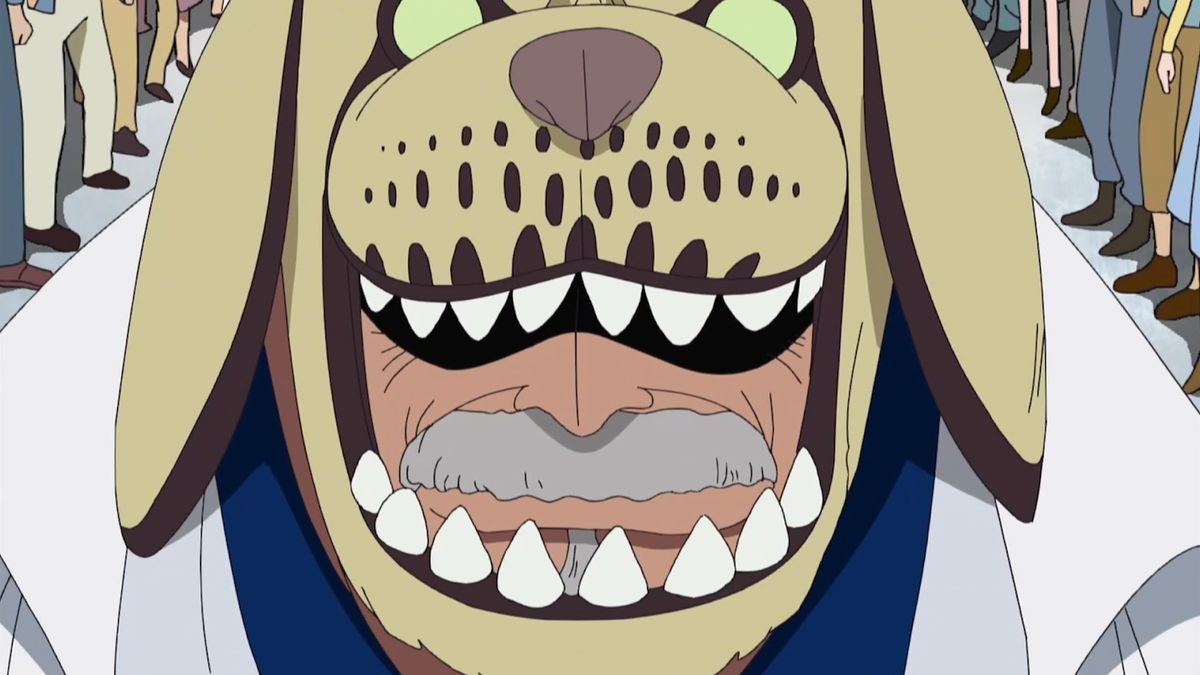
One Piece Episode 313 lets the exhausted crew rest before Vice Admiral Garp arrives as Roger’s legendary pursuer and Luffy’s fist-happy grandfather.
The short version
Episode 313 lets the Straw Hats sleep for two days after Enies Lobby, then sends Vice Admiral Garp crashing into recovery with a fist full of family history. The legendary Marine who cornered Roger is also Luffy’s grandfather, and “love” apparently means punching a sleeping grandson awake.
Rest becomes part of survival
The crew cannot sprint from trauma into another adventure without consequence. Sleep, food, bandages, and Galley-La shelter give exhausted bodies the care victory requires.
Water 7 welcomes former fugitives as lifesavers
The city once blamed the Straw Hats for Iceburg’s attack. Truth changes public meaning. Robin’s rescuers return as people who protected the mayor and exposed CP9.
Garp enters as institution and family
His Marine rank carries government authority, while his relationship to Luffy creates an entirely different claim. The collision makes every joke politically and personally loaded.
The fist of love is still a fist
Garp frames violence as affection because that is how this family communicates. Comedy makes the entrance memorable, but love does not magically remove the pain or the power imbalance.
Roger’s pursuer widens the historical frame
Garp belongs to the era that shaped the Great Pirate Age. His arrival connects Luffy’s small recovering crew to legends whose choices still organize the world.
RaeRae’s receipt
I love the absurdity of a famous Marine revealing himself through domestic violence played at cartoon volume. I also keep the receipt: Garp’s affection is real, and his method is not automatically healthy because the family laughs.
Episode facts and receipts
Episode 313 aired June 10, 2007. ONE PIECE.com credits Naoki Koga, Hiroaki Miyamoto, Kenji Yokoyama, Miyuki Sato, and Kumiko Fukuzawa.
Classification: numbered manga-canon post-Enies Lobby television episode and RaeRae React. Anime, Anime Series, Japanese Anime, and Anime Reacts, not Anime Reviews.
Garp enters like family trouble wearing a Marine coat
The comedy works because Garp refuses every clean category available to the room. He is a legendary officer, Luffy’s grandfather, a source of childhood terror, and a man who throws cannonballs as casually as another relative might pass the bread. Water 7 has barely begun breathing again when this hurricane walks through the wall. The entrance feels ridiculous until every frightened reaction confirms that the ridiculous man carries terrifying authority.
Luffy does not greet a famous Marine. He reacts like a child caught by the relative whose training methods still live in his nervous system. That reversal is delicious after Enies Lobby. The captain who declared war on the World Government suddenly looks small without losing any earned strength. Family can reach beneath a public legend and find the old reflexes nobody else knows.
The sleeping punch says more than a ceremonial reunion
Garp wakes Luffy with violence and then complains when Luffy says the blow hurts. The exchange establishes their shared language immediately. Affection, discipline, irritation, and absurd physical force arrive tangled together. No polished speech could reveal the relationship faster. Their bond has warmth, but the warmth never turns Garp’s methods gentle or asks viewers to pretend those methods were normal.
One Piece often lets comedy carry uncomfortable family history without erasing the discomfort. Luffy survived his grandfather’s survival lessons and remembers them as ordeals. Garp remembers the same years as preparation. Both perspectives sit inside the joke. I laugh at the timing while also understanding why Luffy’s entire body recognizes danger before his brain finishes waking.
A hero of the Marines can still be a disastrous grandfather
The institution sees Garp through victories, rank, and reputation. Luffy sees the man who tossed him into ravines, forests, and impossible situations. Neither portrait cancels the other. Episode 313 makes public honor and private consequence occupy the same frame. That tension matters because One Piece distrusts titles that claim to explain a whole person.
Garp genuinely loves Luffy. Love alone does not make every choice loving. His dream of producing a Marine grandson treated Luffy’s future as an assignment before Luffy could define freedom for himself. The episode keeps the affection visible while letting the clash remain. Family devotion becomes more interesting when the story refuses to flatten control into care.
The crew learns that Luffy’s impossible childhood has a source
The Straw Hats have watched their captain survive poison, collapsing buildings, impossible falls, and Lucci’s final assault. Garp makes that durability feel hereditary and trained. Every crew reaction carries a quiet revision of Luffy’s biography. Their captain did not emerge from nowhere. Somebody terrifying helped teach his body that survival was the baseline expectation.
That discovery also offers comedy as communal intimacy. Friends meet the relative who explains far too much. Nami, Sanji, Zoro, Usopp, Chopper, Robin, and Franky gain access to a chapter Luffy never bothered narrating. His refusal to perform personal history makes these collisions feel especially revealing. The past arrives in human form and starts throwing punches.
Coby’s return measures the distance from Episode 1
Coby stands beside Garp with a body, posture, and confidence that would have been unimaginable aboard Alvida’s ship. The visual transformation is not a cosmetic reward. Every change records a choice first made when Luffy demanded honesty from him. Coby wanted to become a Marine before he possessed the courage to say the dream aloud. Now the uniform fits a self he actively built.
The reunion belongs to both boys because neither friendship required identical allegiance. Luffy moved toward piracy and Coby moved toward the Marines. Their directions oppose each other on a map, yet both directions began with liberation from fear. Episode 313 remembers that shared origin without turning difference into betrayal. That generosity remains one of the franchise’s strongest ideas about friendship.
Helmeppo proves change can begin from an ugly starting point
Helmeppo once treated borrowed authority as permission to humiliate everybody around him. Seeing him disciplined beside Coby refuses the easy claim that a cruel introduction must become permanent identity. His growth does not retroactively excuse the harm. Growth shows that consequences, labor, and better relationships can produce a person who no longer needs his father’s power.
The pair also demonstrates why Garp cannot be summarized only through his failures with Luffy. Under Garp’s command, Coby and Helmeppo found structure that strengthened chosen dreams rather than replacing them. The contradiction stays productive. The same mentor can inspire one generation while trying to prescribe another child’s destination. Human beings rarely arrange their virtues and flaws into separate rooms.
Water 7 becomes a crossroads instead of an epilogue
The city is repairing wounds from Aqua Laguna and Enies Lobby when the Marines arrive. That timing prevents recovery from feeling sealed away from the larger world. Robin has been rescued, Lucci has fallen, and Merry has received a goodbye, but consequences are already sailing toward the crew. Victory creates space to breathe without creating isolation from politics.
Garp’s presence expands the scale through relationship rather than exposition alone. Global institutions suddenly have a seat beside Luffy’s bed. The method feels organic because the messenger matters personally. We learn about the world’s movement while watching a grandfather complain about his grandson. One Piece hides structural information inside emotional chaos, which keeps lore connected to lived experience.
The Marine visit complicates the crew’s idea of an enemy
Enies Lobby gave the Straw Hats government agents willing to destroy lives for institutional obedience. Garp, Coby, and Helmeppo arrive wearing related authority while carrying very different moral textures. Their presence does not redeem the institution. Their presence proves the institution contains people whose motives, loyalties, and limits cannot be read from a coat alone.
That complication strengthens criticism rather than weakening the criticism. A system capable of employing honorable people can still commit monstrous acts. Individual decency does not wash blood from the Buster Call. At the same time, opposing the system does not require pretending every uniform contains the same soul. The story trusts viewers with more than one truth.
Garp’s laughter protects him from his own contradictions
He laughs through revelations and treats impossible news like another family anecdote. Humor gives Garp freedom from shame, but humor also keeps other people from controlling the conversation. Before anybody can settle into judgment, he has changed the emotional weather again. The habit makes him magnetic and frustrating in equal measure.
Luffy inherited some of that refusal to be managed by solemn expectations. Their laughter can sound alike even when their values diverge. Both men overwhelm rooms through presence. The resemblance makes their disagreement sharper because rebellion did not erase family influence. Luffy carries pieces of Garp while rejecting the future Garp planned.
Robin watches a family revelation without losing her own story
After an arc built around Robin’s stolen childhood, another complicated family history enters the room. The episode does not force a false equivalence. Luffy had people who wanted him alive, even when their methods and ambitions clashed with his own. Robin faced a government that erased her home and hunted her existence. Different histories can still recognize the pressure of inherited conflict.
Her place among the listening crew matters. She is no longer the outsider guarding every fact about herself. She gets to witness Luffy become the exposed one for a moment. Chosen family redistributes vulnerability. Nobody must remain the mysterious wound forever, and nobody’s past stays beyond the affectionate chaos of the group.
Post-battle comedy becomes emotional first aid
Enies Lobby asked the crew and viewers to live inside grief, terror, exhaustion, and a farewell that still hurts. Garp’s arrival does not declare those feelings finished. The comedy gives bodies a different rhythm after sustained crisis. Laughter creates room around pain, allowing recovery without pretending loss vanished overnight.
This tonal movement is not filler between important events. Recovery is an event. Watching Luffy eat, sleep, panic at family, and reconnect with old friends restores dimensions that combat compressed. The captain remains more than the body that defeated Lucci. He is ridiculous, loved, embarrassed, hungry, and embedded in relationships stretching beyond the current crew.
The episode makes lineage information feel dangerous
Names in One Piece can carry political weight, inherited expectation, and questions powerful institutions would rather control. Garp’s connection to Luffy already changes how the room understands both men. The episode prepares a larger revelation by teaching us that family facts are not trivia. A bloodline can rearrange the meaning of a pirate’s place in the world.
Luffy’s own indifference makes the danger funnier and stranger. Other people hear history. He hears relatives being annoying. That gap protects his freedom. He refuses to build identity from prestige, whether the prestige belongs to pirates, Marines, or revolutionaries. Blood may explain connections, but blood never receives authority to define his dream.
Coby and Luffy embody respect without ideological surrender
Coby does not need to become a pirate to honor the person who freed him. Luffy does not need to admire the Marines as an institution to celebrate Coby’s growth. Their friendship survives because neither asks the other to shrink a chosen path for emotional convenience. The future conflict between them gains meaning precisely because the affection is real.
That model feels rare in stories obsessed with converting every sympathetic person to the hero’s side. One Piece understands that a shared moral awakening can lead toward different forms of service. The important question becomes what each person protects when institutions and promises collide. Episode 313 lets reunion stay joyful before that future test arrives.
The family’s scale changes without making Luffy smaller
Garp is famous enough to dominate another protagonist’s story. Here, his legend expands Luffy’s context but never replaces Luffy’s authorship. The captain still chose his crew, declared his war, rescued Robin, and survived Lucci through his own convictions. Heritage adds pressure and surprise. Heritage does not become the secret source of every achievement.
That distinction keeps lineage from turning into destiny. Luffy can inherit strength, appetite, stubbornness, and an alarming laugh while directing those qualities toward a life Garp opposed. Family resemblance becomes raw material. Choice remains the craft shaping that material into a person.
Episode 313 is a reckoning disguised as a family sitcom
Almost every gag carries an account coming due. Luffy must face the grandfather whose plan he rejected. Garp must confront a grandson who attacked a government island. Coby returns to the pirate who made his Marine dream possible. Helmeppo stands near the boy who exposed his cowardice. The room fills with past choices wearing new bodies.
Nobody receives a final judgment because the story is still moving. Instead, the episode lets transformation become visible. The frightened cabin boy is stronger. The spoiled bully is disciplined. The reckless child is now a captain who challenged the world for a friend. Garp laughs, punches, and watches the evidence that people exceed his plans.
RaeRae’s final receipt
I love this episode because One Piece knows a wall-breaking grandfather can be hilarious and emotionally revealing at the same time. Garp does not arrive as a tidy answer about Luffy. He arrives as proof that Luffy’s history was loud, dangerous, affectionate, controlling, and probably exhausting. Suddenly the captain’s durability feels less like a mystery and more like a childhood survival skill.
The real heart belongs to the reunion with Coby. Episode 1 promised that freedom could begin with one honest sentence, and Episode 313 shows the life built after that sentence. Coby kept walking. Luffy kept sailing. Their uniforms disagree, their dreams may collide, and their respect survives. That is richer than easy loyalty. That is friendship sturdy enough to face the future.