RaeRae Reacts · One Piece Episode 860
Bege Surrenders His Escape Route for Chiffon While Luffy Decides He Must Defeat Katakuri at Full Strength Rather Than Wait for Exhaustion
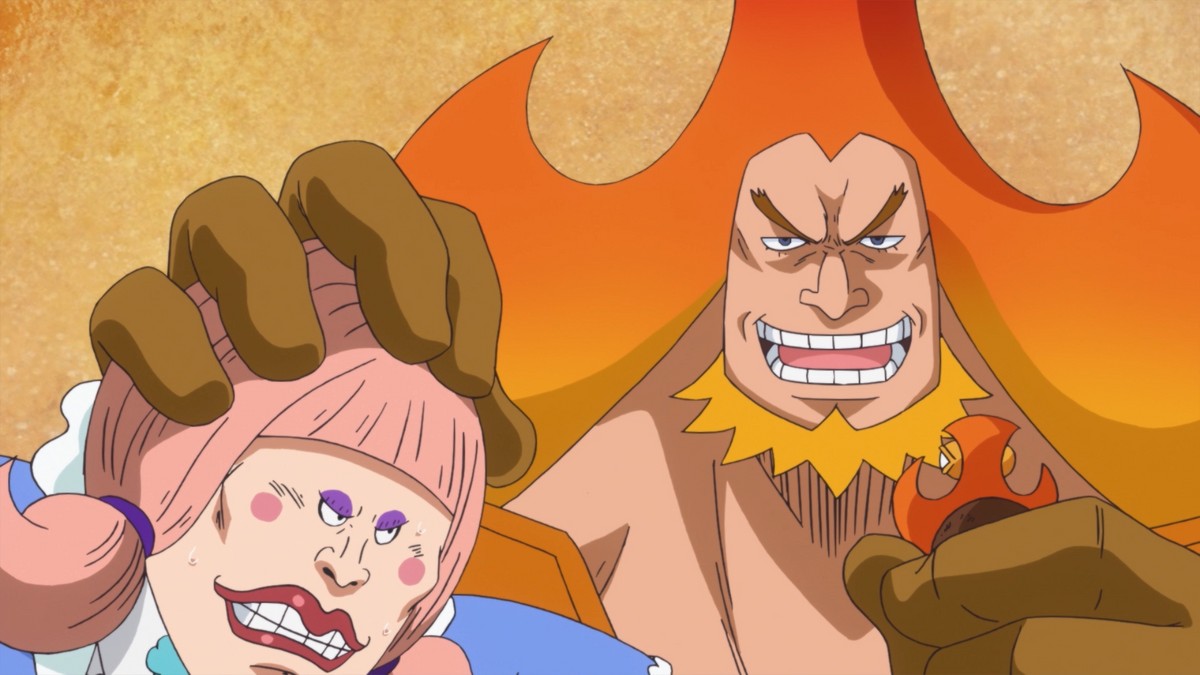
One Piece Episode 860 React follows Oven using Chiffon as bait, Bege’s surrender, Sanji transferring the cake, Luffy’s flight, and Rayleigh’s lesson about Haki blooming in battle.
One Piece Episode 860 React: Episode 860 places two captains beside choices that would be easier if they valued outcomes more than people. Bege can keep sailing and let Oven execute Chiffon, preserving crew and ship at the cost of the family those tools exist to protect. He turns back. Luffy can spend the night fleeing until Katakuri’s Observation Haki degrades from exhaustion, perhaps manufacturing a safer path to the rendezvous. He rejects that answer too. Luffy wants to face the commander at full focus because surviving Whole Cake Island is tied to becoming someone capable of meeting stronger seas ahead.
RaeRae’s opening receipt
These decisions are not identical. Bege responds to immediate violence against his wife, while Luffy converts a deadly duel into chosen training whose consequences still reach his waiting crew. The episode lets both choices reveal leadership through responsibility rather than domination. Sanji moves the cake aboard the Nostra Castello in a burst nobody can track, preserving the weapon without interrupting the family confrontation. Rayleigh’s teaching reminds Luffy that Haki blooms under pressure against stronger opponents. Growth does not guarantee safety, but Luffy refuses to build confidence around an opponent’s fatigue when the New World will keep producing people whose full strength cannot be avoided.
Oven turns Chiffon into bait
He demands the Nostra Castello approach and surrender, converting a sister’s body into leverage against her husband.
Bloodline becomes a hostage rope.
The direction gives this beat enough room to register before the next crisis arrives. Reaction shots matter as much as impact because One Piece wants the audience to notice who understands the cost, who remains confused, and who decides to carry responsibility forward.
Chiffon orders Bege to flee
She would rather lose her own future than watch her chosen family enter an execution arranged through her capture.
Love sends the ship away.
The scene also changes the practical map of the rescue. A feeling becomes useful only when somebody turns that feeling into movement, shelter, information, treatment, or time. Impel Down measures devotion through what another person can do next.
Her childhood abuse enters the open
Chiffon names Bege and Pez as the first family that gave belonging after Big Mom treated her face as an offense.
Home contradicts the bloodline.
Nothing about this moment promises a clean reward. The choice can be brave and still fail, compassionate and still hurt, funny and still expose fear. That refusal to sand away contradiction gives the episode the rough fandom texture worth talking about.
Oven punishes the farewell
He strikes her for speaking beyond the role assigned to a condemned daughter, making control visible through pain.
Authority attacks testimony.
Notice how the performance refuses emotional minimalism. Faces stretch, voices crack, bodies collapse, and the score lets the feeling become embarrassingly large. The excess works because the danger underneath remains specific enough to support every loud choice.
Bege offers surrender for her safety
The captain accepts personal defeat as a price if Oven will stop hurting Chiffon.
Pride yields to care.
The prison would prefer this person reduced to a number, a sentence, or a body assigned to one floor. The scene restores personality through stubborn behavior. Individual weirdness becomes resistance against a system designed to make every prisoner interchangeable.
The fleet closes both sides
Nostra Castello approaches without a clean route out, making the decision a genuine exposure rather than theatrical confidence.
Return enters the trap.
This beat also answers the episode’s central question about help. Nobody has every necessary skill. Survival depends on one person reaching the next person, then trusting that incomplete contribution to become part of a larger answer.
Sanji transfers the cake at speed
He moves the enormous platform aboard when Bege gives the order, protecting the mission inside a family rescue.
Cuisine crosses the deck.
A quieter series might treat the same development as connective tissue. One Piece makes the connection itself the event. The distance between danger and possible care becomes a battlefield, and crossing that distance earns as much attention as any finishing move.
Luffy keeps Brûlée beside him
Mirror travel remains unavailable without her, so flight across islands depends on protecting the unwilling key to return.
The door runs with him.
The consequence remains active after the scene ends. Pain, lost time, damaged trust, and new obligation travel into the following decision. That continuity prevents a powerful image from becoming an isolated clip with no responsibility to the story around the image.
The rendezvous has been overheard
Brûlée knows Kakao Island and one o’clock, removing any fantasy that escape can rely on secrecy.
The clock belongs to both sides.
The direction gives this beat enough room to register before the next crisis arrives. Reaction shots matter as much as impact because One Piece wants the audience to notice who understands the cost, who remains confused, and who decides to carry responsibility forward.
Rayleigh names battle as the forge
Training provides foundation, but extreme encounters with stronger Haki users force perception and will beyond rehearsed limits.
Pressure teaches the next lesson.
The scene also changes the practical map of the rescue. A feeling becomes useful only when somebody turns that feeling into movement, shelter, information, treatment, or time. Impel Down measures devotion through what another person can do next.
Luffy chooses full-strength Katakuri
He refuses to wait for simple exhaustion and commits to returning after Haki recovery for an honest test of growth.
The rematch becomes a vow.
Nothing about this moment promises a clean reward. The choice can be brave and still fail, compassionate and still hurt, funny and still expose fear. That refusal to sand away contradiction gives the episode the rough fandom texture worth talking about.
Impel Down makes friendship physical
This prison keeps turning affection into labor: carry a body, cross frozen ground, risk poison, keep shouting when a throat gives out. Nobody gets to prove love through a speech alone.
That is why this stretch lands so hard. Bon Clay’s devotion is funny, theatrical, frightened, and exhausting at once. The comedy never cancels the cost.
Notice how the performance refuses emotional minimalism. Faces stretch, voices crack, bodies collapse, and the score lets the feeling become embarrassingly large. The excess works because the danger underneath remains specific enough to support every loud choice.
The execution clock never leaves the room
Ace is moving toward Marineford while every floor demands another detour. A minute spent surviving can still feel like a minute stolen from the rescue.
Luffy cannot solve that pressure by wanting harder. The story keeps forcing him to spend time on a body that is rapidly losing the ability to move.
The prison would prefer this person reduced to a number, a sentence, or a body assigned to one floor. The scene restores personality through stubborn behavior. Individual weirdness becomes resistance against a system designed to make every prisoner interchangeable.
Bon Clay refuses tidy hero language
Bentham can panic, run, return, cry, lie, sing, and still be brave. The character works because courage arrives as a repeated choice rather than a permanent personality setting.
A cleaner version would be easier to summarize and much less human. One Piece lets the swan wobble before asking him to stand again.
This beat also answers the episode’s central question about help. Nobody has every necessary skill. Survival depends on one person reaching the next person, then trusting that incomplete contribution to become part of a larger answer.
The prison hierarchy keeps cracking
Magellan is terrifyingly competent, yet the institution around him leaks ambition, secrets, hidden corridors, and competing loyalties. Strength at the top cannot make every subordinate honest.
Level 5.5 is the loudest proof that official maps only describe the version of Impel Down its rulers understand.
A quieter series might treat the same development as connective tissue. One Piece makes the connection itself the event. The distance between danger and possible care becomes a battlefield, and crossing that distance earns as much attention as any finishing move.
The episode earns its melodrama
Tears, screams, poses, and impossible declarations arrive at maximum volume, but the physical stakes underneath them are exact. Poison destroys tissue. Cold takes movement. Treatment consumes years.
Big emotion works here because the story has already itemized the bill. Nobody is crying over a vague threat.
The consequence remains active after the scene ends. Pain, lost time, damaged trust, and new obligation travel into the following decision. That continuity prevents a powerful image from becoming an isolated clip with no responsibility to the story around the image.
Luffy cannot punch biology into surrender
Determination opens routes and changes allies, yet poison does not care who deserves to win. The body keeps its own accounting.
That limit protects the rescue from becoming empty wish fulfillment. Luffy needs other people, medical knowledge, and time he does not possess.
The direction gives this beat enough room to register before the next crisis arrives. Reaction shots matter as much as impact because One Piece wants the audience to notice who understands the cost, who remains confused, and who decides to carry responsibility forward.
The accidental crew becomes a care network
Buggy and Galdino provide chaos, Bon Clay provides loyalty, and hidden prisoners provide knowledge and shelter. None resembles the crew Luffy would have chosen.
Impel Down survives on isolation. Every strange alliance therefore becomes a small rebellion against the prison’s design.
The scene also changes the practical map of the rescue. A feeling becomes useful only when somebody turns that feeling into movement, shelter, information, treatment, or time. Impel Down measures devotion through what another person can do next.
Comedy keeps the horror watchable
A face, a misunderstanding, or an extravagant entrance can break the pressure for seconds without pretending the pressure vanished.
One Piece uses laughter as oxygen. The joke gives viewers enough room to remain present for the next cruel detail.
Nothing about this moment promises a clean reward. The choice can be brave and still fail, compassionate and still hurt, funny and still expose fear. That refusal to sand away contradiction gives the episode the rough fandom texture worth talking about.
The camera stays interested in witnesses
What matters is not only who acts but who watches, misunderstands, cheers, or finally believes. A rescue becomes communal before the rescued person can even answer.
That attention turns background prisoners into an emotional chorus rather than disposable scenery.
Notice how the performance refuses emotional minimalism. Faces stretch, voices crack, bodies collapse, and the score lets the feeling become embarrassingly large. The excess works because the danger underneath remains specific enough to support every loud choice.
RaeRae’s final receipt
This group of episodes asks what friendship looks like after the heroic pose collapses. The answer is messy: poisoned hands, frozen feet, terrible odds, loud encouragement, and another person refusing to leave.
No single gesture fixes the crisis. The miracle grows from accumulated choices made by people who keep showing up when common sense tells them to disappear.
The prison would prefer this person reduced to a number, a sentence, or a body assigned to one floor. The scene restores personality through stubborn behavior. Individual weirdness becomes resistance against a system designed to make every prisoner interchangeable.
This remains an episode React
This page responds to the choices, performances, pacing, and consequences contained inside One Piece Episode 860. The larger Impel Down verdict belongs on a series or arc Review. Keeping that line clear matters because an episode can hurt, thrill, or frustrate in a very specific way without pretending one chapter can judge the whole prison story.
The official local image remains canonical
The official Episode 860 story still is stored inside the local WordPress media library. That one attachment serves as the featured image, top hero, static directory card, and social preview. No reused feature art and no remote image dependency are hiding behind the card.
What stays with me after the credits
The loudest image will be different for every viewer, but the emotional thread remains consistent: somebody chooses to stay connected when Impel Down expects isolation to win. That choice does not erase fear, reverse poison by itself, or stop Ace’s transport clock. Connection simply keeps another possibility alive long enough for the next person to reach the problem. I love that One Piece can wrap such a serious idea in swan poses, giant faces, prison wolves, terrible jokes, and enough shouting to wake every floor. The episode never asks the cast to become tasteful before their devotion counts. These people survive through the exact personalities the prison wants to flatten, and that feels more honest than a polished speech about hope.
The prison arc also understands that momentum is not the same as certainty. Characters race because waiting guarantees loss, not because running guarantees success. Every new ally carries a motive that could split the group later, every shortcut creates another risk, and every burst of strength spends something the body cannot instantly replace. That uncertainty keeps my attention on the people rather than a scoreboard. I am watching who shares information, who notices pain, who admits fear, and who makes space for somebody else to keep moving. Those small decisions are the real route through Impel Down, even when the hallway is full of giant attacks. The result feels like fandom conversation rather than a victory ledger: I can celebrate the hit, worry about the cost, argue with the choice, and still understand why nobody had a cleaner answer available. That layered reaction is exactly why a single episode deserves its own receipt instead of disappearing inside one giant arc summary. Specific choices deserve specific praise, blame, laughter, and side-eye. Every scene keeps its consequence.