RaeRae Reacts · One Piece Episode 372
Nightmare Luffy Saves Nami and Usopp Before Overwhelming Oars With Borrowed Strength
One Piece Episode 372 React follows Nightmare Luffy rescuing Nami and Usopp, answering Oars’s copied attacks, and spending the trust carried by one hundred shadows.
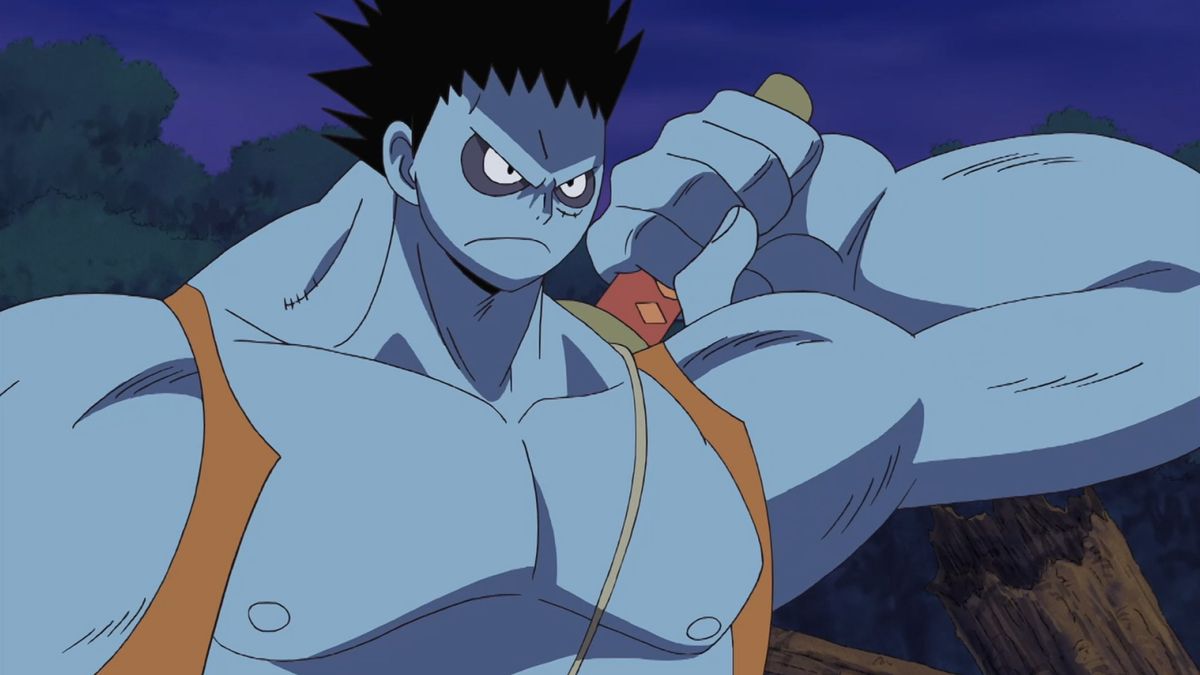
One Piece Episode 372 React: Nightmare Luffy rescues Nami and Usopp, blocks Oars’s copied attack, and spends one hundred borrowed shadows to throw the giant across Thriller Bark.
What happened in Episode 372
Zoro and Usopp’s final salt plan fails before Oars can crush the remaining crew. Nightmare Luffy arrives, carries his friends clear, and overwhelms Oars while the Rolling Pirates move the injured Straw Hats.
RaeRae’s opening receipt
The transformation works because every shadow inside Luffy belongs to a person waiting for morning. Strength arrives with names, stakes, and a deadline.
Zoro and Usopp spend the crew’s last ordinary answer
Episode 372 begins with the Straw Hats trying to finish Oars through knowledge they earned the hard way. Zoro creates an opening, Usopp launches Brook’s salt, and the plan targets the shadow rather than pretending the corpse can be exhausted like a living enemy.
The attempt matters because the crew is still thinking after nearly every body has reached collapse.
The salt plan fails because Moria understands the same weakness
Usopp gets the bag into position, but Moria’s shadow intercepts the purification before Oars can swallow the salt. The villain does not survive through greater courage. He survives by protecting the mechanism that keeps stolen labor under command.
Shared knowledge creates a race over who can act on the weakness first.
Doppelman destroys more than a bag
The returned salt scatters, taking away the crew’s cleanest supernatural answer. A plan built from Brook’s expertise, Usopp’s aim, and Zoro’s opening disappears in one counter.
Loss lands harder when teamwork was correct. Good strategy can still meet prepared defense.
Zoro keeps moving after his body has stopped cooperating
His injuries make every dodge slower and every strike more expensive. Moria notices that condition and orders Oars to press the advantage. Zoro continues because Nami and Usopp need time he can still purchase.
Sacrifice here is not a speech. Sacrifice is movement performed on borrowed seconds.
Usopp’s shot proves fear can carry precision
He understands that missing means losing the salt and perhaps the crew. Terror does not vanish before he fires. Terror sharpens the stakes surrounding the shot.
Usopp remains valuable because bravery never requires him to become emotionally numb.
Nami watches the available crew shrink
Most of her friends lie unconscious, Zoro is being broken against the walls, and Usopp’s specialized ammunition is gone. The battlefield has stopped offering comfortable alternatives.
Her fear records reality. Optimism without evidence would be less honest than the panic on her face.
Oars receives an order to turn injury into execution
Moria does not want the remaining Straw Hats merely defeated. He orders the giant to crush conscious and unconscious bodies until nobody can rise. The command exposes the final purpose behind his controlled army.
Obedience exists to remove every future challenge to ownership.
Nightmare Luffy arrives through rescue before spectacle
The transformed captain could enter by striking Oars. Instead, his first meaningful action is saving Nami and Usopp from the giant’s feet. Power receives a moral direction before receiving applause.
That choice tells us more about Luffy than the new muscles ever could.
The rescue proves borrowed power has not displaced Luffy
One hundred shadows crowd his body with skills and impulses, but his first priority remains his friends. The transformation expands capacity without rewriting the promise at the center.
Identity survives because Luffy still chooses whom the strength serves.
Nightmare Luffy carries a crowd rather than a costume
Every shadow belongs to somebody unable to face sunrise. The broad shoulders and changed voice are visible, but the true transformation is communal. Many interrupted lives now depend on one body’s choices.
Calling the form a power-up without naming those people would erase the cost that gives the power meaning.
The Rolling Pirates protect the exhausted Straw Hats
Lola’s people move the injured crew away while Luffy engages Oars. Their work is not glamorous, but removing wounded bodies from impact range makes the duel possible.
Care labor changes the battlefield even when nobody gives the labor an attack name.
Luffy learns what happened before spending the shadows
He sees the condition of his crew and receives the stakes surrounding Oars. Rage does not operate without information. The transformed captain understands that everybody else already paid for the opening he inherits.
His response joins a fight in progress rather than claiming to begin the fight.
There can be only one Luffy because identity is relational
Oars can stretch, improvise, and echo familiar attacks. None of those traits makes the giant the captain Nami and Usopp know. Luffy answers the imitation with a claim grounded in shared history.
A silhouette can be copied. Years of chosen trust cannot.
Blocking the copied strike restores the original relationship
Oars sends Luffy’s combat language toward Luffy’s friends. Nightmare Luffy meets that force and redirects danger away from them. Similar movement now reveals opposite purpose.
The difference between weapon and protector lives in where the strength lands.
Nightmare Luffy’s sword skill belongs to another life
The shadows carry abilities their owners developed before Moria stole them. Luffy can wield a blade because somebody else’s experience temporarily lives inside his body.
The moment should inspire awe and responsibility together. Skill has an owner even while another person performs the motion.
Borrowed technique creates a debt of accurate memory
The episode does not name every shadow inside Luffy, which makes editorial attention more important. Anonymous people still supplied concrete ability, risk, and hope.
Power assembled from unnamed contributors should never be narrated as a solitary achievement.
Oars finally meets strength on his own scale
The giant has dominated because every opponent was physically smaller and already worn down. Nightmare Luffy can catch, throw, and drive Oars through the island with startling ease.
Scale changes the choreography, but scale does not erase the crew’s earlier contribution.
The body slam reverses Thriller Bark’s hierarchy
Oars was built to make resistance look tiny. Luffy grabs the giant and turns that display of dominance into a body that can be moved. The visual order Moria designed collapses with every throw.
A monument to control becomes evidence that control can lose balance.
Moria tries to escape the consequence inside his weapon
When Nightmare Luffy gains advantage, Moria searches for distance. The man who ordered Oars to crush wounded people does not welcome equal danger.
His retreat repeats the arc’s central pattern: authority demands courage from disposable bodies while reserving safety for the owner.
Luffy’s punch reaches the controller at last
A Gum-Gum Pistol knocks Moria out of protected position. The familiar attack returns to the person whose body and choice produced the technique.
After watching Oars imitate Luffy, seeing Luffy reclaim the movement against Moria feels like authorship returning to the source.
Gum-Gum Storm becomes communal force
The barrage comes from Luffy’s will, his rubber body, and the strength carried by one hundred shadows. No single source explains the result.
The attack succeeds as a temporary coalition concentrated through one person willing to spend everything before dawn.
The shadows leave when the borrowed window closes
Nightmare Luffy cannot hold the transformation indefinitely. The departure prevents temporary trust from quietly becoming permanent possession.
Limits protect the difference between borrowing power and building a collection.
Apparent victory does not return every stolen life
Oars and Moria crash down, but the original owners still need their shadows restored. Defeating a visible weapon is not identical to repairing the system’s damage.
Episode 372 lets celebration begin while preserving the unfinished obligation.
Lola cheers because hope finally has a body
Her crew has survived under a daylight sentence while Moria kept the shadows. Nightmare Luffy’s victory appears to create the route back to ordinary morning.
The cheer belongs to people who are not asking for glory. They are asking to stand in sunlight again.
Kuma watches without joining the relief
The other Warlord remains on Thriller Bark as Moria falls. His stillness keeps the apparent ending unstable. One government-aligned observer has witnessed a protected pirate lose.
The wider institution is already present before the survivors can understand what victory may cost.
Nightmare Luffy is powerful because the form must end
A permanent transformation could become another story about accumulation. Temporary power keeps the focus on emergency, consent, and return.
The form carries urgency because every shadow is supposed to go home.
The episode honors the crew before unveiling the captain
Zoro, Usopp, and Nami stand at the edge of defeat because everybody else already fought. Luffy’s entrance lands only after the episode shows what their resistance cost.
Heroism becomes continuation, not replacement.
Episode 372 remains an episode React
This page responds to the failed salt plan, Nightmare Luffy saving Nami and Usopp, the confrontation with Oars, and the one hundred shadows leaving after the attack. A complete Thriller Bark Review belongs after the arc resolves every stolen shadow and Kuma’s arrival.
React classification preserves broadcast-level close reading while keeping whole-work Reviews reserved for complete arcs, seasons, series, and films.
The official local still remains canonical
The Episode 372 still serves as featured image, hero, bounded-directory card, and social preview. One local attachment preserves recognition across every discovery route.
Complete source, descriptive, accessibility, and filing metadata remain attached. No other record reuses this image.
RaeRae’s final receipt
Episode 372 knows the difference between arriving strongest and arriving alone. Nightmare Luffy looks like one enormous answer, but one hundred stolen lives are standing inside that body, waiting for somebody to turn borrowed strength into freedom. Luffy’s first move is not a victory pose. He saves Nami and Usopp. That choice tells us the captain survived the transformation before he ever throws Oars.
Zoro and Usopp’s failed salt plan still belongs in the victory ledger. The Rolling Pirates carrying wounded bodies belong there too. Luffy can overwhelm Oars because a whole island of people created the conditions, skills, and trust surrounding the fight. Moria built power by separating shadows from owners. Nightmare Luffy builds an answer by accepting that every borrowed shadow has somewhere to return. The form is spectacular, yes, but the ethics are simple: use the gift, protect the people, and give everybody back their morning.
Anonymous shadows still belong to complete people
Nightmare Luffy’s body contains more lives than Episode 372 has time to name. That anonymity should not make the contributors feel interchangeable. Every shadow came from a person with a face, a route interrupted by Moria, and a private reason to want daylight back. The transformed body carries a temporary archive of stolen futures.
Luffy respects those people by directing their strength toward the system that trapped them. The story does not need a roll call before the obligation becomes real.
Care keeps the spectacular fight from becoming reckless abandonment
While Luffy throws Oars, Lola’s crew searches for injured Straw Hats and carries them away from collapsing structures. Somebody has to notice breathing, lift damaged bodies, choose safer ground, and keep the battlefield from consuming the people the duel supposedly protects.
That labor is not secondary to the victory. Without evacuation, every dramatic attack risks finishing Moria’s work by burying the survivors.
The salt failure and shadow victory belong to one chain
Zoro and Usopp do not receive the payoff they planned. Their attempt still forces Moria to reveal Doppelman’s defensive role and keeps Oars occupied until Nightmare Luffy arrives. A failed action can preserve time, expose mechanics, and narrow the enemy’s choices.
Episode 372 treats contribution as cumulative. The final person standing inherits information purchased by everyone who fell.
Borrowed power cannot settle the restoration question alone
Nightmare Luffy can defeat bodies, but the shadow owners need Moria to lose control over the collection. Physical dominance opens the door. Repair requires the stolen pieces to return.
That difference protects the story from confusing punishment with justice. Moria crashing into rubble may feel satisfying. Justice arrives only when ordinary people can walk into morning without burning.
The apparent ending leaves the correct work unfinished
Lola cheers because the impossible enemy has fallen and the borrowed shadows have left Luffy. Her relief is earned. The uncertainty is equally earned because release from Luffy does not guarantee return to each original owner.
Episode 372 closes on the exact distance between winning a fight and undoing a system. The next episode has to cross that distance before sunrise.