RaeRae Reacts · One Piece Episode 320
Eight New Bounties Announce the Crew the World Can No Longer Ignore
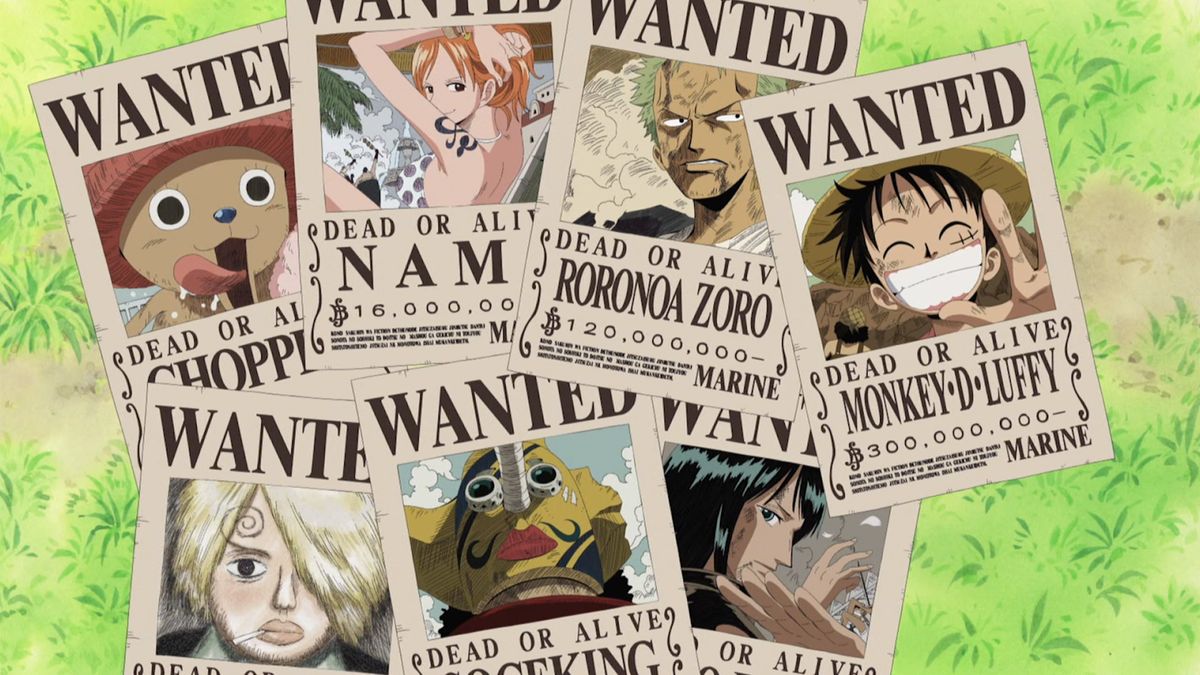
One Piece Episode 320 completes the dream ship while eight wanted posters turn the Straw Hats’ Enies Lobby victory into global consequence.
The short version
Episode 320 completes the Straw Hats’ collective transformation into a globally wanted crew while Franky, Iceburg, and Galley-La finish the dream ship in three sleepless days. Eight posters arrive beside a vessel built for the next sea.
The new ship begins as collective labor
Franky’s dream needs Iceburg and the foremen’s hands. Reconciliation becomes architecture, and shared craft gives grief somewhere constructive to travel.
Wanted posters turn private courage into public identity
The government translates Enies Lobby into numbers and images. Those documents cannot explain why the crew fought, but they change how the world will meet them.
No Straw Hat remains invisible
Recognition carries danger and comedy together. The crew’s combined bounty announces that this family now matters as a unit.
Three days carry years of unfinished feeling
Franky and Iceburg build with the precision of people completing Tom’s inherited dream. The ship becomes forward motion without erasing their shared past.
RaeRae’s receipt
A new ship and eight wanted posters arrive together because the next chapter needs both home and consequence. The world finally sees a crew Water 7 already learned to trust.
Episode facts and receipts
Episode 320 aired August 19, 2007. ONE PIECE.com credits Ryo Suga, Hiroyuki Kakudo, Kenji Yokoyama, Miho Shiraishi, and Michiyo Kawasaki.
Classification: numbered manga-canon post-Enies Lobby television episode and RaeRae React. Anime, Anime Series, Japanese Anime, and Anime Reacts, not Anime Reviews.
The dream ship rises while the government prints consequences
Two forms of recognition arrive together. Franky, Iceburg, and Galley-La finish a vessel built from inherited craft and private dreams. The World Government finishes eight posters designed to classify the people who humiliated Enies Lobby. One creation offers home. The other creates pursuit.
The timing makes the next voyage feel complete before departure. The Straw Hats receive a body capable of carrying their future and a public identity that will make every future port more dangerous.
Three sleepless days turn reconciliation into architecture
Franky and Iceburg spent years separated by grief, blame, and different responses to Tom’s death. Building together does not erase those years. Their hands create proof that shared love for craft survived the fracture. The foremen join them, turning reunion into coordinated labor rather than sentimental declaration.
Every precise joint says something words cannot finish. They still understand each other’s standards. They can still build toward the same horizon.
Tom’s dream survives through people who stopped speaking his name together
The new ship carries Adam wood, Franky’s design, Iceburg’s expertise, and the principles Tom taught both apprentices. Inheritance moves through adaptation rather than replication. Nobody builds another Oro Jackson. They build the vessel this crew and this era require.
That distinction honors a mentor properly. Tom’s legacy remains alive because his students create beyond him, not because they freeze his craft into a museum piece.
The government converts Robin’s rescue into threat assessment
The Straw Hats fought because Robin wanted to live and their family refused to surrender her. Official paperwork cannot print that emotional truth. Bounties translate the event into danger, assigning numbers to people who exposed government weakness.
The posters therefore reveal as much about institutional fear as pirate strength. Enies Lobby proved this crew will attack sacred authority when somebody they love becomes a target. No bureaucracy can comfortably tolerate that promise.
Luffy’s three hundred million confirms the captain cannot be dismissed
Defeating Lucci and surviving the Buster Call changes how the world must read Luffy. Three hundred million does not create his strength, but the number carries news to people who never saw Jet Gatling. The boy from East Blue now occupies a level of attention reserved for pirates capable of disturbing global calculations.
Luffy treats the poster with familiar delight because he hears adventure where officials intend warning. The same paper communicates opposite meanings depending on who holds the page.
Zoro’s one hundred twenty million reflects more than Kaku
The swordsman’s new figure recognizes a combatant who cut through CP9 opposition and repeatedly carried the crew’s survival. His number also marks the Straw Hats as a crew with danger extending beyond the captain. Opponents can no longer assume defeating Luffy would remove every serious threat.
Zoro receives external confirmation without allowing external measurement to replace the promise to become the world’s greatest swordsman. A bounty is evidence, not destination.
Robin’s eighty million preserves the government’s oldest fear
Her new poster cannot be read only as a combat ranking. Robin threatens the government’s monopoly over history. Enies Lobby proves she now has a crew willing and able to protect that knowledge. The increase records the combination of scholarship, survival, and belonging.
That combination is more dangerous than the child they hunted alone. Robin no longer has to spend every escape abandoning connection. Her chosen family turns continued life into organized defiance.
Sanji’s seventy-seven million arrives with the wrong face
The hand-drawn portrait should be a triumph turned into comedy. Sanji finally receives recognition, then the poster attacks the vanity he would most enjoy displaying. Government surveillance proves powerful enough to price his threat and incompetent enough to miss the photograph.
The joke also creates practical uncertainty. A wanted poster meant to identify him may instead protect his appearance while humiliating his ego. Institutional error produces consequences nobody planned.
Sogeking’s thirty million protects Usopp and exposes him at once
The government prices the masked sniper who burned its flag without correctly naming the man beneath the mask. Usopp receives recognition through the heroic identity he created when personal shame made his own name difficult to carry.
The poster preserves that emotional split. Sogeking performed courage Usopp already possessed but could not claim directly. Public history records the mask before the friend underneath completes his return.
Nami’s sixteen million turns navigation into visible threat
The government recognizes that the crew’s navigator does more than steer. She defeated Kalifa, escaped the Buster Call, and repeatedly converted impossible weather and water into survival. Her intelligence makes every other member more dangerous because she keeps their voyage moving.
The poster’s photograph invites a different kind of attention, which gives her reaction understandable frustration. Being seen by the world does not mean being understood on her own terms.
Franky’s forty-four million makes Water 7’s local trouble global
He began as the leader of a dismantling family operating inside one city. Enies Lobby reveals engineering knowledge, combat power, Pluton-related history, and direct opposition to government control. The bounty announces that remaining quietly in Water 7 may no longer protect his people.
Public pursuit becomes another pressure toward departure. The dream ship needs the shipwright whose choices already placed him aboard the government’s list.
Chopper’s fifty berries create the funniest institutional failure
The government reads him as a pet because his most visible form does not fit their assumptions about combatants. Fifty berries insults everything he contributed as doctor, fighter, and friend. The tiny number becomes comedy while revealing how classification fails when bodies refuse expected categories.
Chopper wants recognition and receives misrecognition. His hurt is adorable, but the receipt belongs to the system that cannot imagine a reindeer as a full crew member.
Eight posters say the crew now matters collectively
Earlier attention centered heavily on Luffy, Zoro, and Robin. The new set spreads consequence across every current member and Franky. Government recognition catches up with a truth viewers already know: Enies Lobby was never one hero’s victory.
Every specialty contributed. Posters flatten those contributions into threat values, yet the existence of eight pages accidentally confirms the crew’s cooperative power.
Bounties are propaganda pretending to be measurement
Numbers encourage citizens and hunters to read danger as a clean hierarchy. The values mix combat ability, political threat, knowledge, institutional embarrassment, and incomplete intelligence. Chopper’s number alone proves the scale cannot function as objective truth.
Fans can enjoy comparisons while keeping the receipt. A bounty tells us how the government currently frames somebody, not the complete worth or ability of that person.
The posters enter hometowns as distorted messages from afar
People who knew the Straw Hats before piracy will see faces and numbers without witnessing the choices behind Enies Lobby. Pride, worry, disbelief, and gossip travel through the same newspaper. Public documents reconnect the crew to communities they left while increasing the distance between personal memory and global reputation.
A hometown remembers the child. The world sees the criminal. Both images meet on one printed page.
The new ship answers Merry without attempting replacement
Franky’s vessel cannot become Going Merry, and the episode does not ask for such substitution. The new ship begins with different materials, design, capabilities, and relationships. Continuing requires a home capable of future seas, not a copy forced to carry old identity.
Grief and excitement can share the dock. Loving the new vessel will not make gratitude for Merry less real.
Adam wood turns durability into a promise, not a guarantee
The legendary material gives the vessel strength worthy of the crew’s destination. No material can remove danger from the Grand Line or make care unnecessary. Merry’s history taught that a ship remains a body requiring attention, maintenance, and respect.
Franky’s design offers possibility. The crew must still build relationship through every voyage, repair, meal, argument, and ordinary day aboard.
The shipwrights build for dreams they may not personally sail
Iceburg and the Galley-La foremen pour expert labor into a vessel destined to leave Water 7. Creation becomes generous because ownership is not the only reward. They want the work to meet the sea and prove what their hands can do.
Franky’s position differs. His dream includes watching the vessel complete the journey. The ship’s launch will force him to decide whether the builder belongs aboard his own promise.
Public danger makes private belonging more urgent
Eight bounties mean anonymity is ending. The crew will need a secure ship and clearer commitment because every member can draw pursuit. Water 7 gives them both a vessel and the emotional pressure to settle unfinished relationships before departure.
Usopp remains outside the formal reunion. Franky remains outside the crew. The posters announce a unit while the family itself still has seats to resolve.
Episode 320 turns transition into an event
No central villain drives the episode, yet almost every condition of the series changes. A ship is completed. Reputation expands. Individual identities become public. The government responds to defeat. Future travel gains new capacity and new danger.
Transition deserves this weight because adventure is shaped by consequences between battles. The next arc begins through paperwork, woodworking, grief, comedy, and decisions not yet spoken.
RaeRae’s final receipt
I love bounty reveals because everybody receives the same paper and somehow experiences a completely different emotional crisis. Luffy sees three hundred million and grins. Sanji finally becomes wanted and gets betrayed by the portrait. Chopper helps defeat CP9, heals people, transforms into a monster for his friends, and the government prices him like pocket change. Bureaucracy has jokes.
The bigger receipt belongs to the ship rising behind those posters. Franky and Iceburg take years of grief, Tom’s teaching, Adam wood, and three sleepless days, then build a future strong enough to sail. The government names the crew as threats while Water 7 gives those same people a home. One side prints fear. The other builds faith. I know which creation understands them better.
The posters make every future kindness more politically dangerous
Anyone who shelters, feeds, repairs, or befriends the Straw Hats now risks being read as an accomplice to a crew worth more than six hundred million combined. Water 7 chooses relationship with full knowledge of that danger. The city’s support becomes more courageous once official paperwork gives fear a number.
Reputation therefore changes not only the crew’s safety but the cost paid by people who welcome them. A good captain must remember that hospitality can expose hosts long after the ship leaves.
The next voyage begins with the world finally paying attention
East Blue departures carried dreams larger than public reputation. Episode 320 closes that distance. The crew still sees friends, food, arguments, repairs, and adventure. The world now sees an organized threat capable of attacking a government stronghold and escaping.
Neither view contains the whole truth. The tension between them will shape every island ahead, where strangers may meet the posters before they meet the people.