RaeRae Reacts · One Piece Episode 304
Gear Third Makes Luffy’s Protective Promise Giant
One Piece Episode 304 forces Luffy beyond Gear Second and turns a giant inflated fist into the wall between Rob Lucci and the escaping crew.
The short version
Episode 304 introduces Gear Third because Luffy understands that losing to Lucci would expose everybody he loves. The giant fist looks playful for one second and devastating the next. Beneath the spectacle sits a captain making power answer protection.
The Buster Call creates a brutal clock
Warships erase sections of Enies Lobby while Luffy fights beneath the Bridge of Hesitation. Nobody has unlimited time for a respectable duel. Every minute Lucci remains standing increases the chance that Robin or another crewmate dies during escape.
The bombardment turns combat pacing into moral pressure.
Luffy names the reason he cannot lose
His logic is not personal invincibility. If Lucci gets past him, Lucci will hunt the crew. That recognition transforms stubbornness into responsibility. Luffy accepts the painful assignment because captaincy means becoming the wall between danger and friends.
The line also admits fear. He knows exactly what this opponent could do.
Lucci’s strength forces invention
Gear Second changed speed and circulation. Lucci can still withstand, read, and punish Luffy at a level few enemies reached before. The fight demands another answer rather than allowing the newest power to remain unbeatable.
Escalation works when the opponent exposes a real limit instead of merely announcing a larger number.
Gear Third makes childhood imagination dangerous
Luffy bites into bone and inflates his body into the scale of a giant. The method sounds ridiculous because his imagination does not separate play from possibility. The resulting strike carries the mass needed to break through Lucci’s defenses.
One Piece lets comedy and awe occupy the same attack without apologizing for either.
The giant fist visualizes protective ambition
Luffy has always reached toward impossible destinations. Gear Third turns that instinct into anatomy. His hand becomes large enough to challenge the institution-sized violence surrounding the crew.
The attack feels like a child answering a war machine with an idea adults would call foolish until the wall cracks.
Power still charges a physical price
The technique does not arrive as free mastery. Inflation requires preparation, creates openings, and carries consequences for Luffy’s body. Risk keeps the breakthrough attached to desperation rather than convenience.
He chooses the cost because letting Lucci pass would cost everyone more.
Lucci’s ideology cannot understand Luffy
Lucci respects force but empties force of care. Violence is pleasure protected by a government badge. Luffy’s violence moves in the opposite direction: he fights because other people need space to live.
Their conflict is not simply pirate against agent. The episode pits protective power against authorized cruelty.
The animation sells mass through anticipation
Gear Third needs more than a large drawing. The sequence makes viewers feel breath, expansion, displaced air, and the pause before impact. Scale becomes believable because motion establishes weight.
Naoki Tate’s animation direction gives the debut elasticity without losing the strike’s brutal force.
RaeRae’s receipt
I love Gear Third because the technique remains unmistakably Luffy. Another hero might unlock a solemn divine weapon. Luffy turns bone inflation into a giant punch and trusts the absurd answer completely.
The laugh never cancels the stakes. Robin is free but not safe, the island is burning, and Lucci cannot leave this battlefield standing. Joyful invention becomes serious protection.
Episode facts and receipts
Episode 304 aired April 8, 2007. ONE PIECE.com credits Ryo Suga for the script, Makoto Sonoda for direction, Naoki Tate for animation direction, and Miyuki Sato with Fumihiro Uchikawa for art.
Classification: numbered manga-canon Enies Lobby television episode and RaeRae React. Anime, Anime Series, Japanese Anime, and Anime Reacts, not Anime Reviews.
Gear Third begins with a tactical admission
Luffy unveils another form because Gear Second alone has not ended the threat. That admission protects the fight from empty escalation. Lucci earned the next answer by surviving, adapting, and continuing to endanger everyone moving toward escape.
A new technique means more when the previous technique remains powerful but insufficient for this exact opponent.
Luffy is not collecting transformations for display. He is solving the problem standing between his crew and survival.
Bone Balloon turns rubber logic inward
Earlier attacks stretched skin and muscle into larger shapes. Gear Third sends air into Luffy’s bones, building a giant-scale striking structure from inside the body. The premise follows the playful internal rules of his Devil Fruit while opening a new class of force.
The explanation is ridiculous enough to sound like Luffy and coherent enough to guide animation.
That combination is a One Piece specialty: imagination becomes mechanics without losing the joke.
The giant’s fist challenges institutional scale
Enies Lobby has made the World Government feel enormous through gates, towers, flags, courts, agents, and warships. Luffy answers with a body part suddenly large enough to rival the architecture.
The image gives physical scale to his refusal. A system calling Robin small and disposable meets a fist that refuses the proportions assigned to one pirate.
Gear Third becomes symbolic without requiring Luffy to deliver a symbolic speech.
Protection gives the transformation moral direction
Lucci would pursue and kill the escaping crew if Luffy fell. The captain knows that outcome, so victory is not a private test of pride. Every attack buys distance for Robin, Franky, and the others.
Power without a destination can become vanity. Luffy’s destination is clear: nobody gets through him to his friends.
The giant fist matters because love tells the force where to land.
Lucci remains terrifying after earlier breakthroughs
He reads movement, exploits openings, and keeps pressure on a body already paying for Gear Second. Zoan endurance makes damage feel temporary, while Rokushiki provides answers at multiple ranges.
The episode does not weaken Lucci to advertise Gear Third. His threat gives the debut credibility.
Luffy has to risk a less tested technique because the safer options leave Lucci standing.
Preparation creates vulnerability
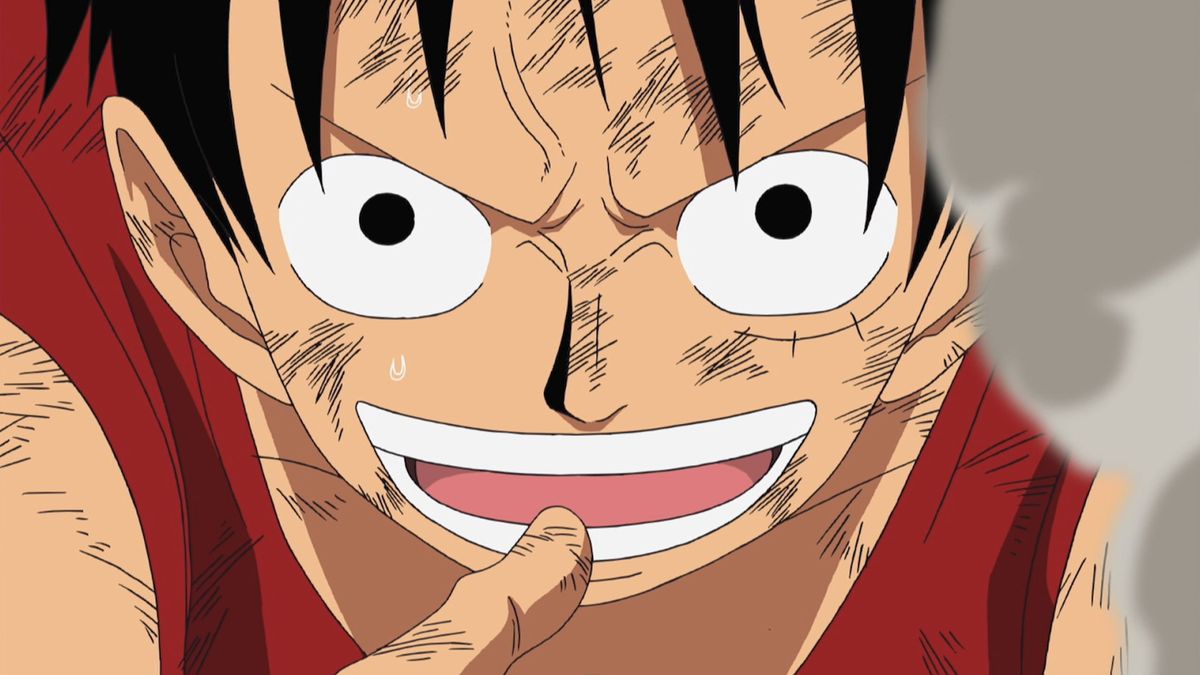
Biting into his thumb and moving air through bone requires a setup Lucci can punish. The larger limb also changes balance, speed, and the space Luffy occupies. A giant attack is not automatically a convenient attack.
Those limitations keep strategy alive. Luffy must choose the moment, survive the opening, and trust the impact will justify the cost.
Desperation creates innovation, but innovation still has consequences.
Comedy does not reduce the violence of impact
The inflated body invites laughter because the method resembles a child testing a wild idea. Then the strike arrives with enough mass to transform the battlefield. Viewers move from amusement to awe without a clean dividing line.
That tonal mobility belongs to Luffy. Seriousness never requires him to become visually generic.
The episode protects the series’ identity by letting the funniest solution become the most physically intimidating image in the room.
The attack preserves Luffy’s creative intelligence
People often mistake his impatience with formal plans for lack of intelligence. Combat repeatedly proves otherwise. Luffy understands his body’s unusual properties, reads what an enemy can withstand, and invents applications under pressure.
Gear Third is not textbook engineering, but the technique is embodied problem-solving.
He thinks through motion, pain, and possibility rather than through the vocabulary other strategists prefer.
Lucci and Luffy represent opposite relationships to strength
Lucci treats killing ability as self-justifying. Government authorization gives him access to victims, while personal mastery gives him pleasure in domination. Protection barely enters his moral world.
Luffy builds strength around relationships. He wants freedom for himself and recognizes that friends need defense against people who would erase theirs.
The fight asks what power serves after power proves itself.
The Buster Call makes every experiment urgent
Luffy has no training room and no recovery interval. Cannons are destroying the island while Robin’s group searches for escape. Trying Gear Third under these conditions reveals both confidence and terror.
He believes the new attack can work because the alternative is watching Lucci leave the battlefield.
The surrounding catastrophe turns invention into an emergency promise.
Scale changes the animation vocabulary
Naoki Tate’s animation direction has to sell volume, air, weight, and the delay between a giant limb beginning to move and the impact arriving. Speed alone would make the fist feel light.
The sequence uses anticipation and environmental reaction to establish mass. Lucci’s response confirms that this is not a stretched version of an ordinary punch.
Visual storytelling performs the physics that dialogue only sketches.
The debut expands possibility beyond one fight
Gear Third immediately changes what viewers imagine Luffy can challenge. Large opponents, fortress walls, and oversized obstacles no longer automatically belong to a separate scale class. His rubber body can contest their mass directly.
Future applications will refine the technique, but Episode 304 owns the thrill of first possibility.
A familiar power suddenly contains a new category of answer.
The cost prevents easy triumph
New forms in One Piece rarely arrive without bodily accounting. Gear Second accelerates systems that should not operate casually at that rate. Gear Third redistributes air and scale in ways that cannot remain stable forever.
Consequences remind viewers that Luffy is risking himself rather than opening a menu of free upgrades.
Protection becomes meaningful partly because his body pays the invoice.
Robin’s freedom remains the fight’s center
Gear Third could easily dominate discussion as a cool transformation detached from context. The episode keeps returning to why Lucci cannot pass. Robin has only just escaped the cuffs, and a Buster Call still wants her erased.
Luffy’s breakthrough extends the courthouse promise into another form of labor.
He declared war for her life. Now his bones enlarge to enforce that declaration.
RaeRae’s second look
I love when One Piece lets absurdity carry moral weight. A giant inflated fist should look like a gag scribbled in a margin. Episode 304 makes that fist feel like the only object large enough to answer Luffy’s fear for his crew.
The technique works because neither humor nor responsibility gets sacrificed. Luffy remains playful, inventive, furious, and protective in the same movement.
Gear Third is not maturity through becoming grim. The debut is maturity through aiming imagination at the people who need him to win.
The giant form does not erase close emotional stakes
Gear Third expands Luffy’s body toward architectural scale, but the reason remains intimate. He pictures Lucci reaching the people he loves. The technique grows enormous because the protective obligation feels enormous.
That contrast keeps the scene human. Viewers can cheer the fist without losing Robin, Usopp, Nami, Zoro, Sanji, Chopper, and Franky behind the impact.
Luffy learns through failure without becoming ashamed of experimentation
Gear Second proved valuable, yet Lucci continues standing. Luffy does not treat that limit as evidence that trying was foolish. He gathers information from the failed conclusion and moves toward another application of rubber.
Creative fighters need permission to discover that a good answer was not the final answer. Episode 304 makes adaptation look confident rather than embarrassed.
Lucci’s composure finally meets an image outside his expectations
CP9 training gives Lucci categories for speed, hardening, cutting force, and bodily transformation. A pirate inflating bone to giant proportions falls outside the orderly system he mastered. Surprise creates a rare crack in his control.
Luffy’s unpredictability becomes strategic because institutional expertise often assumes opponents will respect established technique.
The fist answers a government that hides violence behind procedure
Enies Lobby presents execution as paperwork, captivity as law, and annihilation as an authorized call. Gear Third has none of that polished language. The attack is direct, visible, and openly committed to stopping the agent in front of Luffy.
The pirate’s force looks more honest than the courthouse because viewers can see who the violence protects and what danger the violence confronts.
A power debut should reveal character
The best transformation cannot belong interchangeably to any protagonist. Gear Third carries Luffy’s appetite for impossible scale, trust in bodily instinct, willingness to look ridiculous, and refusal to abandon friends. Remove those traits and the technique loses emotional identity.
Episode 304 succeeds because the new form tells us more about the same person rather than pausing character for spectacle.
The rescue gives victory a measurable standard
Luffy does not win merely by landing the largest attack. Success means Lucci cannot pursue the crew and Robin reaches the sea alive. That standard keeps every transformation accountable to outcome.
Gear Third opens a new possibility, but the battle remains unfinished. The episode celebrates invention while refusing an early victory banner.
The captain makes imagination answer fear, and the battlefield changes.