RaeRae Reacts · One Piece Episode 290
Chopper’s Second Rumble Ball Makes the Doctor His Own Emergency
One Piece Episode 290 destabilizes Chopper’s transformations against Kumadori and turns medical expertise into a dangerous rescue countdown.
The short version
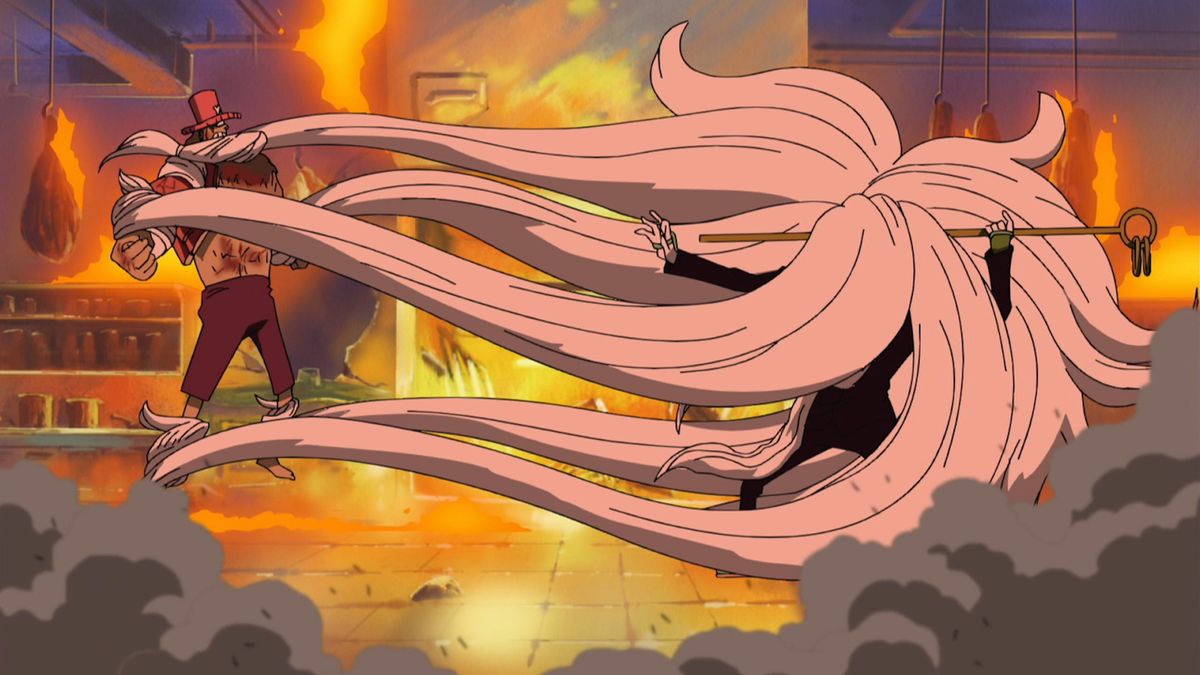
One Piece Episode 290 turns Chopper’s medical expertise against his own body. A second Rumble Ball destabilizes his transformations while Kumadori keeps attacking. Chopper finally lands Arm Point’s Roseo Metel, but the victory path leads toward the forbidden third dose and a form he cannot control.
This is not a simple courage story. Chopper understands dosage, risk, and bodily consequence better than anyone in the tower. Robin’s deadline pressures the doctor into becoming his own unsafe patient.
The second Rumble Ball changes probability into chaos
One Rumble Ball alters Devil Fruit wavelengths and opens additional transformations. A second dose within the restricted period makes those transformations unpredictable. Chopper can still reach power, but cannot reliably choose which body arrives.
That loss of control matters more than raw strength. Medicine requires dosage, timing, observation, and adjustment. The second ball breaks the feedback loop a doctor depends on.
Chopper knows exactly why the choice is dangerous
Ignorance would make the scene easier. Chopper cannot claim ignorance. He developed the drug, tested the effects, and set the safety rule. Every transformation reminds him that the body is slipping outside his plan.
Expertise increases moral weight. Chopper takes the risk because Kumadori blocks the rescue and conventional options are failing. The decision remains understandable without becoming medically responsible.
A doctor becomes his own emergency
Chopper’s role usually asks him to stabilize other people. Episode 290 reverses that relationship. His body becomes the unstable system, and no second doctor stands nearby to intervene.
The reversal exposes the crew’s dependence on him. If Chopper wins and cannot practice medicine afterward, the rescue loses more than one fighter. Personal sacrifice has collective consequences.
Kumadori mistakes instability for weakness
Kumadori sees failed transformations and assumes control of the encounter. The conclusion is reasonable within the immediate evidence. Chopper’s body appears unreliable, exhausted, and small.
The mistake lies in treating instability as only reduction. An unpredictable body can also produce an unexpected opening. Chopper reaches Arm Point and turns a failed sequence into one decisive attack.
Roseo Metel is skill, not accidental luck
The correct transformation arrives unpredictably, but Chopper still has to recognize the opening, position himself, and execute. Luck creates access. Training converts access into impact.
That distinction protects the character’s competence. The episode does not hand Chopper a random victory. The body gives him a narrow window, and he knows what to do inside that window.
The forbidden third dose waits behind the win
Chopper’s physical limit is already visible. The audience knows another Rumble Ball would cross the boundary from unstable transformations into something worse. Knowledge creates dread before the hand moves.
One Piece often frames willpower as admirable. Monster Point complicates that tradition. More determination does not guarantee more agency. A body pushed beyond control may endanger the same people sacrifice was supposed to protect.
Medical self-experimentation carries an ugly history
Chopper’s invention emerged from curiosity and survival, not an institution with oversight. He possesses no laboratory team, ethics board, monitoring equipment, or controlled trial. His own body became the research site.
The story celebrates ingenuity while showing the cost of isolation. Brilliant outsiders often create tools because formal systems exclude them. Exclusion does not make experimentation safe.
Kumadori’s theatrical control meets biological reality
Kumadori performs discipline through kabuki gestures, hair manipulation, and claims of bodily mastery. Chopper arrives with a science that deliberately disrupts bodily limits. Their fight places ritualized control against experimental change.
Neither body is ordinary. Kumadori trained Life Return to command hair and metabolism. Chopper uses chemistry to alter transformation wavelengths. The difference is not nature versus technology. The difference is which risks each fighter recognizes.
Robin’s rescue pressures every ethical boundary
Franky destroyed inherited blueprints. Sanji preserved a personal gender rule. Chopper violates his own dosing rule. Enies Lobby keeps asking which principles bend under emergency and who receives the consequences.
Chopper’s choice centers the rescue more directly than Sanji’s refusal, but good intent cannot guarantee a safe result. The arc is strongest when sacrifice remains complicated.
The small body and the coming monster
Chopper’s usual form invites enemies to treat him as harmless. The coming transformation will reverse that visual judgment so completely that allies may no longer recognize the doctor inside the body.
That possibility touches his oldest wound. Chopper grew up called a monster by reindeer and humans. Choosing a monstrous form to save friends does not erase the terror of becoming unreadable to them.
Adaptation and performance
Writer Naoki Koga and director Yoshihiro Ueda organize the episode around escalating bodily uncertainty. Katsumi Ishizuka’s animation direction makes each transformation distinct enough that viewers can track loss of control. Miyuki Sato and Kunihiro Chida’s art keeps Kumadori’s room theatrical and hostile.
Ikue Otani gives Chopper fear without helplessness. The voice carries medical understanding, physical pain, and a child’s desperate loyalty at once.
RaeRae’s final reaction
Episode 290 hurts because Chopper knows better. He does not lack information. He lacks a safe option that reaches Robin in time. The second Rumble Ball turns expertise into a countdown, and every successful attack moves him closer to a choice no doctor should have to make alone.
I cheer Roseo Metel and keep watching the dosage. Victory is not clean when the healer becomes the next emergency. Enies Lobby keeps receipts for every shortcut.
Episode facts and receipts
One Piece Episode 290 aired in Japan on December 17, 2006. ONE PIECE.com credits Naoki Koga for the script, Yoshihiro Ueda for direction, Katsumi Ishizuka as animation director, and Miyuki Sato with Kunihiro Chida on art. The official synopsis follows Chopper taking a second Rumble Ball, losing reliable transformation control, and reaching Arm Point for Roseo Metel.
Classification: numbered television episode, manga-canon Enies Lobby material, RaeRae React. This record belongs in Anime, Anime Series, Japanese Anime, and Anime Reacts. This record does not belong in Anime Reviews.
Dosage is a boundary Chopper created from evidence
The Rumble Ball limit is not superstition. Chopper observed how his body responds and built a rule from those observations. Taking another dose means overruling his own science under pressure.
That conflict differs from ordinary recklessness. A doctor must decide whether the known danger of treatment is smaller than the known danger of doing nothing. Enies Lobby supplies no safe control group.
The rescue produces battlefield triage
Triage allocates limited resources when every need cannot receive ideal care. Chopper applies that logic to strength, time, and his own future health. Kumadori must be stopped now, even if the solution creates another patient later.
The decision becomes tragic because Chopper is the crew member most qualified to understand the downstream cost. He cannot consult himself after losing control.
Monster Point threatens Chopper’s social identity
Chopper spent childhood rejected as neither ordinary reindeer nor acceptable human. The Straw Hats gave him a place where mixed identity became belonging. An uncontrolled giant form threatens to make friends see only danger again.
The fear is therefore relational, not merely physical. Chopper risks losing recognition from the people whose recognition allowed him to grow.
Kumadori’s Life Return offers a dark mirror
Kumadori boasts that training grants control over hair and body. Chopper uses chemistry to expand possible forms and then loses selection. One fighter performs mastery while the other confronts biological uncertainty.
The mirror prevents a simple nature-versus-science reading. Both bodies are altered through knowledge. The ethical question concerns purpose, consent, and whether control survives the method.
Chopper’s small form invites lethal underestimation
Enemies repeatedly read his size and voice as evidence of weakness. That judgment allows surprise but also forces Chopper to prove danger before opponents take him seriously.
Episode 290 shows the cost of that proof. Respect arrives only after he pushes beyond a medically responsible limit. A biased observer creates pressure for spectacular overperformance.
Roseo Metel carries Hiluluk’s visual inheritance
The cherry-blossom image connects Chopper’s attack to the doctor who taught him that healing includes hope. A violent technique wearing that image creates tension rather than hypocrisy.
Chopper fights because Robin’s chance to live requires force in this room. The blossom marks violence directed toward rescue, not cruelty performed for rank.
Willpower cannot replace informed consent
Chopper chooses the dose, but emergency narrows that choice. Robin’s movement toward the gate, Kumadori’s power, and isolation all constrain the decision. Consent made under catastrophe deserves context.
The story can honor his bravery while admitting that no crew should want the doctor cornered into self-experimentation. Heroism names the response, not the fairness of the situation.
The crew’s distributed battles create hidden dependencies
Zoro and Usopp need a key. Nami needs time. Franky needs fuel. Chopper needs somebody capable of stopping him if the third dose arrives. Every isolated fight depends on results elsewhere.
CP9 sees separate matchups. The Straw Hats function as a network even across walls. Their weaknesses become calls for another member’s strength.
Animation must make transformation readable
Chopper’s multiple forms can become visual noise if changes lack clear silhouettes and weight. Episode 290 makes failed selection understandable through posture, scale, and immediate reaction.
That clarity supports the medical argument. Viewers see a system malfunction, not a random sequence of costumes. Each body carries a different capability and cost.
RaeRae’s second look
I cannot celebrate the Rumble Ball without asking who cares for Chopper afterward. The doctor is not an unlimited resource. His body deserves the protection he offers everyone else.
Robin’s rescue makes the risk emotionally legible. The coming monster makes the cost impossible to ignore. Episode 290 lives in that space between a necessary choice and an unacceptable situation.
The third Rumble Ball is not a transformation upgrade
Calling the coming form an upgrade would erase the defining cost. An upgrade expands capability under the user’s control. Monster Point removes Chopper’s ability to choose targets, communicate, practice medicine, or stop when the objective changes.
More force paired with less agency is not uncomplicated progress. CP9 values bodies by destructive output. The crew has to value Chopper as a person even when destructive output rises.
Emergency medicine includes the aftermath
A treatment decision does not end when the immediate threat falls. Somebody must monitor breathing, consciousness, injury, hydration, and delayed effects. Chopper has no clinician waiting beyond Kumadori.
That absence exposes a structural weakness in the crew. One doctor cannot be the only medical plan and the patient most likely to require specialized care. Friendship may supply hands, but affection does not create training.
Chopper’s courage is not proof that the risk was fair
Stories often use bravery to make dangerous conditions feel justified. Chopper’s willingness to act says something beautiful about him. The need for that action says something terrible about the situation.
Robin’s execution, CP9’s power, and the separated crew created the corner. Applause for courage should not become gratitude toward the corner.
Kumadori and Chopper both perform identities
Kumadori’s theatrical speech and gestures create an image of ancient discipline. Chopper’s small form, hat, and medical bag create an image enemies classify as harmless. Neither surface contains the entire fighter.
The battle strips those performances open. Kumadori’s control depends on violent institutional purpose. Chopper’s vulnerability contains experimental power he fears. Appearance offers a starting clue, never a verdict.
RaeRae’s receipt
Episode 290 gives Chopper a win that already feels like a warning. Roseo Metel lands, but the dosage clock keeps running. The series understands that consequences can arrive after applause.
I am rooting for the doctor without romanticizing the emergency. Chopper deserves a crew that sees the sacrifice, stops the monster if necessary, and remembers that saving Robin cannot mean forgetting the person who keeps everyone else alive.
The final warning before the third dose
Chopper has already proved his courage, medical intelligence, and combat value before Monster Point appears. The larger form should not become retroactive proof that the smaller doctor was insufficient. The tragedy lies in a battlefield demanding more than one body can safely give.
That framing protects the character from power-scaling logic. Chopper matters because he heals, studies, worries, invents, and loves. Destructive scale is one emergency tool, not the measure of his worth.