RaeRae Reacts · One Piece Episode 239
Water 7 Believes Iceburg and Stops One Question Too Early
One Piece Episode 239 turns the Straw Hats into hunted suspects after Iceburg names Robin, while Luffy forces his way toward the missing motive.
Bottom line: Water 7 believes Iceburg, then stops one question too early
One Piece Episode 239 turns the Straw Hats from troublesome visitors into hunted suspects. Iceburg remembers Nico Robin standing beside the masked attacker. Paulie repeats the identification. Galley-La closes ranks. The residents who love Iceburg accept the company’s conclusion, and Luffy’s insistence that Robin would not attack him sounds like pirate loyalty rather than evidence.
The city is not irrational for believing a wounded witness. The failure comes after the identification. Robin was present. Why was she present? What did the masked figure want? Why did the attackers leave Iceburg alive? Water 7 gets a true fact and lets fear finish the rest of the sentence.
The official episode record
ONE PIECE.com lists Episode 239, “The Criminals Are the Straw Hat Pirates? The Bodyguards of Water 7,” with a Japanese broadcast date of July 31, 2005. Hirohiko Kamisaka wrote the screenplay, Morio Hatano directed, Naoki Tate served as animation director, and Miyuki Sato and Kumiko Fukuzawa handled the credited art work.
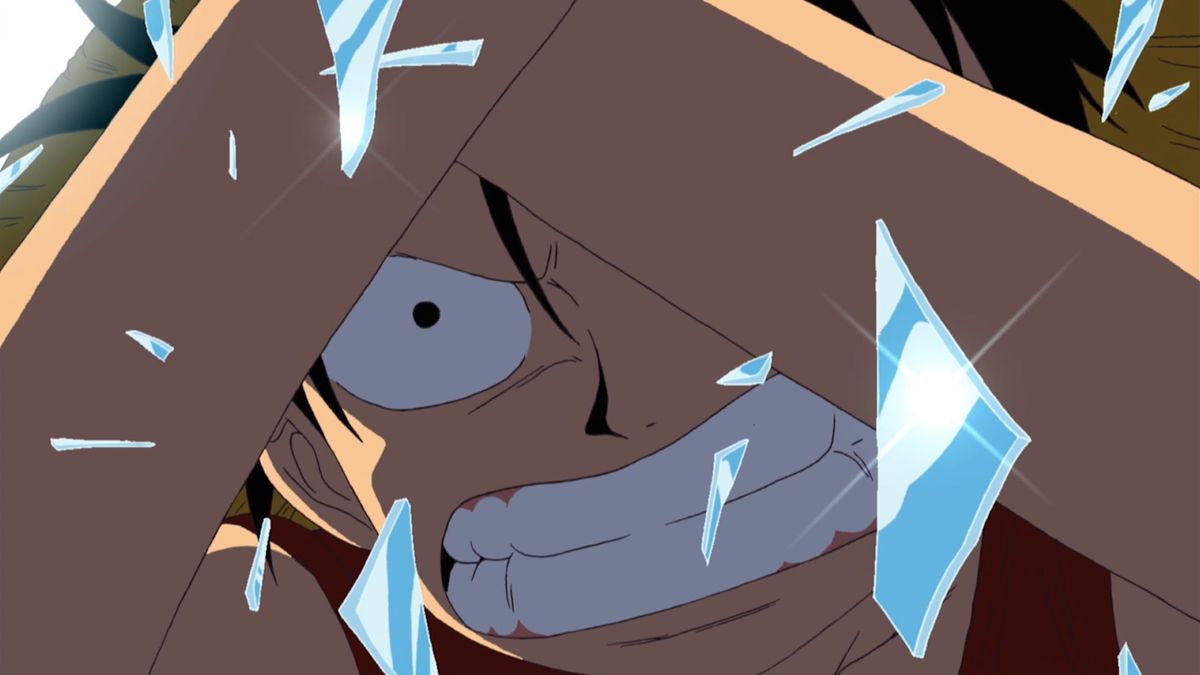
The official summary says Iceburg’s testimony makes the Straw Hats assassination suspects across Water 7. Luffy still wants the truth and forces his way into the heavily guarded Galley-La headquarters. That summary captures the episode’s engine. Public certainty rises while Luffy’s access to the only surviving witness disappears.
Galley-La explains the accusation during a fight nobody can pause
Luffy, Franky, and the foremen are still trading blows when Paulie tells Luffy that Robin and a masked man attacked Iceburg. The information does not arrive in a quiet interview. Luffy hears the accusation while ropes, fists, bullets, and debris keep moving.
That setting guarantees misunderstanding. Galley-La reads resistance as guilt. Luffy reads the attack as proof that nobody will listen. Franky is angry because the shipwrights stole the opponent he came to punish. Every person has a separate argument inside the same brawl.
Luffy’s first answer is loyalty, not strategy
Luffy rejects the accusation because Robin is his crewmate. He has watched her save them, laugh with them, read for them, and choose their ship after years of surviving among enemies. His trust comes from lived experience rather than a courtroom chain of evidence.
That answer has emotional weight and little persuasive power for Water 7. Residents know Robin as a wanted criminal who arrived with pirates. Luffy’s certainty can sound like a captain protecting an accomplice. Trust only functions as evidence inside relationships shared by the listener.
Nami hears how quickly one name condemns everybody
Nami understands the practical danger before Luffy does. Once Galley-La names Robin, the entire crew becomes part of the alleged plot. The city does not separate captain, navigator, cook, doctor, swordsman, missing sniper, and missing archaeologist into individual cases.
Pirate crews operate collectively, so the inference is not absurd. The Straw Hats also behave unlike an ordinary criminal organization. Members argue, split up, make independent choices, and protect strangers without permission. Water 7 cannot know those internal rules from a wanted poster.
Franky is furious that somebody else claimed his enemy
Franky reacts to the assassination accusation with frustration because Galley-La has turned Luffy into their target. He still wants revenge for Franky House. The response is funny, but the territorial anger quietly separates him from the city’s conclusion.
Franky knows Luffy attacked his family for what happened to Usopp. He may hate the answer, but the motive makes sense. Assassinating Iceburg does not fit the man standing in front of him. Franky does not become Luffy’s ally yet. He simply refuses to let a different story erase the conflict he understands.
Paulie believes Iceburg because Iceburg earned belief
Paulie’s loyalty is not blind devotion to a random executive. Iceburg built Galley-La, stabilized Water 7’s shipyards, employed skilled workers, and carries civic authority. Paulie has years of direct experience with him. When Iceburg identifies Robin, Paulie treats the statement as a fact demanding action.
The problem is not belief. Iceburg should be believed about what he saw. The problem is treating his sight as proof of Robin’s motive and the crew’s shared plan. Paulie protects the witness by shrinking the investigation around the first recognizable suspect.
The foremen become bodyguards because the city already sees them that way
Galley-La’s foremen move from shipbuilding into armed protection without waiting for a new badge. Their strength, reputation, and relationship to Iceburg make the transition feel natural to residents. The company’s workers are Water 7’s heroes long before the episode calls them bodyguards.
That social authority can defend the city during a crisis. The same authority can spread a mistake with extraordinary speed. Once Paulie, Kaku, Lucci, Lulu, and Tilestone act as if Luffy is guilty, the crowd receives a conclusion through people they trust.
Luffy does not understand why innocence fails to stop the blows
Luffy keeps insisting that his crew did not shoot Iceburg. He expects direct truth to matter because lying about the attack would not help him reach Iceburg. Galley-La expects denial because guilty people also deny crimes.
The gap frustrates him more than the physical attacks. Luffy can answer force with force. He cannot punch suspicion into a useful question without making himself look more dangerous. Water 7 has created a conflict where his strongest language works against him.
Franky learns Iceburg was shot and the fight changes shape
Franky’s reaction to the news reveals a connection he has not explained. Iceburg matters to him. The assassination attempt lands beneath his theatrical anger, even while he continues fighting over Franky House.
The detail gives viewers another reason to question the obvious sides. Franky leads a criminal gang and clashes with Galley-La, but he does not respond like a rival celebrating Iceburg’s weakness. Water 7’s public categories are too neat for the relationships underneath them.
Aqua Laguna puts a deadline on the search for Robin
Sanji and Chopper learn more about the approaching annual high tide and rush to warn Usopp. Lower parts of Water 7 will flood. Residents are moving possessions, closing businesses, and preparing shelters. The crew cannot search indefinitely.
The storm raises the cost of every separation. Usopp is alone with a damaged ship in a vulnerable area. Robin is missing inside a city preparing to close routes. Sanji and Chopper cannot treat either absence as a private argument once the water starts climbing.
Warning Usopp is care, not a secret reunion
Sanji and Chopper want Usopp to know about Aqua Laguna even though he left the crew. Their concern does not erase the duel or override Luffy’s position as captain. They are responding to a physical danger that could kill him.
This is the emotional maturity the previous argument lacked. A boundary can remain while people prevent avoidable harm. Usopp does not need to be restored automatically for someone to warn him that the sea is about to enter the street.
The whole city becomes a search party with one target
Residents spread the accusation and watch for Straw Hats. Water 7’s canals, bridges, lifts, and tightly connected neighborhoods make movement visible. The city that delighted Luffy during arrival now feels like a structure built to funnel him toward capture.
Community knowledge gives the hunt speed. Shopkeepers, workers, boat operators, and residents know the routes better than outsiders. CP9 does not need to chase the crew personally when public anger can close the map for them.
Luffy chooses the witness over the crowd
Luffy decides that the only useful move is speaking directly to Iceburg. He cannot argue with every resident or defeat the whole company without making the accusation worse. Iceburg saw Robin. Luffy needs to hear the account from him.
The decision is more strategic than his usual charge suggests. He identifies the source rather than wrestling every repetition. Unfortunately, Galley-La has fortified the headquarters precisely to stop a suspected assassin from reaching the wounded mayor.
Galley-La headquarters becomes a castle built from labor
The company’s main building is guarded by shipwrights who know every entrance, platform, rope, window, and structural weakness. Luffy is entering their workplace during a lockdown. Raw power does not cancel home-field knowledge.
The setting also makes the accusation feel institutional. Luffy is not sneaking into one patient’s room. He is challenging the company that employs much of Water 7 and protects the mayor. Every broken barrier becomes another public receipt against him.
Luffy creates chaos because polite access is gone
Luffy forces his way toward Iceburg. The choice is reckless and understandable. Waiting for permission means accepting a judgment already moving through the city. Breaking in may be the only route to the witness before Robin disappears completely or Aqua Laguna closes Water 7.
His method still carries a cost. Guards do not know his internal deadline. They see a pirate accused of attempted murder breaching the victim’s protection. Luffy’s urgency looks exactly like threat from the other side of the door.
Iceburg repeats Robin’s identity without pretending he knows everything
When Luffy reaches him, Iceburg confirms that Robin was there. The statement hurts because Iceburg has no reason to fabricate her face. Luffy cannot solve the problem by declaring the witness mistaken.
Iceburg also wants to see Robin again. That request signals unfinished information. He knows the attackers sought something and recognizes that Robin’s presence does not explain the whole operation. The city hears accusation. Iceburg is still asking for a conversation.
Robin’s absence becomes more powerful than her testimony
Robin cannot answer Luffy, Iceburg, or the city because she remains hidden. Her silence lets every group write a motive around her. Galley-La sees an assassin. Residents see a dangerous pirate. The crew sees a friend who may be in trouble. CP9 sees leverage.
Robin has survived by controlling what other people know about her. Water 7 turns that survival habit against her. Each secret makes the worst interpretation easier to sell.
The episode adds a cold opening because the arc has stopped waiting
Episode 239 is noted for introducing the cold-opening teaser pattern that becomes common in the anime. The structural change fits the story. Water 7 now begins under pressure before the familiar opening sequence can reset the mood.
The audience receives crisis first. That choice reduces the sense that each weekly installment starts cleanly. Usopp’s departure, Iceburg’s wounds, Robin’s disappearance, and the approaching tide carry across the episode boundary.
Naoki Tate gives panic a rough physical edge
The animation emphasizes stretched reactions, abrupt impacts, crowded movement, and Luffy’s refusal to stay contained. The drawings do not make civic panic elegant. Faces strain, bodies collide, and the city feels increasingly difficult to navigate.
That rough energy suits a story about public certainty outrunning careful thought. Water 7 is losing composure. The visual rhythm should not look calm while everybody decides whom to chase.
What changed after another watch
The first watch makes the city’s hostility feel like an unfair obstacle. Another watch makes the residents easier to understand. Their mayor was shot, a witness named a pirate, and the suspect’s captain is breaking into the hospital. Fear did not appear from nowhere.
Understanding the fear makes CP9’s method uglier. The operation uses real trust rather than inventing fake emotion. Iceburg’s workers care about him. Residents care about him. The conspiracy only needs to direct that care toward the wrong complete story.
RaeRae verdict: Robin was there is the beginning of the mystery, not the solution
Episode 239 succeeds because the accusation is factually grounded. Iceburg saw Robin. Luffy cannot dismiss him, and Water 7 cannot ignore him. The drama would be cheaper if the city relied on a ridiculous lie.
The episode also makes clear how evidence becomes propaganda without changing a word. Repeat “Robin attacked Iceburg” often enough, remove the masked partner, motive, timing, and her missing testimony, then the whole crew becomes guilty by grammar. Luffy is right to demand the rest of the story, even while his method makes every guard reach for another weapon.
Receipts and where to watch
The official ONE PIECE.com Episode 239 record supplies the Japanese title, July 31, 2005 broadcast date, Water 7 placement, story summary, production credits, and official image used on this page. The credited staff are Hirohiko Kamisaka, Morio Hatano, Naoki Tate, Miyuki Sato, and Kumiko Fukuzawa. Crunchyroll carries licensed One Piece streaming availability by region.
This React stops with Episode 239 knowledge. Later episodes explain Robin’s bargain, CP9’s identities, Iceburg’s secret, and the full reason Water 7 was manipulated. Those answers do not erase the honest uncertainty here. The crew knows Robin was present and still does not know whether her presence means betrayal, coercion, or sacrifice.